
Plan a trip
Hyena Conservation Safari: A Guide for UAE Travellers
Last updated: August 2026
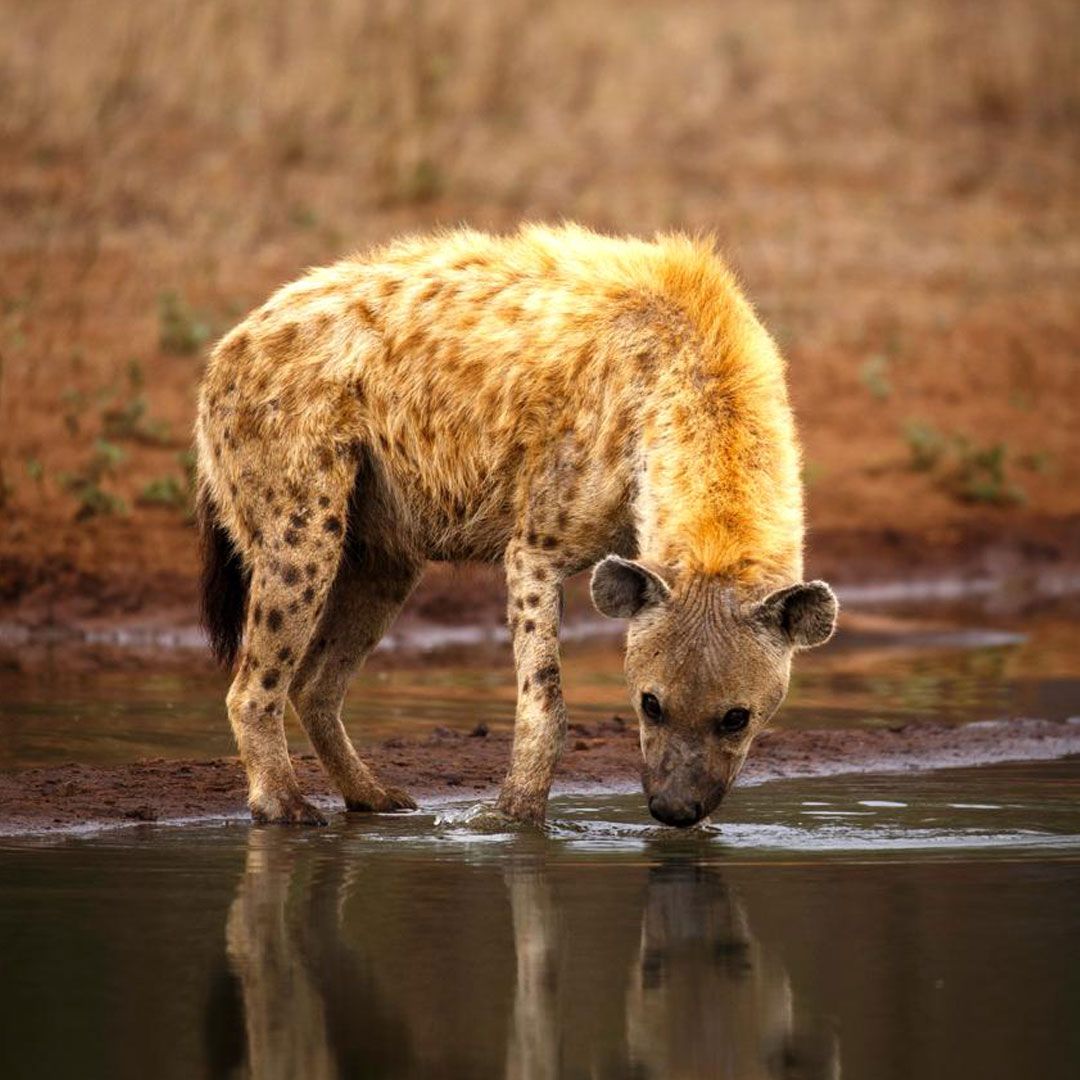
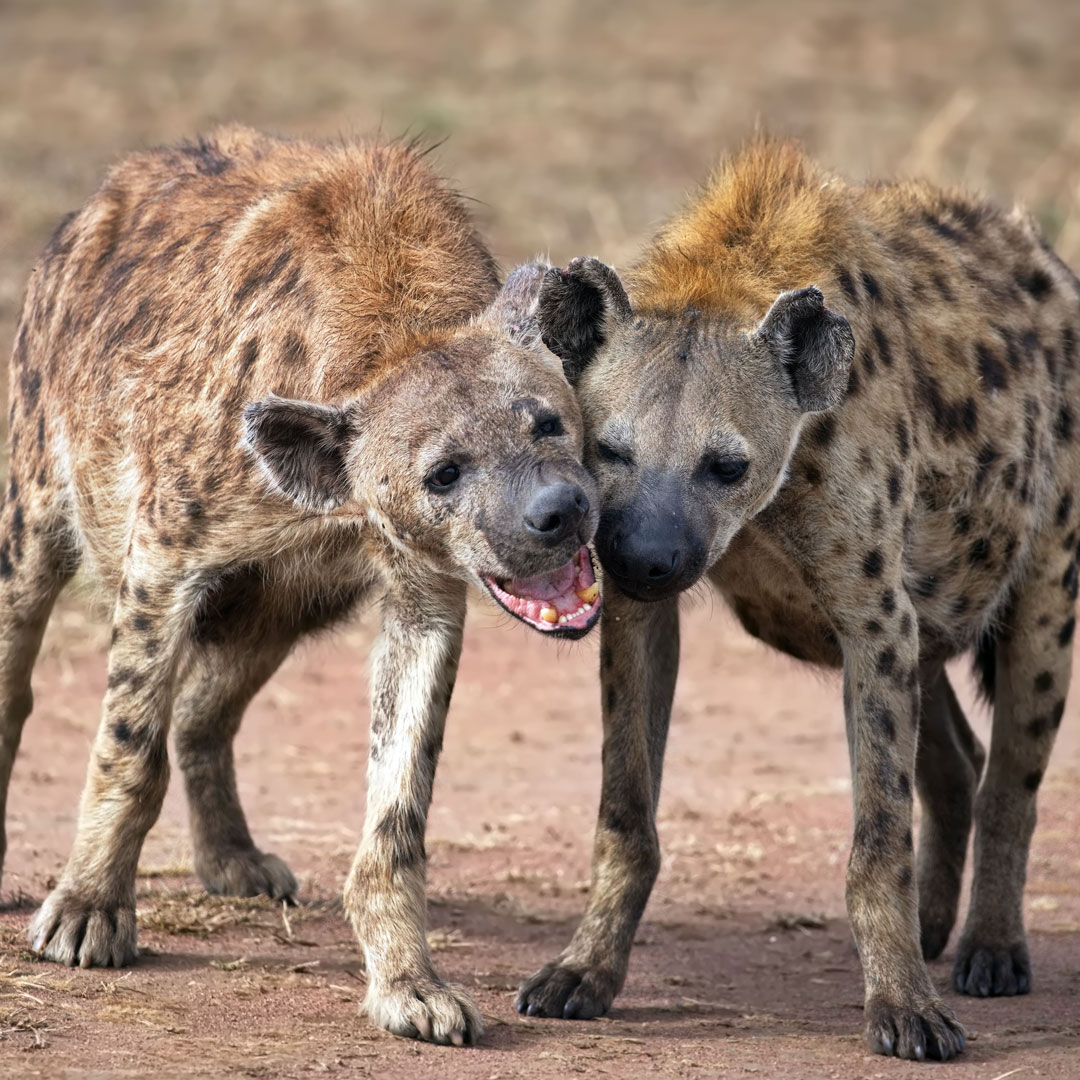
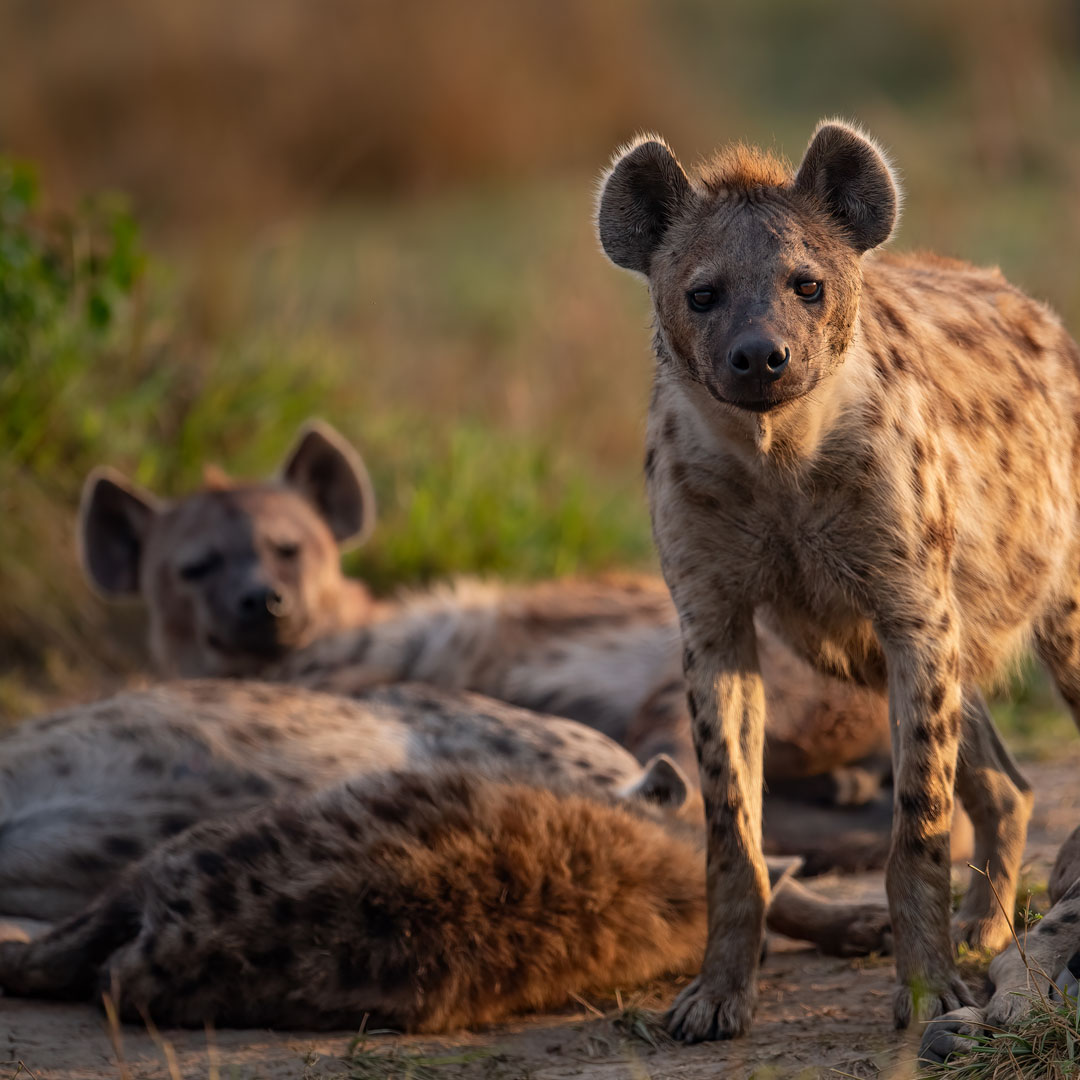
Hyenas are among Africa’s most misunderstood predators, yet they are essential to healthy ecosystems. Spotted hyenas are formidable hunters with complex, female-led clans, while the elusive brown hyena occupies the arid landscapes of Southern Africa and is classified as Near Threatened.
Ranger Buck Safaris helps travellers from Dubai, Abu Dhabi and across the United Arab Emirates go beyond ordinary game viewing to understand how monitoring, research, coexistence work and responsible tourism contribute to hyena conservation. This guide explains how to plan an ethical hyena conservation safari and how it can fit into a wider African safari package from the UAE.
Why UAE Travellers Are Choosing Hyena Conservation Safaris
A conservation-led safari offers a different kind of luxury: privileged insight, time with knowledgeable field teams and a deeper understanding of the landscape. Hyenas reveal why this matters. Spotted hyenas are not merely scavengers; they hunt, raise cubs in communal dens, maintain intricate clan relationships and influence the behaviour of other predators. Brown hyenas survive in some of the continent’s harshest dry environments and are exceptionally difficult to see without expert local knowledge.
For UAE residents who value privacy, expert access and travel with a clear purpose, a hyena-focused journey can combine meaningful conservation learning with premium accommodation and excellent guiding. Ranger Buck can build the experience into a luxury safari package from the UAE without turning the fieldwork into a staged attraction.
The short time difference and nonstop access to Johannesburg also make Southern Africa practical for an Eid break, school holiday, honeymoon or longer annual leave. Couples, private groups and multigenerational families can request exclusive-use vehicles, interconnecting rooms or villas, and age-appropriate activities. Travellers with children can compare the broader family safari options from the UAE.
Getting to Southern Africa from the UAE
Emirates operates nonstop services from Dubai International Airport (DXB) to Johannesburg (JNB), while Etihad connects Zayed International Airport in Abu Dhabi (AUH) with Johannesburg. Published nonstop schedules are approximately 8 hours 10 minutes, depending on the date and service. Travellers from Sharjah and the Northern Emirates can route through Dubai or Abu Dhabi. Ranger Buck can incorporate the international and regional sectors into safari packages with flights from the UAE.
South Africa is two hours behind the UAE throughout the year, so the journey usually involves little jet lag. From Johannesburg, onward flights provide access to Hoedspruit for Greater Kruger, Maun for Botswana, Livingstone or Victoria Falls, and other regional safari gateways. Some hyena-focused itineraries require road transfers or light-aircraft sectors because the best field sites are away from large airports.
Passports, Visas and Health Planning
UAE passport holders can currently visit South Africa without a visa for stays of up to 90 days. However, entry rules depend on the passport used for travel, not UAE residency alone. The UAE’s resident population includes many nationalities, and visas or transit documents may be required for South Africa, Botswana, Zambia, Zimbabwe or any other country in the itinerary. Requirements should be confirmed before tickets are issued.
Parts of Greater Kruger, Botswana, Zambia and Zimbabwe have malaria risk. A qualified travel-health professional should advise on your precise route, season and medical history. Travel insurance should cover medical treatment, evacuation, cancellation, delays and every activity listed in the confirmed programme.
What to Pack When Leaving the UAE
Open-vehicle drives and dry-season mornings can feel surprisingly cold to travellers accustomed to UAE weather. Pack light layers, a warm jacket, neutral clothing, closed walking shoes, sun protection, binoculars and personal medication. Use the complete African safari packing list for UAE travellers, and read the practical guide answering is an African safari safe for UAE travellers?
Best Time to Visit from the UAE
Hyenas are active throughout the year, but the Southern African dry season from May to October often makes tracks, den activity and predator movements easier to follow. Vegetation is lower, roads are generally dry and wildlife concentrates around dependable water. This period is also an appealing escape from the UAE’s hottest months and overlaps with the long school summer holiday.
July and August are popular with families, while May, June, September and October may suit couples or independent travellers seeking different availability. In the green season, dramatic skies, newborn animals and strong birding create a different experience, although rain can change road access and field schedules. The best choice depends on whether the priority is spotted hyenas in Greater Kruger, brown hyenas in the Kalahari, or a multi-country route. Compare the wider seasonal picture in Ranger Buck’s guide to the best time to visit Africa from the UAE.
A focused trip can work in 7–10 nights, while 12–14 nights gives enough time for two contrasting landscapes without rushing. Book 3–6 months ahead for peak periods and earlier for private villas, large family groups or Eid dates. If this is your first journey to the continent, the first-time safari guide for UAE travellers explains game-drive routines, lodge etiquette and what a typical day feels like.
What Your Hyena Conservation Experience Looks Like
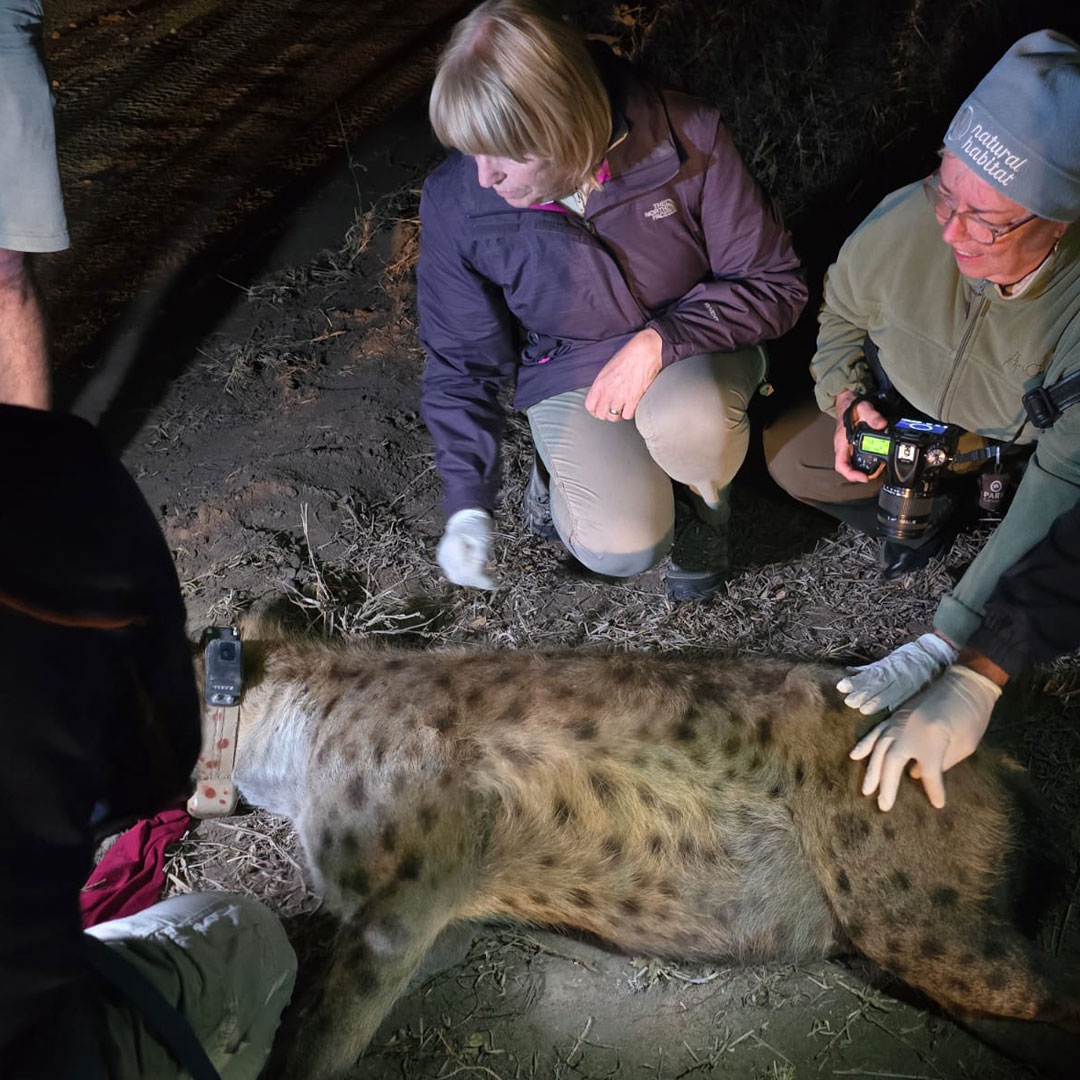
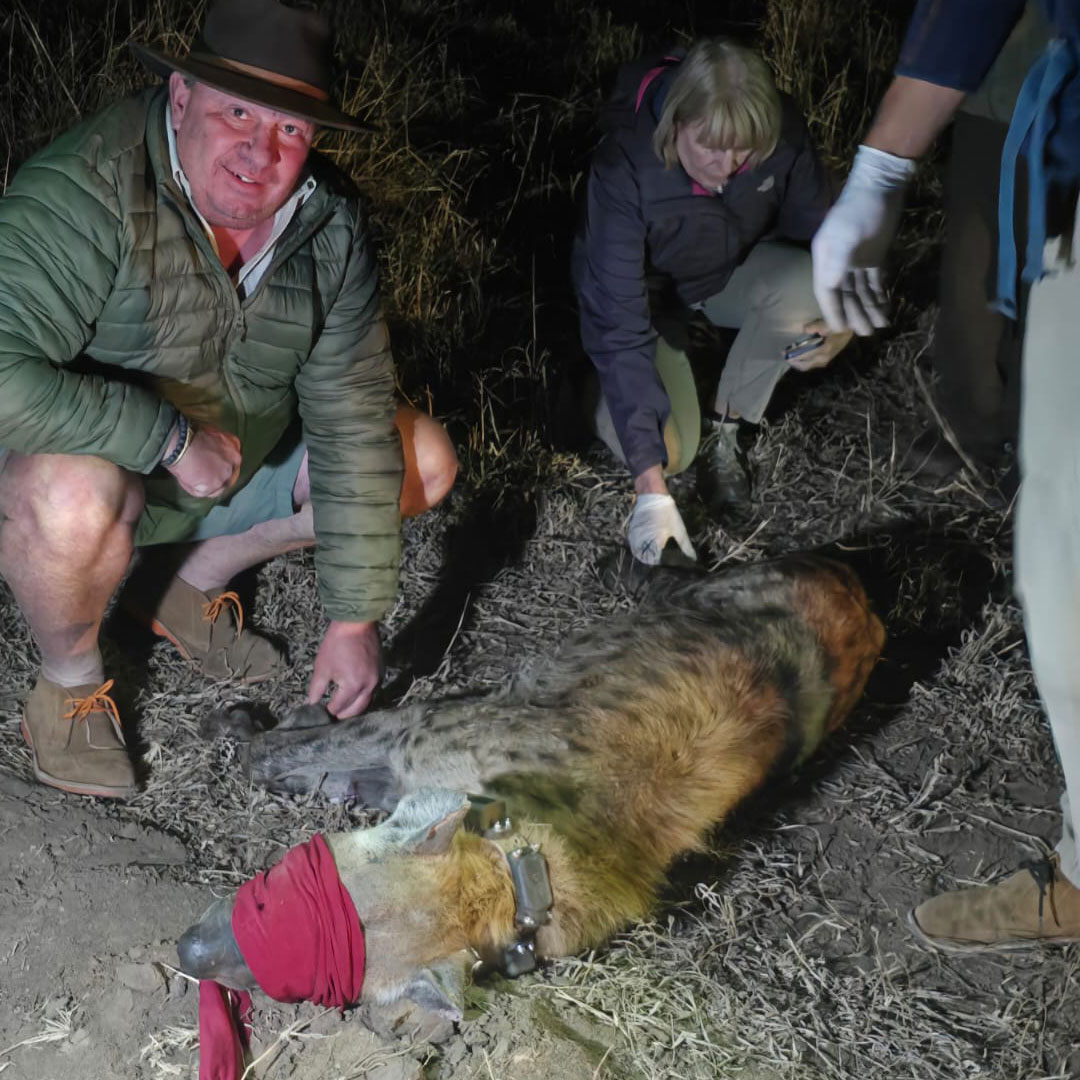
Ranger Buck builds every itinerary around genuine field priorities and the species present in the chosen landscape. A hyena conservation experience may include early-morning tracking of clan movements and den sites, joining field staff during camera-trap checks, learning how spoor and sightings are recorded, reviewing collar or identification data, discussing conflict-response work and taking a night drive when hyenas are often most active.
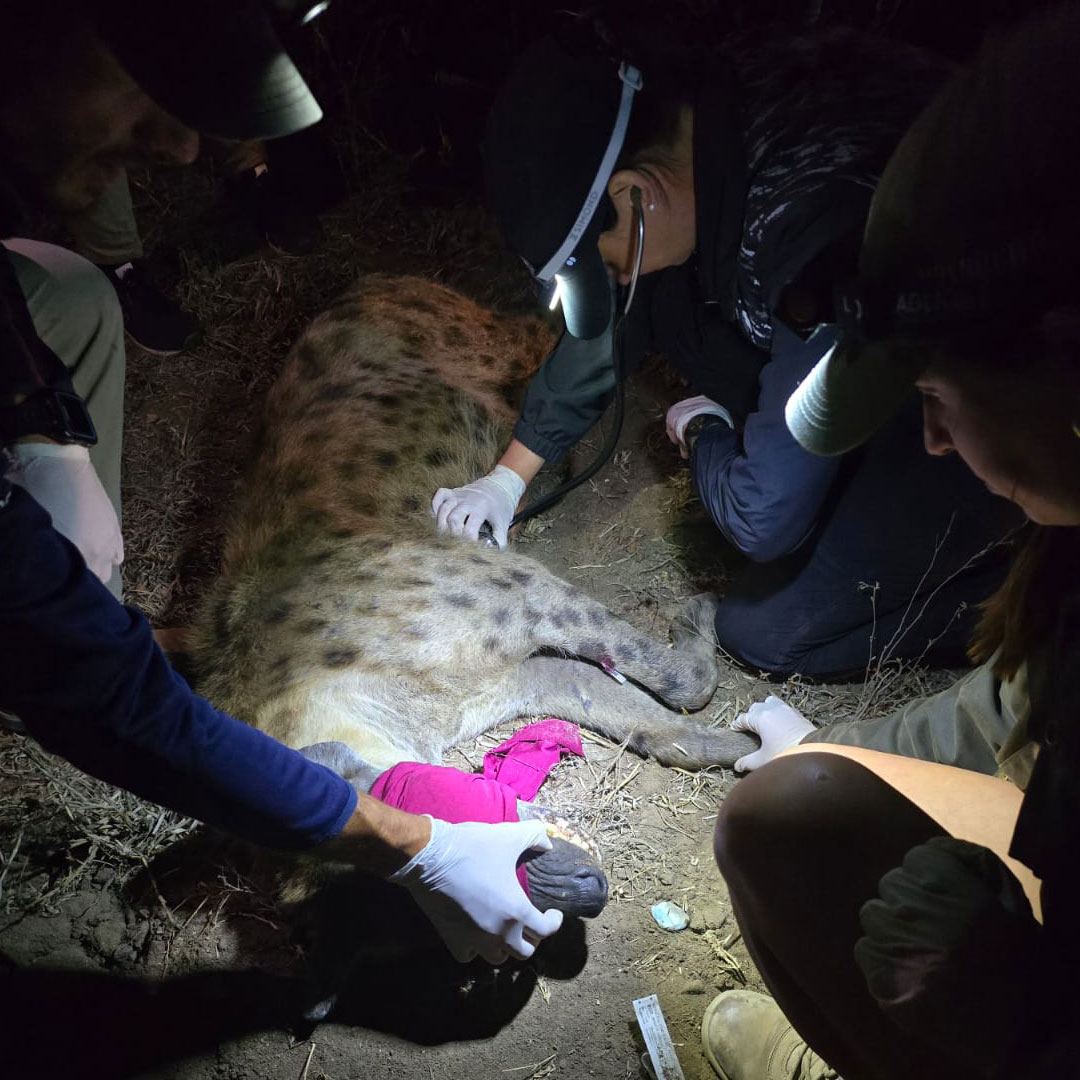
Monitoring helps teams understand territory use, clan composition, reproductive success, injuries and pressures at reserve boundaries. Camera traps can provide non-invasive records of elusive animals; photographs may also reveal coat patterns, scars and other identifying features. In some programmes, telemetry or GPS data helps researchers follow movements across large areas. The method used depends on the project and the conservation question being addressed.
Spotted and brown hyenas require different approaches. Spotted hyenas live in socially complex clans and can be observed around dens, water sources and other predator activity. Brown hyenas are usually more solitary when foraging and are strongly associated with arid Southern African habitats. An itinerary may therefore combine a private reserve in Greater Kruger with the Kalahari, Botswana or another suitable region to reveal how the species differ.
This is not a volunteer placement or a captive-animal interaction. Conservation access is integrated into a complete safari with quality lodge accommodation, professional guides and broader wildlife viewing. Any collaring, darting, veterinary procedure or close-contact operation can occur only when there is a real conservation need, the correct permits are in place and qualified professionals decide it is appropriate. A sighting, den visit or specific intervention can never be guaranteed.
Why Hyena Monitoring Matters
Hyenas can persist near people, but that adaptability should not be confused with security. Habitat fragmentation, reduced movement corridors, wire snares, poisoning and retaliatory killing can affect local populations, particularly beyond well-protected reserves. Misidentifying scavenging as livestock predation can also intensify conflict. Reliable records help conservationists separate perception from evidence, identify recurring threats and work with landowners and communities on practical responses.
The most valuable guest experience therefore connects a memorable sighting with the less visible work behind it: consistent data collection, trained field staff, conflict reporting, responsible waste management, habitat protection and long-term funding. Ask who owns the research, how information is stored, what conservation objective the activity serves and whether guest presence changes the team’s normal protocol. Clear answers are a stronger sign of ethical practice than promises of close contact.
Meals, Privacy and Family Requirements
Many premium lodges can arrange halal-friendly meals, alcohol-free room setups, private vehicles, dietary requirements and family rooming when requested in advance. Facilities and certification differ between properties, so every requirement must be confirmed in the final proposal. Conservation activities may have minimum ages or may be unsuitable for young children; Ranger Buck can arrange an alternative programme for family members where necessary.
What a Hyena Conservation Safari Costs from the UAE
For planning purposes, premium private-reserve accommodation may range from approximately AED 2,500–6,500 per person per night, depending on the destination, season, room category and inclusions. Botswana and remote fly-in camps can cost more because charter flights, park fees and logistical costs are substantial. A carefully designed 12–14-night conservation journey across two destinations may range from approximately AED 40,000–85,000 per person.
International economy flights from the UAE often begin around AED 2,500 return but can rise considerably during school holidays, Eid periods or for flexible and premium cabins. These figures are indicative rather than fixed prices. Conservation contributions, charter flights, private vehicles, park levies, drinks, gratuities and specialist staff may be included or quoted separately, and exchange rates can affect the final AED amount.
For a broader explanation of what changes a quotation, read the African safari cost guide for UAE travellers. Travellers who prefer one comprehensive proposal can also consider an all-inclusive South Africa package from the UAE; Ranger Buck will clearly state what is and is not included.
Building Your Hyena Conservation Itinerary
7–10 nights — Greater Kruger focus: Arrive in Johannesburg and continue to a private reserve in Greater Kruger for spotted-hyena monitoring, night drives and Big Five viewing. Add a second reserve or a relaxed final night near Johannesburg. Explore the available Kruger safari packages from the UAE or the wider South Africa safari packages from the UAE.
10–12 nights — Spotted and brown hyena landscapes: Combine Greater Kruger with the Kalahari or a suitable Botswana region. The contrast between woodland, savanna and arid habitats makes this route especially valuable for travellers who want to understand different hyena species. Ranger Buck can connect the route with selected Botswana safari options from the UAE.
12–14 nights — Conservation, Victoria Falls and Cape Town: Spend four or five nights in Greater Kruger, continue to Zimbabwe or Botswana, add a Victoria Falls extension from the UAE, and finish with a Cape Town stay. This balances conservation depth, excellent wildlife and a relaxed city-and-coast conclusion.
Every route depends on species movements, field priorities, lodge availability, traveller ages, dietary and privacy requirements, and the passports used for regional entry. Review Ranger Buck’s African safari itineraries from the UAE, then send your preferred dates, group details, cabin class and accommodation expectations for a personalised proposal.
Hyena Conservation Library
Everything you need to understand hyenas — their biology, behaviour, threats, and the work being done to protect them.
- Hyena conservation efforts explained →
- How many hyenas are left in Africa? →
- Are hyenas endangered? →
- Why are hyenas important to the ecosystem? →
- Human–hyena conflict explained →
- Human–hyena conflict solutions →
- Spotted, striped and brown hyenas →
- Where to see hyenas in Africa →
- Is a hyena conservation experience ethical? →
- What do hyenas eat? →
- Why do hyenas laugh? →
- Are hyenas scavengers or hunters? →
- How strong is a hyena’s bite? →
- Hyena intelligence & behaviour →
- Hyena myths vs facts →
- Hyena social structure & clans →
- Are hyenas dangerous? →
- How hyenas are monitored →
- Hyena threats: poisoning & snaring →
- Hyenas vs lions →
- Hyena vs leopard →
- Hyena vs wild dog →
- Hyena reproduction & cubs →
- Hyena habitat & range →
- Hyenas in African culture & folklore →
- Hyena conservation organisations →
- Hyena Conservation South Africa →
- Hyena Conservation Botswana →
- Hyena Conservation Zambia →
- Hyena Conservation Experience →
get in touch with us
+27 83 653 5776
+27 83 653 5776 (WhatsApp)
info@rangerbucksafaris.com
16 Lourie Close, Meyersdal Eco Estate,
Alberton, Gauteng
16 Lourie Close, Meyersdal Eco Estate, Alberton, Gauteng

Website by Keeden Marketing | 2024
