
Plan a trip
Where to See Hyenas in Africa
Last updated: April 2026
Hyenas are widespread. They are present in more African countries than lions, and their territories often extend into areas that don’t make it onto most safari itineraries.
But widespread does not mean easy to find. Seeing spotted hyenas on a hunt, or catching a brown hyena padding through the Kalahari at first light, requires knowing where to go, when to go, and how to look. Below is a practical guide by species and region.
Kruger National Park and the Private Reserves (South Africa)
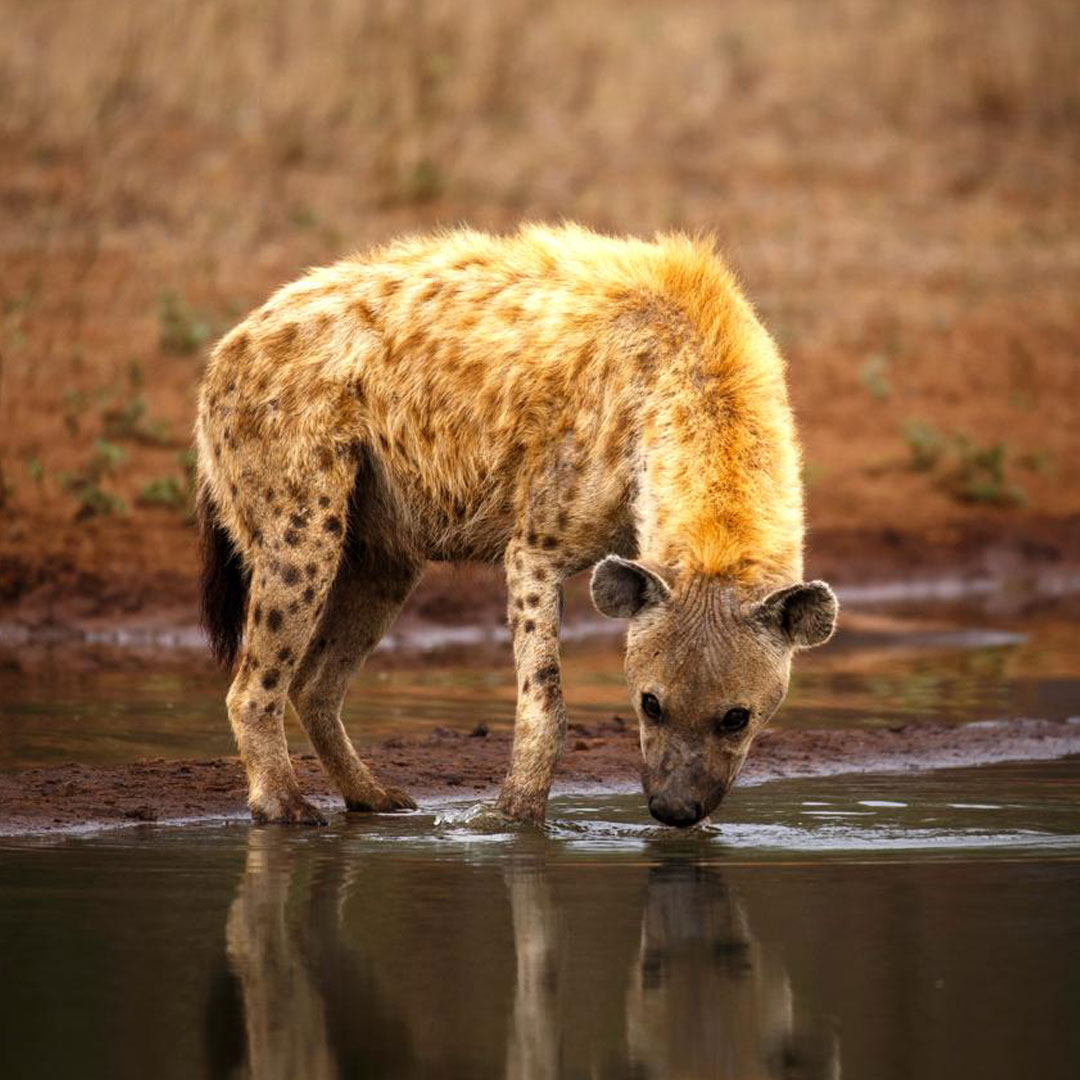
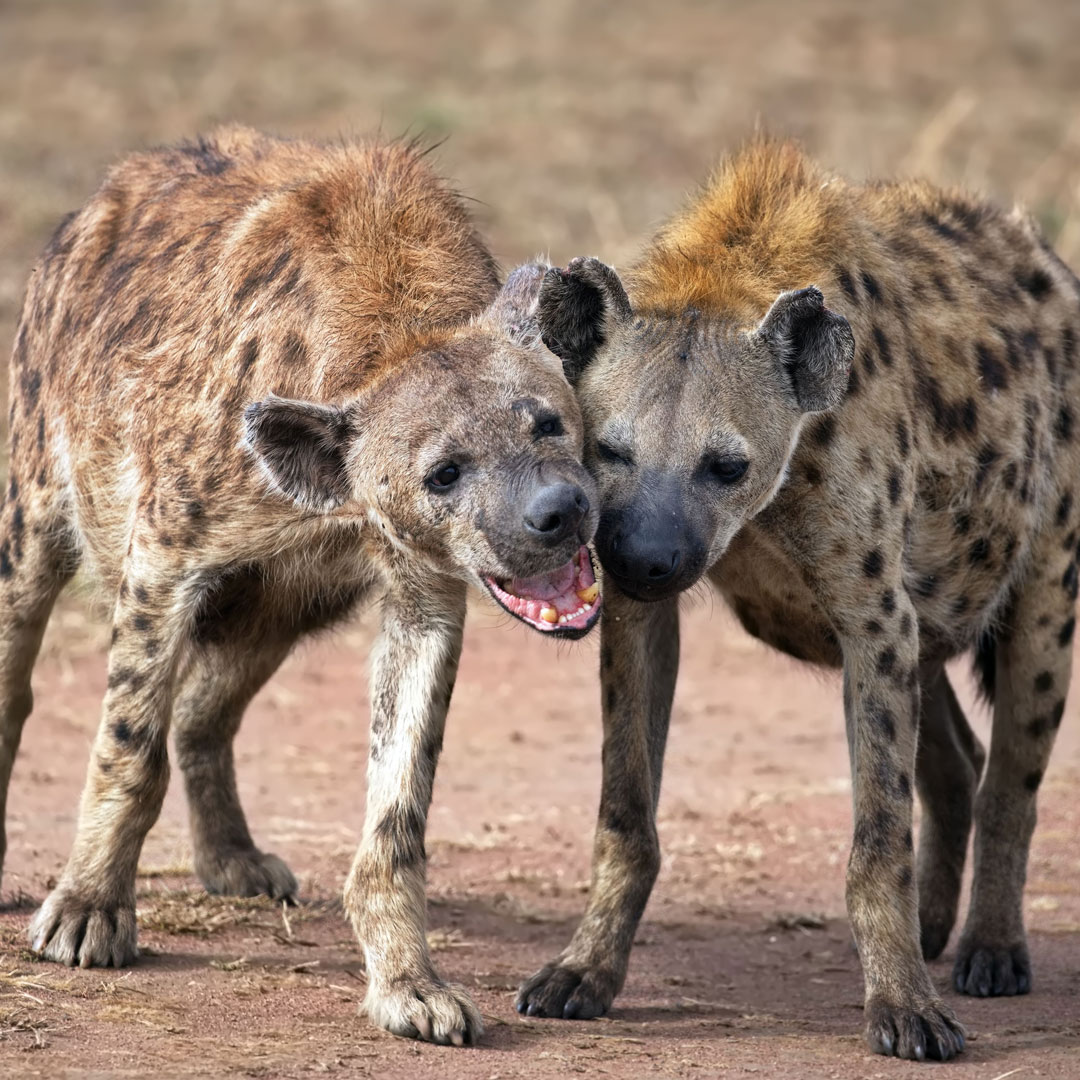
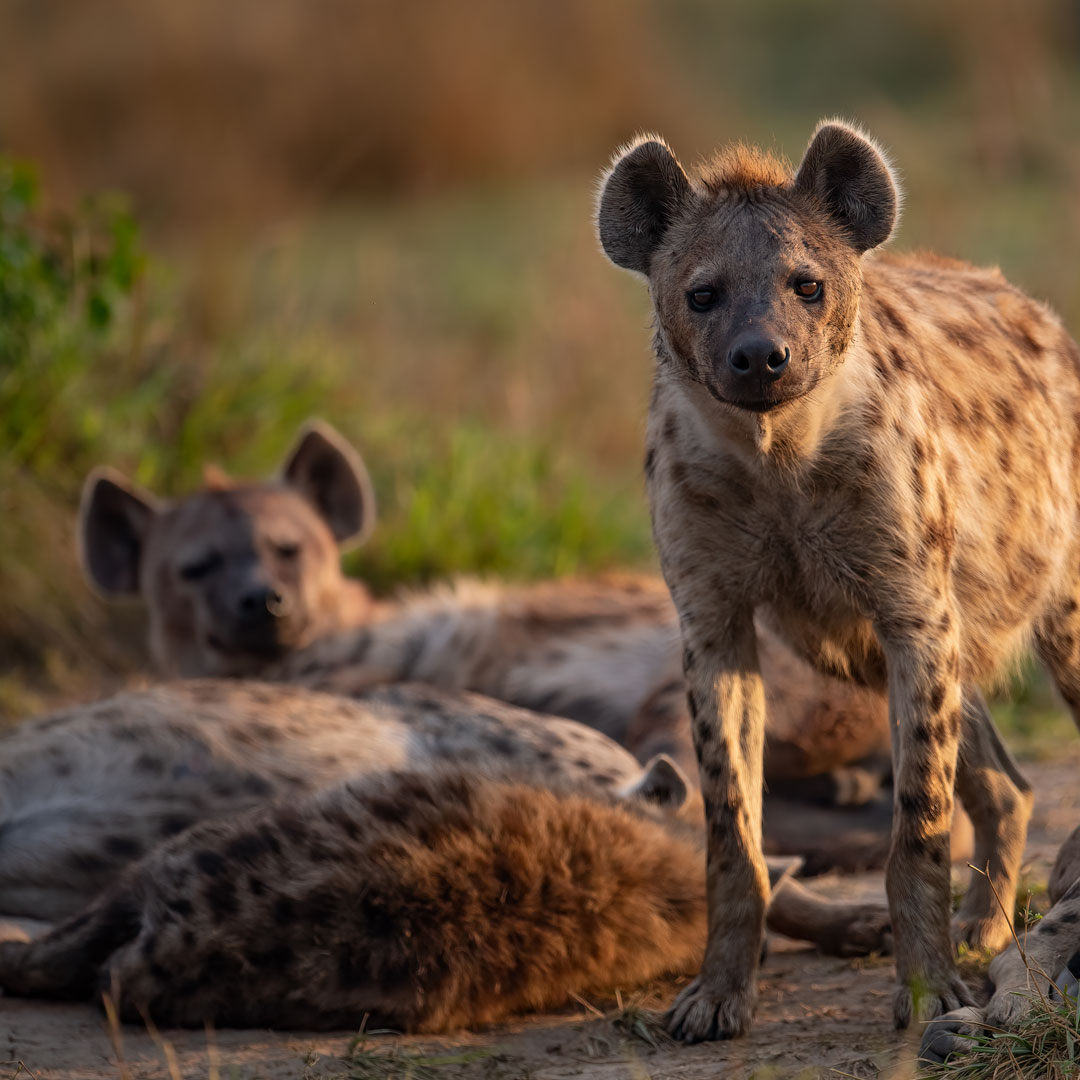
Kruger holds one of the largest spotted hyena populations in Southern Africa. Clan territories are well-established, and hyenas are regularly seen near waterholes, at dawn along main roads, and following lion prides.
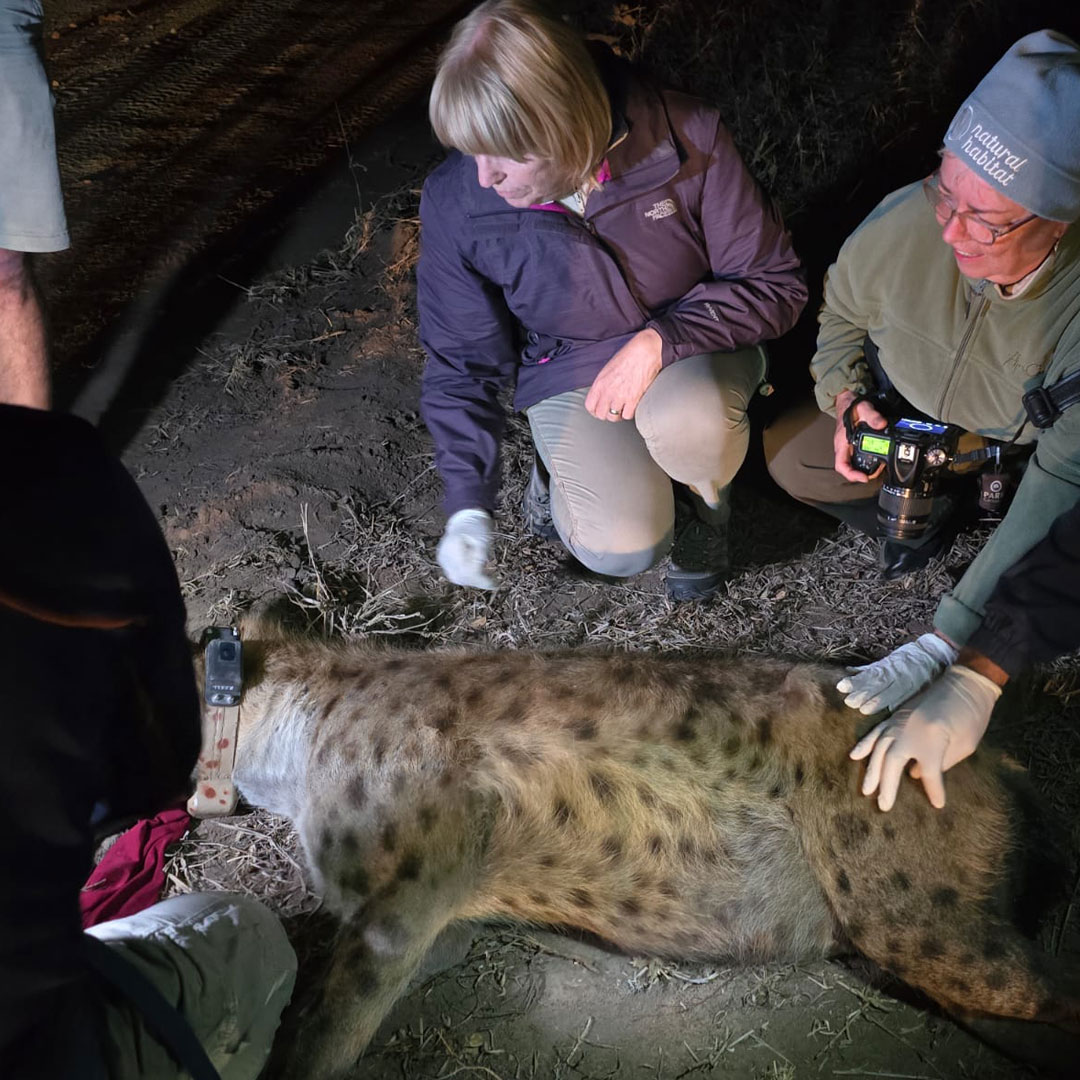
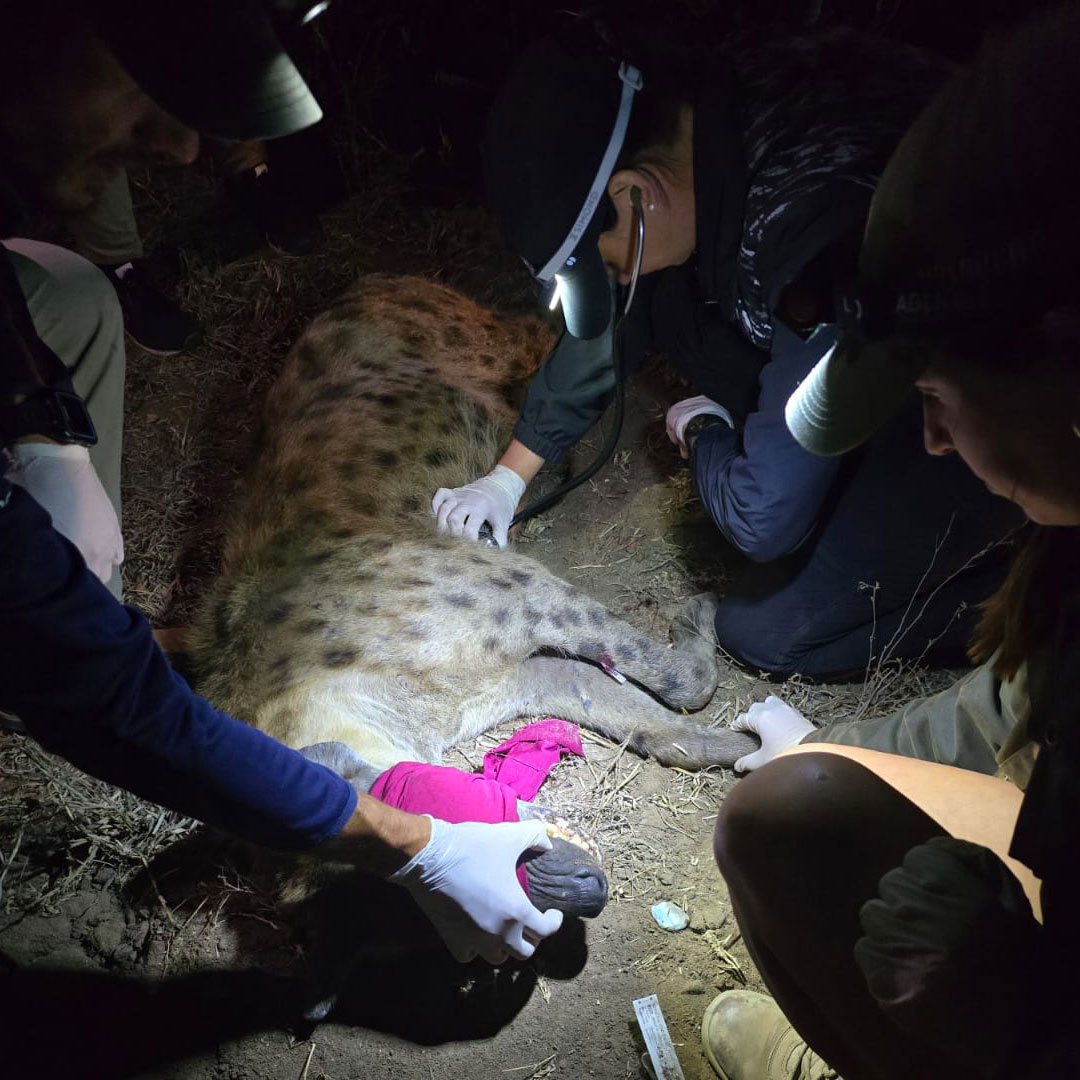
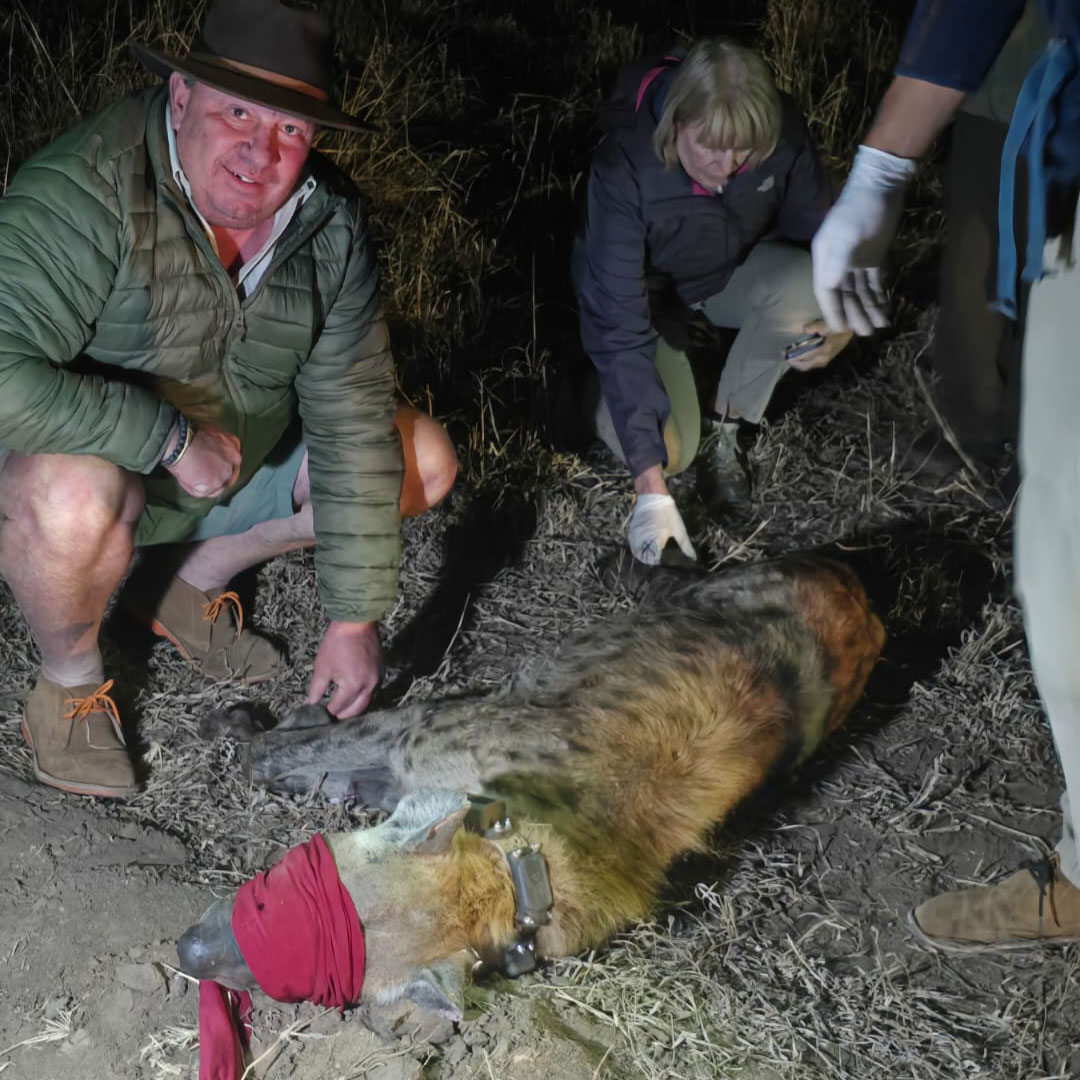
The private reserves bordering Kruger — Sabi Sands, Timbavati, and Klaserie — offer a significant advantage: night drives. Spotted hyenas are most active between dusk and dawn, and the ability to track them after dark dramatically increases both sighting frequency and quality. For conservation-focused itineraries, these private reserves also offer access to genuine fieldwork alongside Kruger ecosystem research teams.
Kgalagadi Transfrontier Park (South Africa and Botswana)
If you want to see brown hyenas in the wild, Kgalagadi is the standout destination in Africa. The arid, open landscape of the Kalahari makes spotting easier than in dense bush, and the park holds a healthy brown hyena population.
The best sightings typically happen in the early morning or late evening. Night drives in the private camps along the Auob and Nossob riverbeds have produced some of the best brown hyena encounters in the world. Spotted hyenas are also present here, making Kgalagadi one of the few places where you might encounter two hyena species on the same trip.
Hluhluwe-iMfolozi and Hwange
Hluhluwe-iMfolozi (South Africa) — One of the oldest protected areas in Africa, this park in KwaZulu-Natal holds a good density of spotted hyenas. Sightings are consistent, particularly in the more open southern section around iMfolozi.
Hwange National Park (Zimbabwe) — One of Africa’s great elephant parks, but its hyena population is equally impressive. Large spotted hyena clans congregate around the park’s famous waterholes, particularly during the dry season. Night drives at the private concessions around Hwange — including Linkwasha and Davison’s — offer reliable hyena encounters.
Masai Mara (Kenya) and Serengeti (Tanzania)
For pure volume of spotted hyena activity, the Masai Mara and Serengeti ecosystem is unmatched. During the wildebeest migration — roughly July to October in the Mara, and year-round in different parts of the Serengeti — hyena clan activity intensifies as food availability surges.
Research on spotted hyena social behaviour has been conducted in the Serengeti for decades, and the population here is among the most studied on earth. Clan territories are large, inter-clan conflict is visible, and the relationship with lions is a constant, observable dynamic.
Chobe and the Okavango Delta (Botswana)
Spotted hyenas are active across the Chobe and Okavango ecosystem, and elephant mortality in this region provides a consistent food source that draws hyenas in large numbers. Hyenas at elephant carcasses are a distinctive and dramatic Botswana sighting.
The delta’s seasonal flooding changes hyena movement patterns, and the dry season (May to October) concentrates game — and hyenas — around permanent water sources. Moremi Game Reserve and the private concessions around the delta offer excellent access.
Best Time to Visit and Responsible Viewing
Best time: Spotted hyenas are active year-round. The dry season (May to October in Southern and East Africa) provides the best viewing: lower vegetation, game concentrated at waterholes, and dusty open ground that makes tracking easier. Brown hyenas in Kgalagadi are best seen May through September. In East Africa, the wildebeest migration (July–October in the Mara) brings peak hyena clan activity.
Responsible viewing tips:
- Night drives are essential — most hyena activity happens after dark. Prioritise lodges that offer them.
- Do not bait or use recordings to attract hyenas. It disrupts natural behaviour.
- At den sites, give distance. Den entrances are where hyenas are most vulnerable to disturbance.
- Stay in the vehicle unless in a designated walking area with a qualified armed guide.
Hyena Itineraries with Ranger Buck Safaris
Ranger Buck Safaris builds hyena-focused itineraries across Southern Africa that combine wildlife viewing with real conservation fieldwork. Depending on the season and what is scheduled in the field, this may include assisting with GPS collar monitoring, camera trap checks, population survey work, or community engagement sessions.
We do not do staged encounters. Every itinerary is built around actual fieldwork schedules, and we are upfront about what is possible when. The viewing is the bonus — the conservation work is the point.
If you want to know what is coming up and where, reach out and we will tell you exactly what is on the ground.
Hyena Conservation Library
If you’re exploring hyena conservation, these guides will help you understand the challenges facing Africa’s most misunderstood predators — and what a real hands-on conservation experience involves.
- Hyena conservation efforts explained →
- How many hyenas are left in Africa? →
- Are hyenas endangered? →
- Why are hyenas important to the ecosystem? →
- Human–hyena conflict explained →
- Human–hyena conflict solutions →
- Spotted, striped and brown hyenas: what’s the difference? →
- Where to see hyenas in Africa →
- Is a hyena conservation experience ethical? →
- Hyena Conservation Experience →
get in touch with us
+27 83 653 5776
+27 83 653 5776 (WhatsApp)
info@rangerbucksafaris.com
16 Lourie Close, Meyersdal Eco Estate,
Alberton, Gauteng
16 Lourie Close, Meyersdal Eco Estate, Alberton, Gauteng

Website by Keeden Marketing | 2024
