
Plan a trip
Hyena Myths vs Facts
Last updated: April 2026
Most of what people “know” about hyenas is wrong. They are not cowardly. They are not dirty. They are not stupid. And they are not hermaphrodites. These myths have followed hyenas for centuries — and they continue to cost the species its life.
Here is what the science actually says.
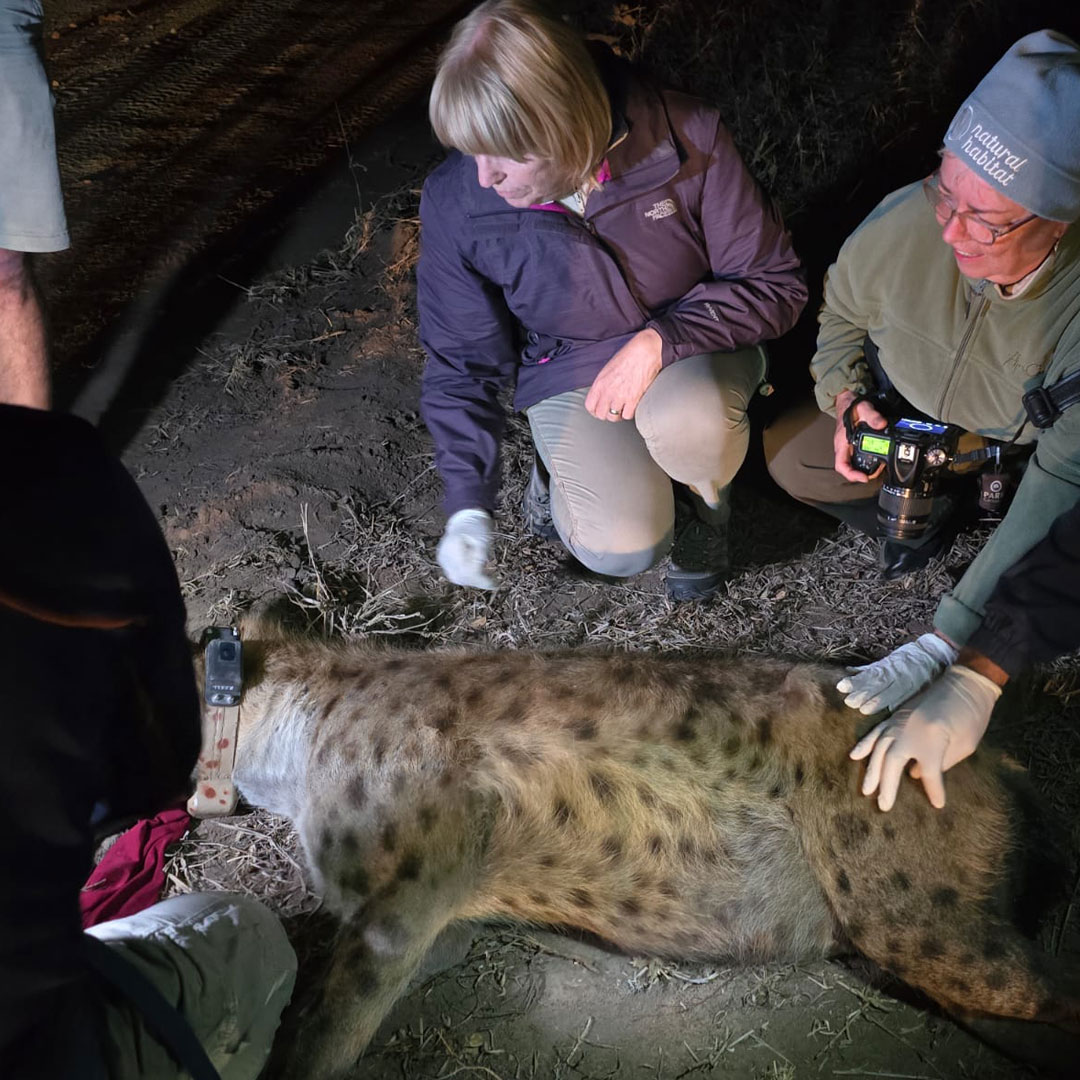
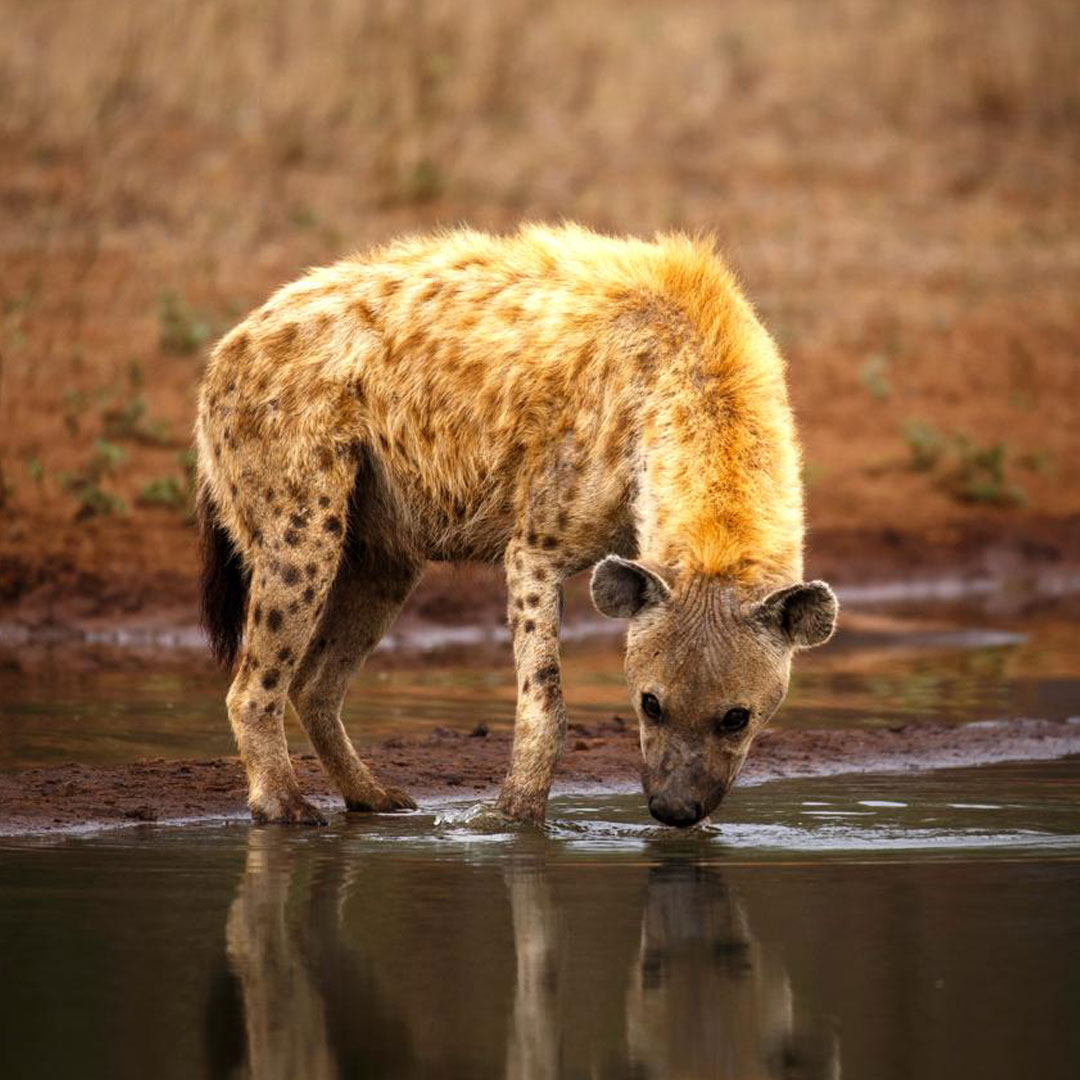
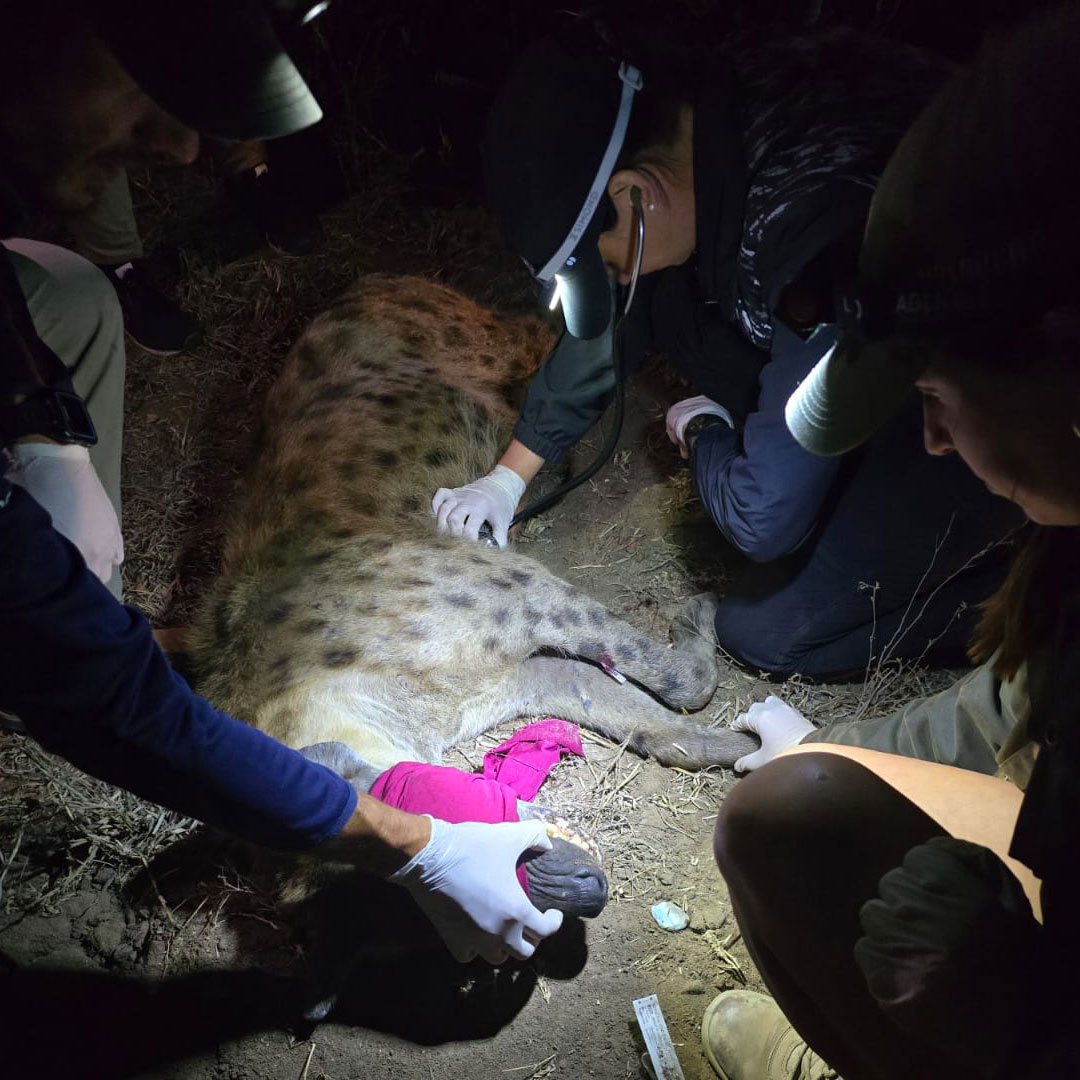
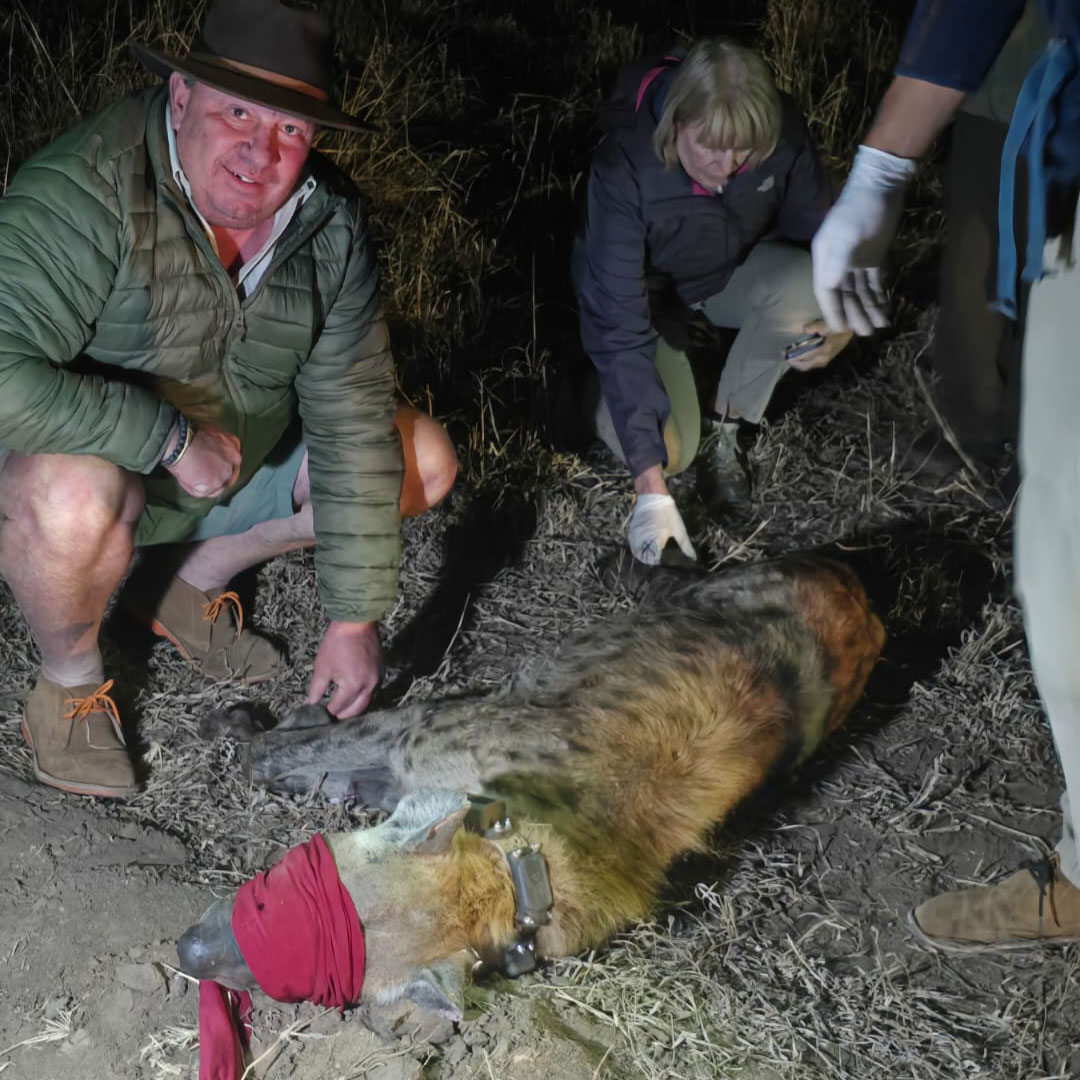
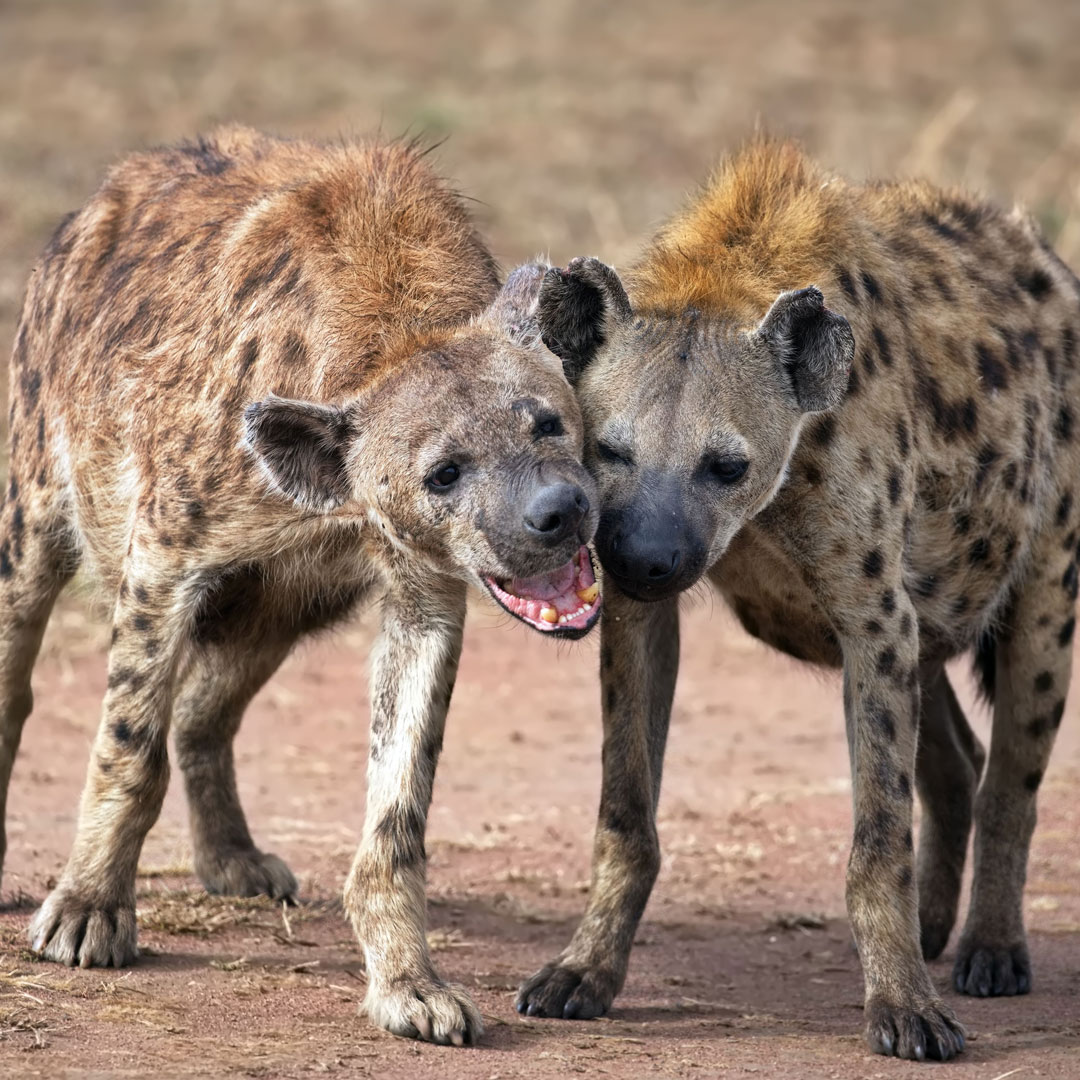
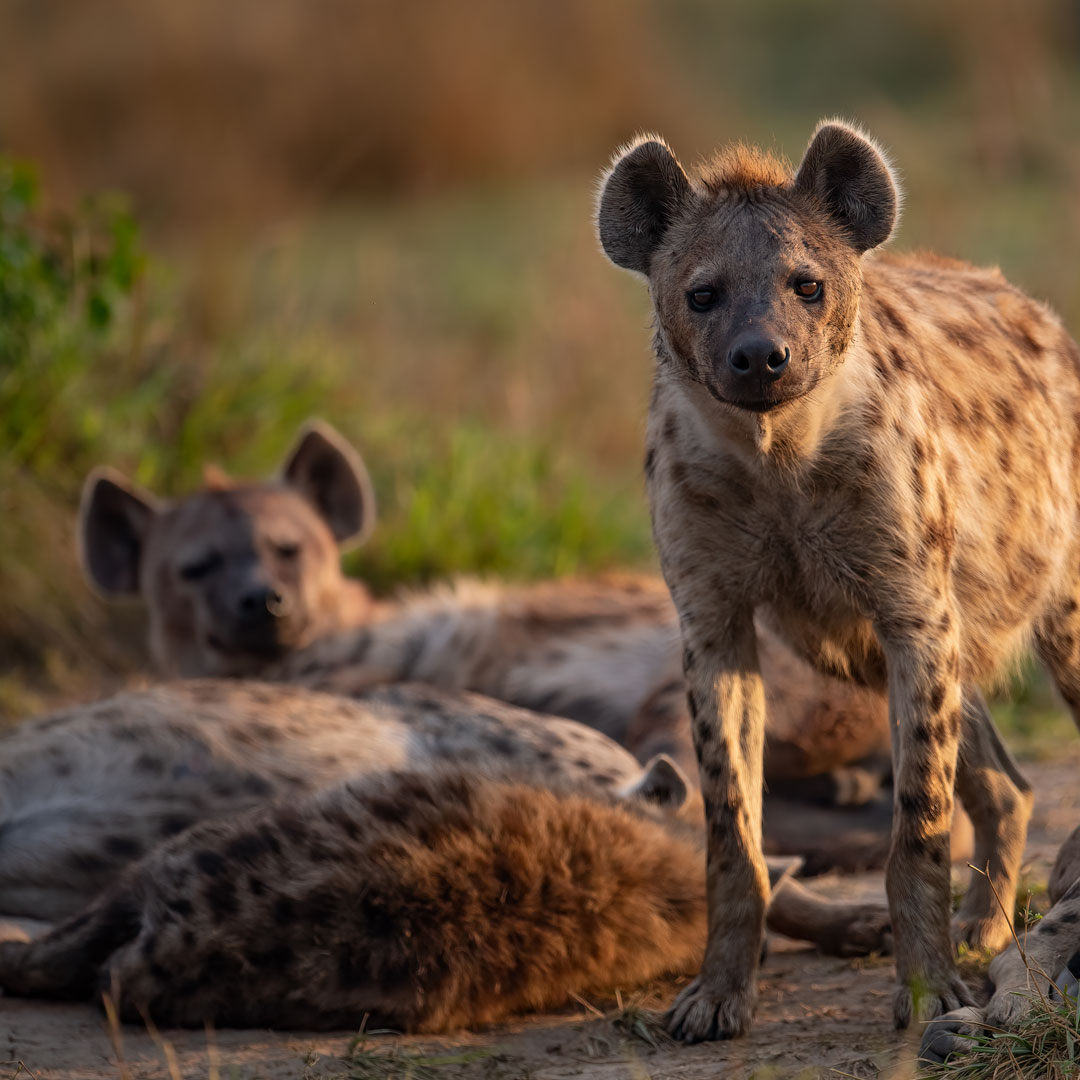
MYTH: Hyenas Are Cowardly Scavengers
The myth: A pack of hyenas lurking on the fringes, waiting for a lion to finish before moving in. Cowardly. Opportunistic. Undeserving of respect.
The fact: Spotted hyenas are among the most effective predators on the continent. Research across multiple ecosystems shows that 60–95% of a spotted hyena’s diet is prey they hunted themselves. They hunt wildebeest, zebra and buffalo in coordinated groups, pursuing prey over distances that would exhaust most predators.
It is actually lions who frequently steal kills from hyenas. The “scavenger” framing has it backwards.
MYTH: Hyenas Are Dirty and Disease-Ridden
The myth: Hyenas eat rotting carcasses, bones, and the parts of an animal that nothing else will touch. Surely that makes them vectors of disease?
The fact: Hyenas have some of the most acidic stomach environments of any large carnivore. Their digestive system destroys pathogens — including anthrax, distemper, and tuberculosis — that would be lethal to other scavengers. They are not disease carriers. They are the ecosystem’s disease control system. By consuming infected carcasses rapidly and completely, they prevent pathogens from spreading through the environment.
MYTH: Hyenas Are Stupid
The myth: They are loud, ungainly, and not as “magnificent” as lions or leopards. The assumption follows that they must be less intelligent.
The fact: Comparative cognitive testing tells a different story. Spotted hyenas outperform lions and leopards on problem-solving tasks. In some tests, they outperform chimpanzees. They live in complex matriarchal societies where social relationships, rank, and coalition management require constant, sophisticated processing. Researchers place spotted hyenas’ social intelligence in the same bracket as primates.
MYTH: Hyenas Are Hermaphrodites
The myth: Female spotted hyenas have genitalia that looks male. This has fuelled centuries of confusion and myth — from Aristotle to medieval bestiaries.
The fact: Female spotted hyenas have a pseudo-penis — an enlarged clitoris — caused by high androgen exposure in the womb. It is the same organ, masculinised by hormones. They are not hermaphrodites. There are clear biological sexes, but the female anatomy is genuinely unusual. It is one of the most remarkable reproductive anatomies in the mammal world. But it is understood. The myth is not.
MYTH: Lions Are the Dominant Predator and Hyenas Just Follow
The myth: In every nature documentary, lions rule. Hyenas are the supporting cast.
The fact: In many African ecosystems, spotted hyenas consume more biomass annually than lions do. They are the dominant predator by weight of prey killed and consumed. The relationship is one of competition, not deference. Hyenas regularly displace lions from kills when they outnumber them. The dynamic depends entirely on group size and context — not on a fixed hierarchy.
MYTH: Hyenas Are a Threat to Humans
The myth: Hyenas are dangerous, unpredictable, and should be feared.
The fact: Wild, healthy hyenas rarely attack adult humans. They are naturally cautious of people and typically avoid contact. Documented attacks almost always involve food-conditioned animals near human settlements, or extremely unusual circumstances. The risk is real in specific contexts — but the idea of hyenas as a general human threat is not supported by the evidence.
Why These Myths Matter
This is not an academic exercise. The myths cost hyenas their lives. Hyenas are poisoned, snared, and shot across Africa. A significant portion of that persecution is driven by misunderstanding — fear of a disease-spreader that actually prevents disease; hatred of a scavenger that actually hunts; contempt for an animal that is, in cognitive terms, more sophisticated than the apex predator it is falsely cast beneath.
Correcting the myths is a conservation act. Every person who understands the truth is less likely to tolerate persecution — and more likely to support protection. That is why Ranger Buck Safaris puts accuracy at the centre of every hyena conservation experience we offer.
Hyena Conservation Library
Everything you need to understand hyenas — their biology, behaviour, threats, and the work being done to protect them.
- Hyena conservation efforts explained →
- How many hyenas are left in Africa? →
- Are hyenas endangered? →
- Why are hyenas important to the ecosystem? →
- Human–hyena conflict explained →
- Human–hyena conflict solutions →
- Spotted, striped and brown hyenas →
- Where to see hyenas in Africa →
- Is a hyena conservation experience ethical? →
- What do hyenas eat? →
- Why do hyenas laugh? →
- Are hyenas scavengers or hunters? →
- How strong is a hyena’s bite? →
- Hyena intelligence & behaviour →
- Hyena myths vs facts →
- Hyena social structure & clans →
- Are hyenas dangerous? →
- How hyenas are monitored →
- Hyena threats: poisoning & snaring →
- Hyenas vs lions →
- Hyena reproduction & cubs →
- Hyena habitat & range →
- Hyenas in African culture & folklore →
- Hyena conservation organisations →
- Hyena Conservation Experience →
get in touch with us
+27 83 653 5776
+27 83 653 5776 (WhatsApp)
info@rangerbucksafaris.com
16 Lourie Close, Meyersdal Eco Estate,
Alberton, Gauteng
16 Lourie Close, Meyersdal Eco Estate, Alberton, Gauteng

Website by Keeden Marketing | 2024
