
Plan a trip
How Hyenas Are Monitored
Last updated: April 2026
You can’t protect what you can’t measure. Hyena conservation depends on data — and gathering that data in the field is a sophisticated, ongoing operation.
From GPS collars to faecal DNA, here is how researchers and conservation teams track hyenas and turn raw observations into protection decisions.
Why Monitoring Matters
Hyena populations are not static. They shift in response to prey availability, human pressure, land use changes, and clan dynamics. Monitoring provides the data that answers the questions that matter: Are population numbers stable, growing, or declining? Are hyenas crossing reserve boundaries into human-use land? Which areas are conflict hotspots? Is disease present?
Without this data, conservation is guesswork. With it, interventions can be targeted, evaluated, and adjusted.
GPS and VHF Collaring
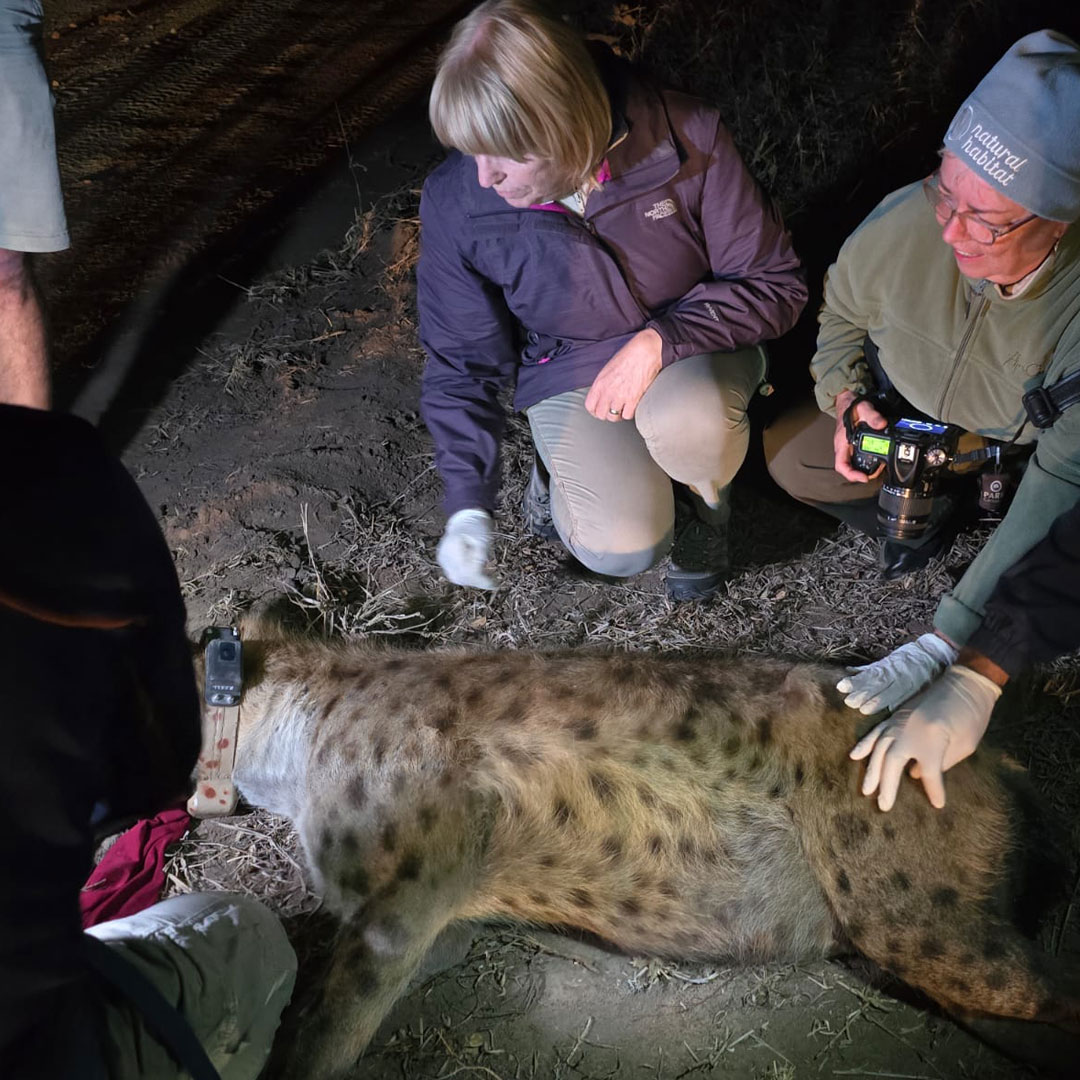
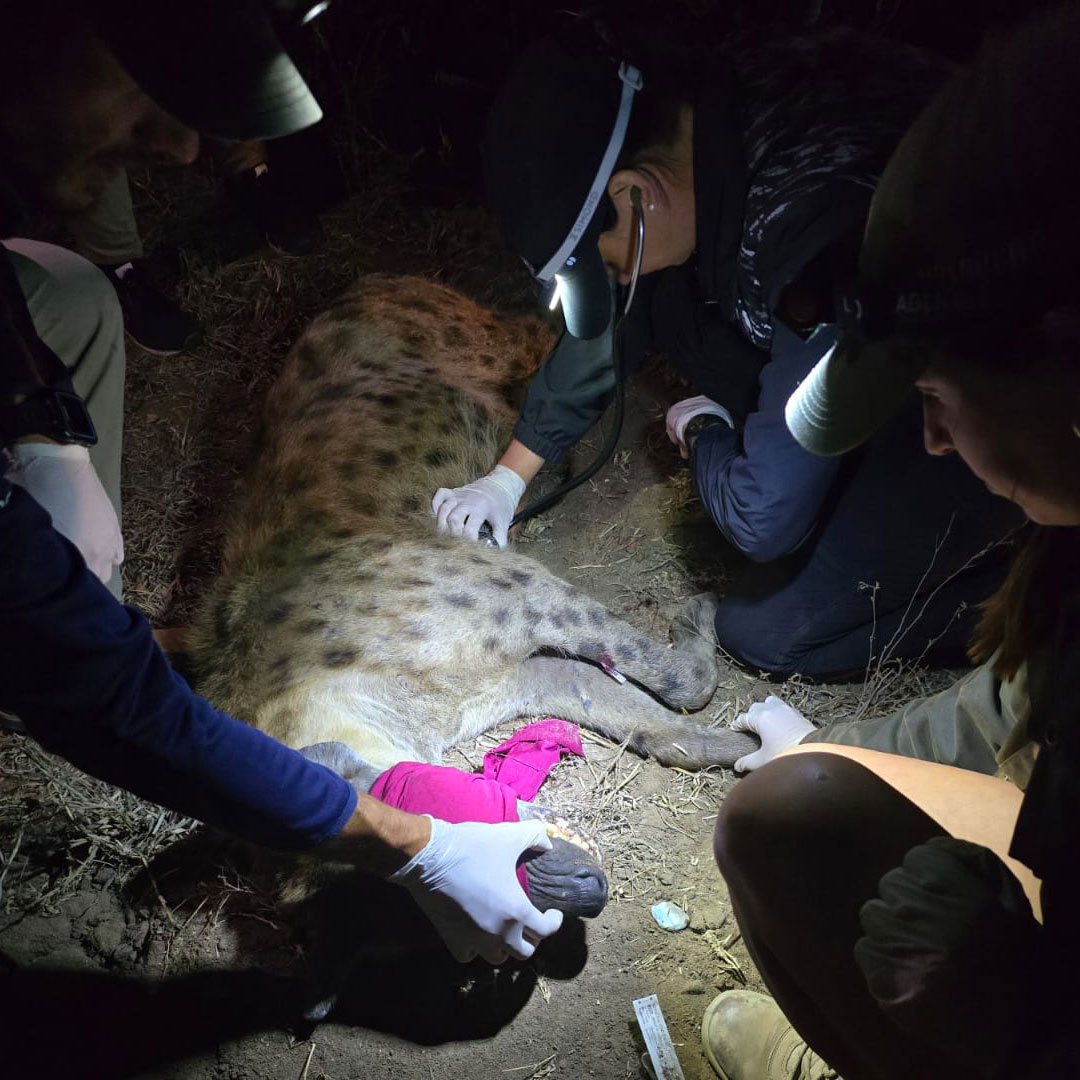
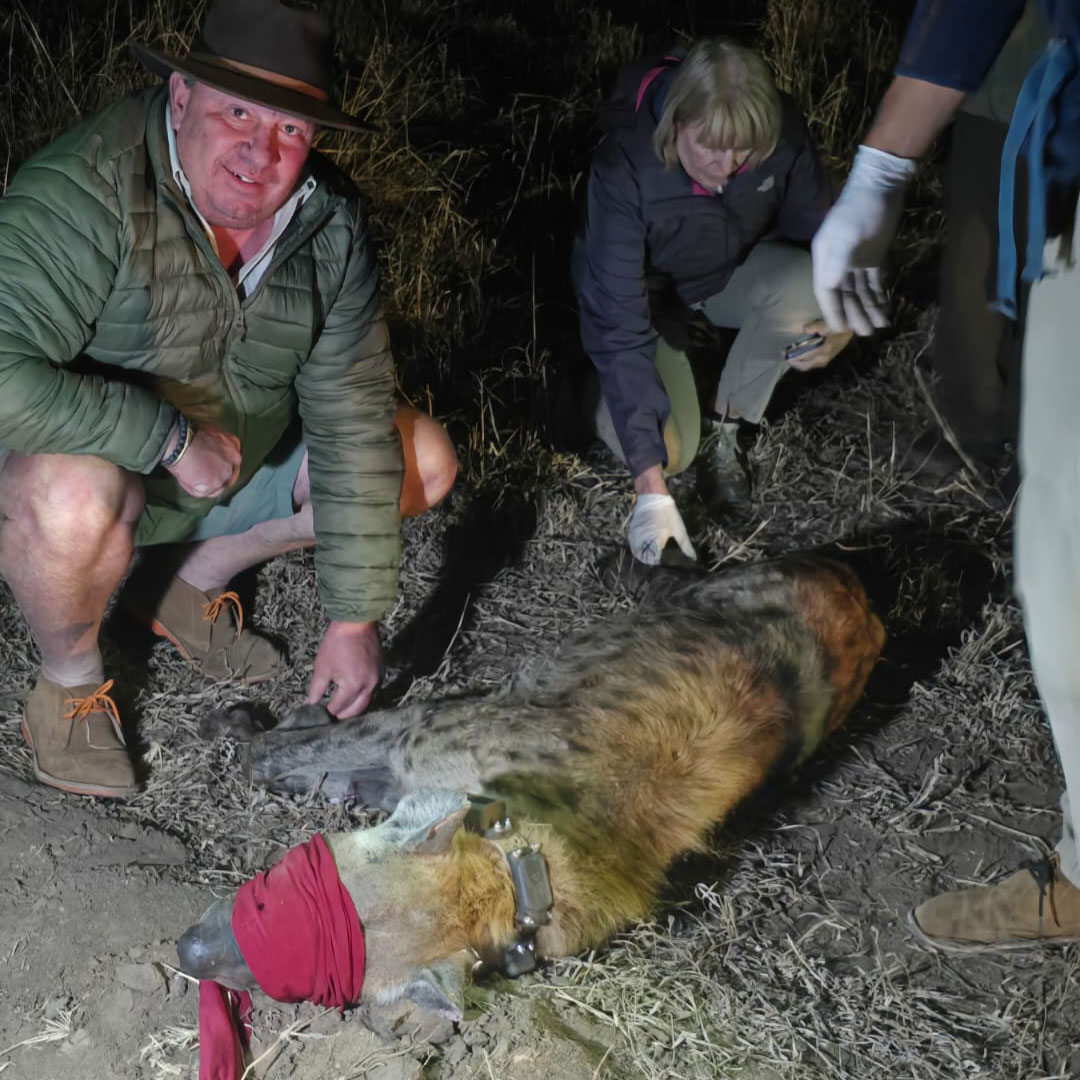
Fitting a GPS collar requires immobilising the animal — a veterinary procedure conducted by experienced conservation staff. Once collared, the hyena is tracked continuously. GPS collars log location at regular intervals and transmit data remotely, allowing researchers to map exact territory boundaries, identify overlap with communal farmland, track movement corridors between reserves, and monitor whether individual animals are moving normally or showing signs of injury.
Older VHF collars require a researcher with a receiver to locate the signal in the field. GPS has largely replaced VHF for primary tracking, but VHF remains useful for fine-scale den-site monitoring.
Camera Traps
Camera traps are one of the most cost-effective and non-invasive monitoring tools available. Positioned at den sites, water sources, territorial boundaries, and known movement corridors, a well-placed network can monitor a large area with minimal resources.
Camera traps reveal activity patterns, den activity (how many cubs are present, maternal behaviour), and individual identification — spotted hyenas have unique spot patterns, allowing researchers to identify individuals from photographs without needing to handle the animal.
Population Surveys
Understanding how many hyenas occupy an area requires systematic survey methods. Transect counts have researchers drive or walk set routes and record all hyena sightings, building a picture of relative density across the landscape. Call-up surveys play recordings of prey distress calls from a vehicle at night — hyenas attracted to the sound are counted within a defined radius.
Neither method is perfect, but combined they give reliable trend data over time. The direction of travel matters more than absolute precision.
Individual Identification
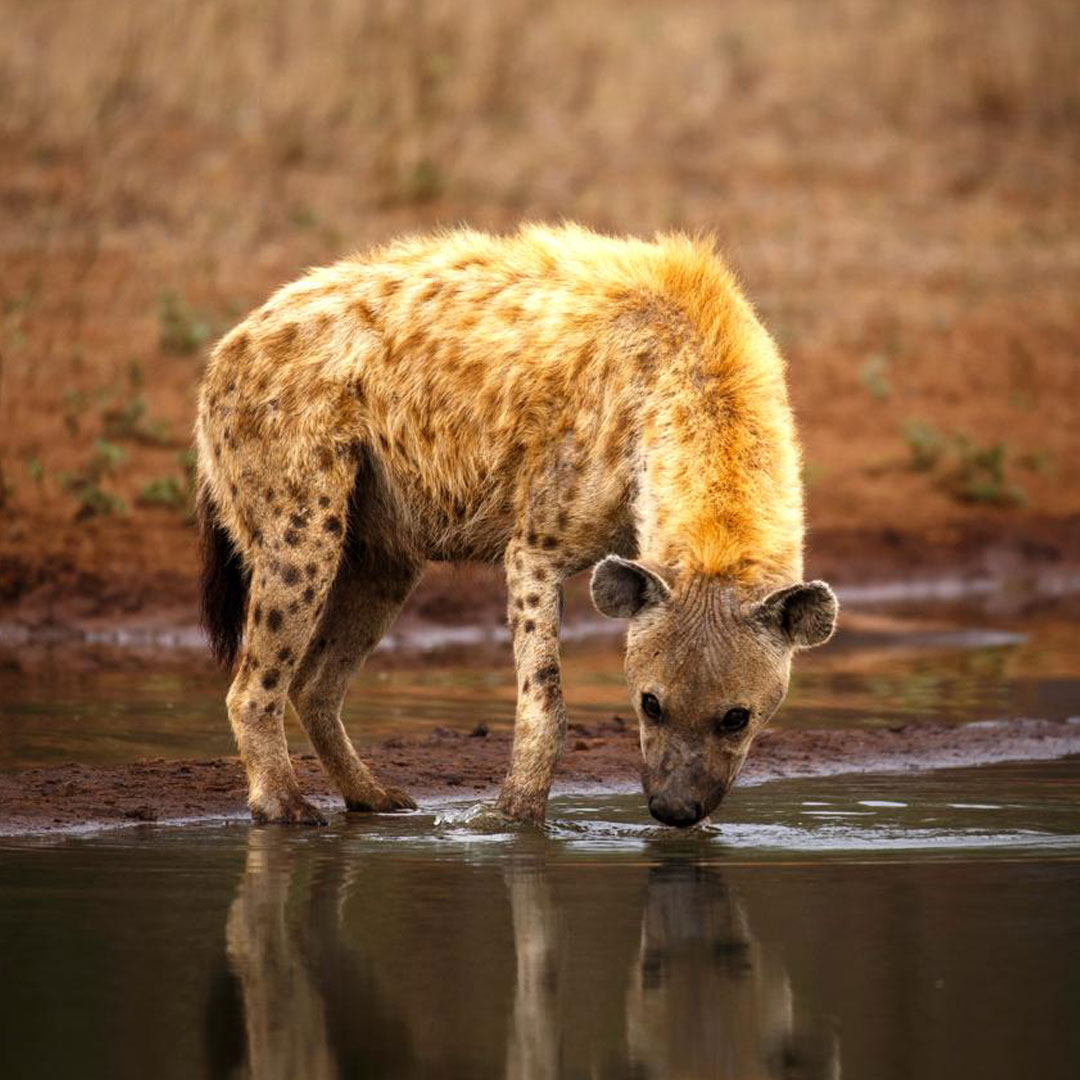
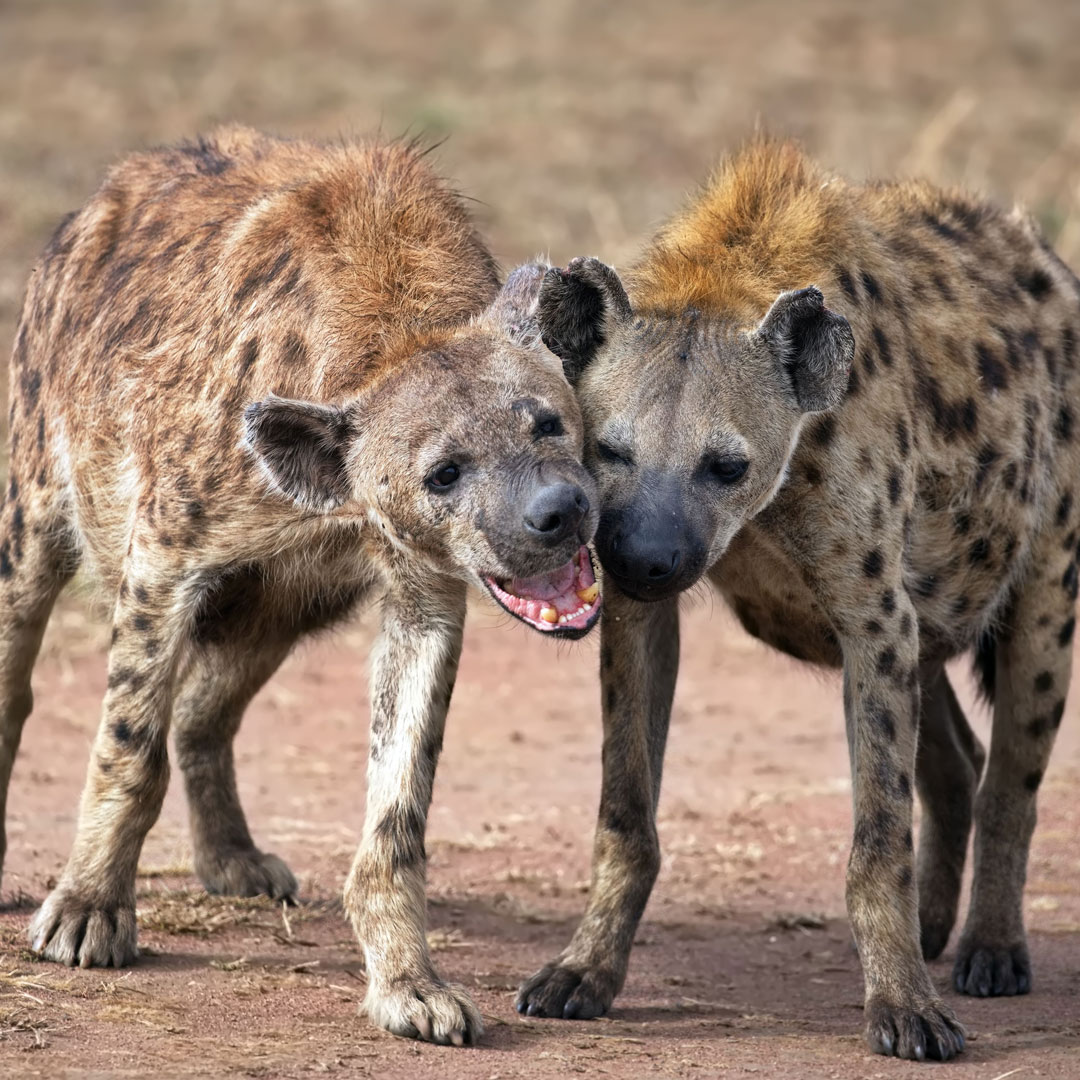
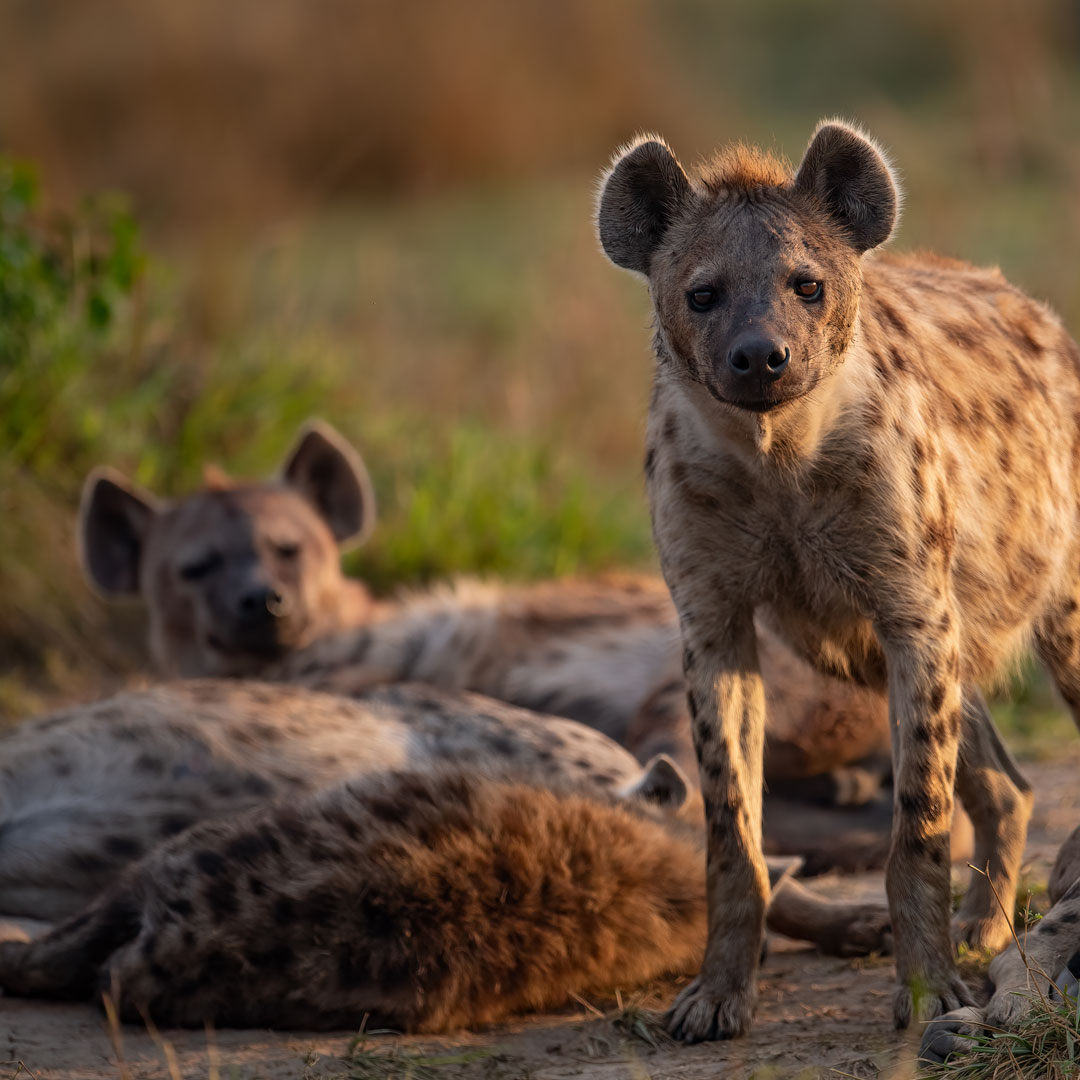
Spotted hyenas are individually identifiable by their spot patterns — as unique as a fingerprint. This makes long-term individual tracking possible without collaring every animal. The Masai Mara Hyena Project, running since 1988, has tracked identified individuals across multiple generations. Researchers know the life histories, clan memberships, and reproductive records of hundreds of individual hyenas. This long-term individual data is invaluable for understanding population dynamics and the effects of specific conservation interventions.
Faecal DNA and Disease Monitoring
Not every monitoring tool requires finding the animal. Faecal (scat) samples collected in the field yield a surprisingly rich dataset. From a single scat sample, researchers can determine individual genetic identity, sex and reproductive status, relatedness to other individuals, presence of parasites or pathogens, and diet composition.
Non-invasive sampling like this is especially valuable in populations where immobilisation is not feasible, or where disease monitoring needs to be conducted at scale without disturbing animals.
What Conservation Safari Guests Contribute
When you visit Ranger Buck Safaris, you are not just observing — you can contribute directly to the monitoring work. Camera trap checks, field observation recording, and hands-on data collection all form part of the guest experience. Our guides explain what the monitoring data shows and how it informs management decisions.
Your visit also funds the equipment, the staff time, and the ongoing monitoring programme. Conservation tourism is not a sideshow — it is a primary funding mechanism for work that would otherwise be underfunded or impossible.
Hyena Conservation Library
Everything you need to understand hyenas — their biology, behaviour, threats, and the work being done to protect them.
- Hyena conservation efforts explained →
- How many hyenas are left in Africa? →
- Are hyenas endangered? →
- Why are hyenas important to the ecosystem? →
- Human–hyena conflict explained →
- Human–hyena conflict solutions →
- Spotted, striped and brown hyenas →
- Where to see hyenas in Africa →
- Is a hyena conservation experience ethical? →
- What do hyenas eat? →
- Why do hyenas laugh? →
- Are hyenas scavengers or hunters? →
- How strong is a hyena’s bite? →
- Hyena intelligence & behaviour →
- Hyena myths vs facts →
- Hyena social structure & clans →
- Are hyenas dangerous? →
- How hyenas are monitored →
- Hyena threats: poisoning & snaring →
- Hyenas vs lions →
- Hyena reproduction & cubs →
- Hyena habitat & range →
- Hyenas in African culture & folklore →
- Hyena conservation organisations →
- Hyena Conservation Experience →
get in touch with us
+27 83 653 5776
+27 83 653 5776 (WhatsApp)
info@rangerbucksafaris.com
16 Lourie Close, Meyersdal Eco Estate,
Alberton, Gauteng
16 Lourie Close, Meyersdal Eco Estate, Alberton, Gauteng

Website by Keeden Marketing | 2024
