
Plan a trip
Hyena Habitat & Range
Last updated: April 2026
Hyenas are not one thing in one place. Three species occupy radically different landscapes across Africa and beyond — from Kalahari dunes to montane grasslands above 4,000 metres.
Understanding their habitat preferences explains why conservation challenges differ so sharply across regions, and why habitat fragmentation is one of the most serious long-term threats these animals face.
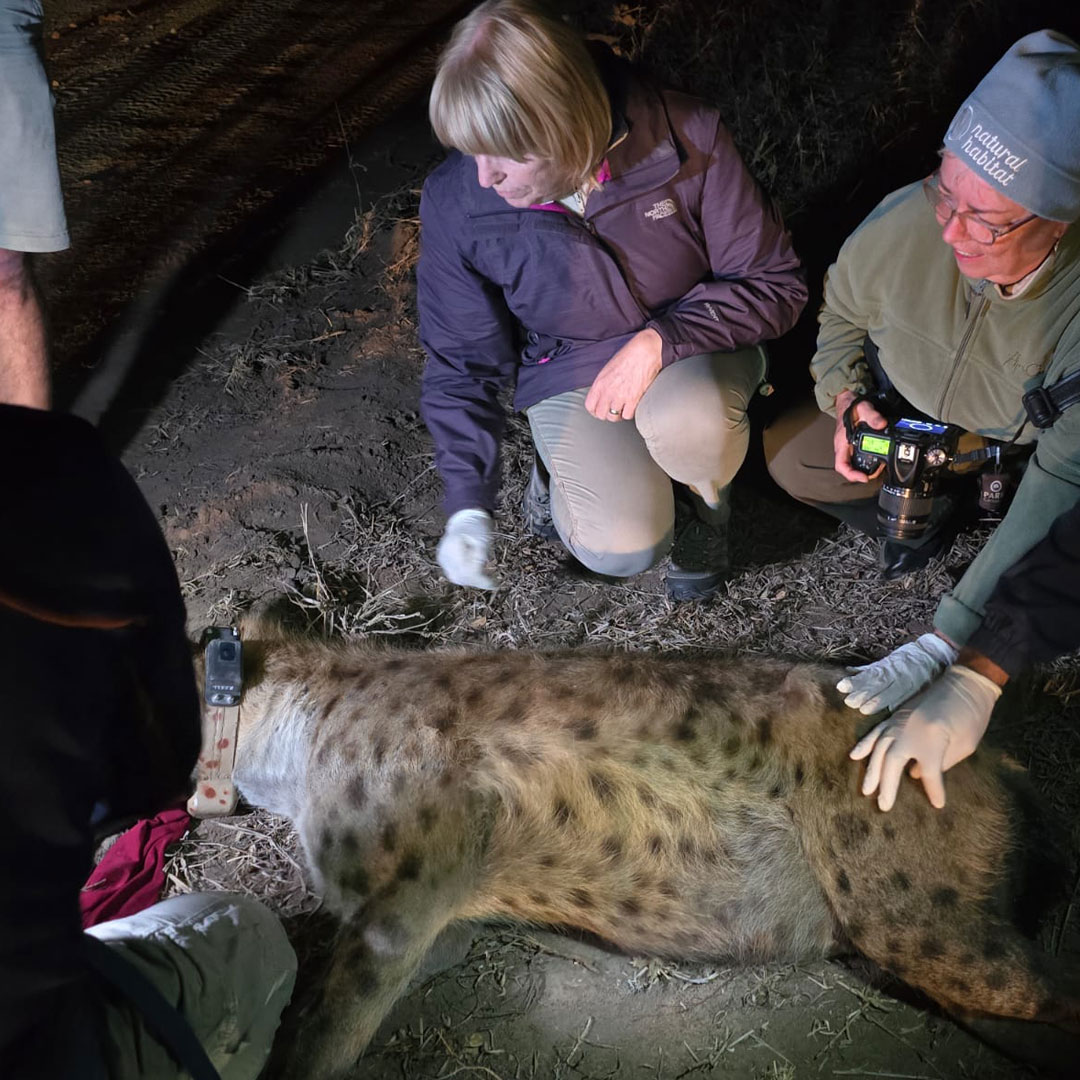
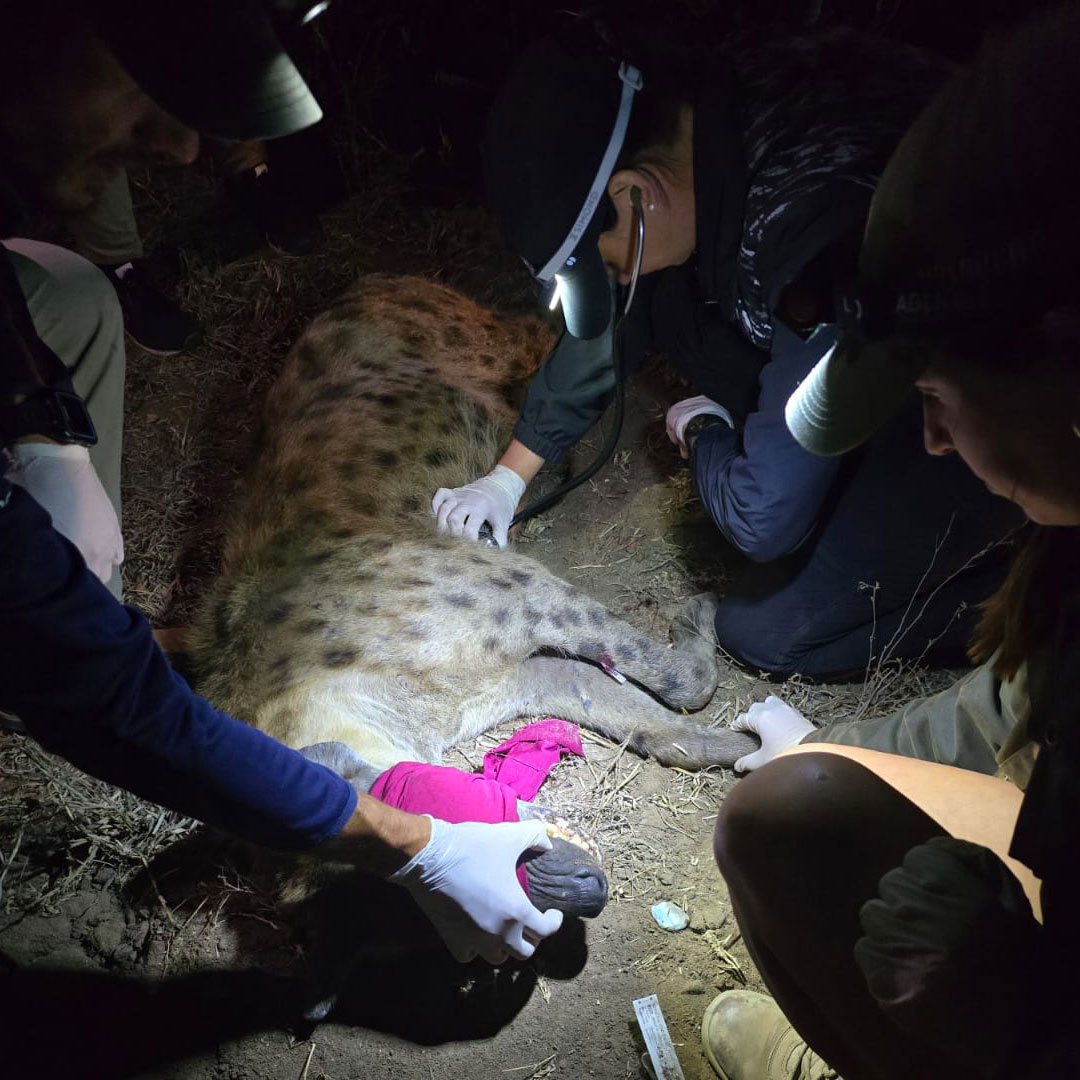
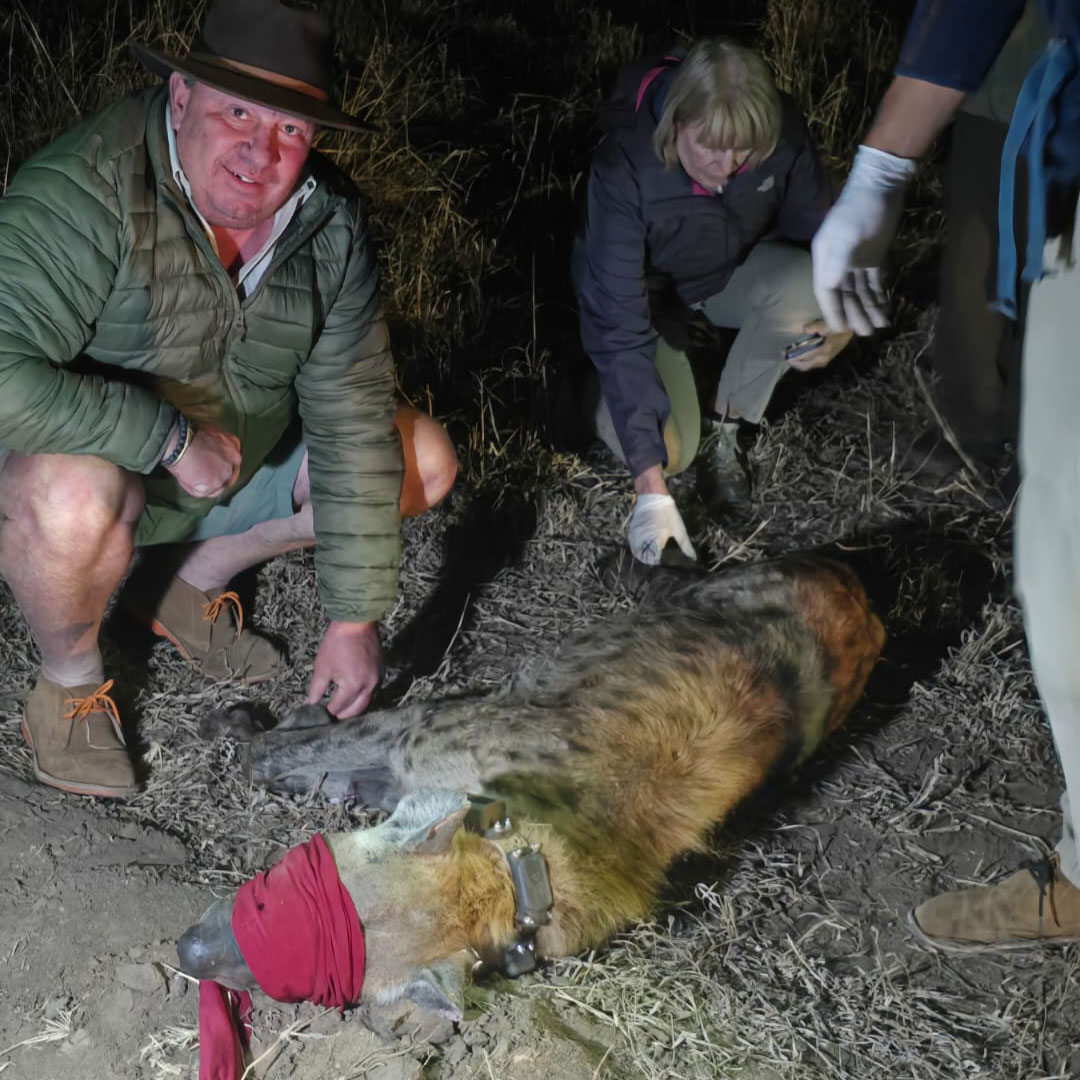
Where Hyenas Live — The Overview
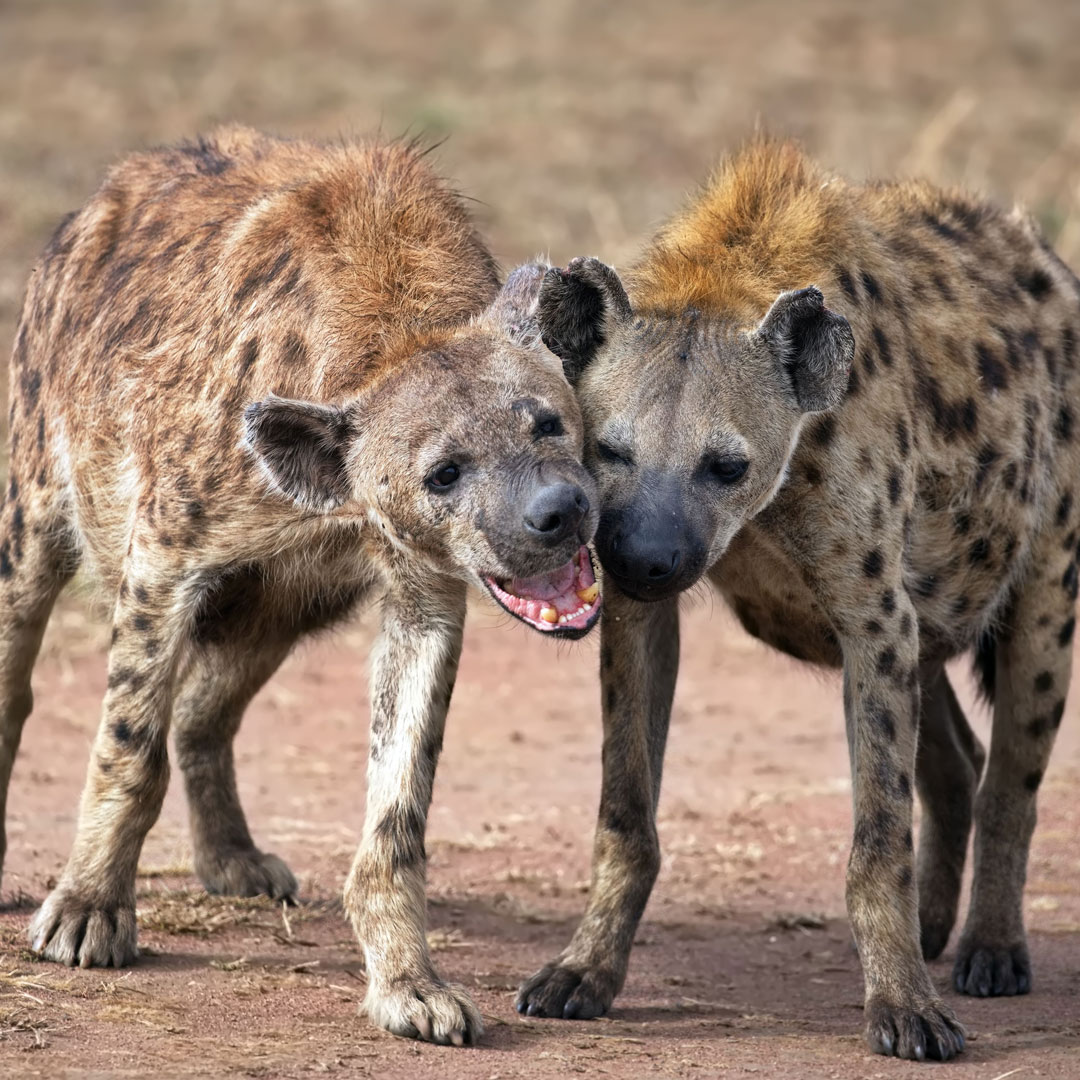
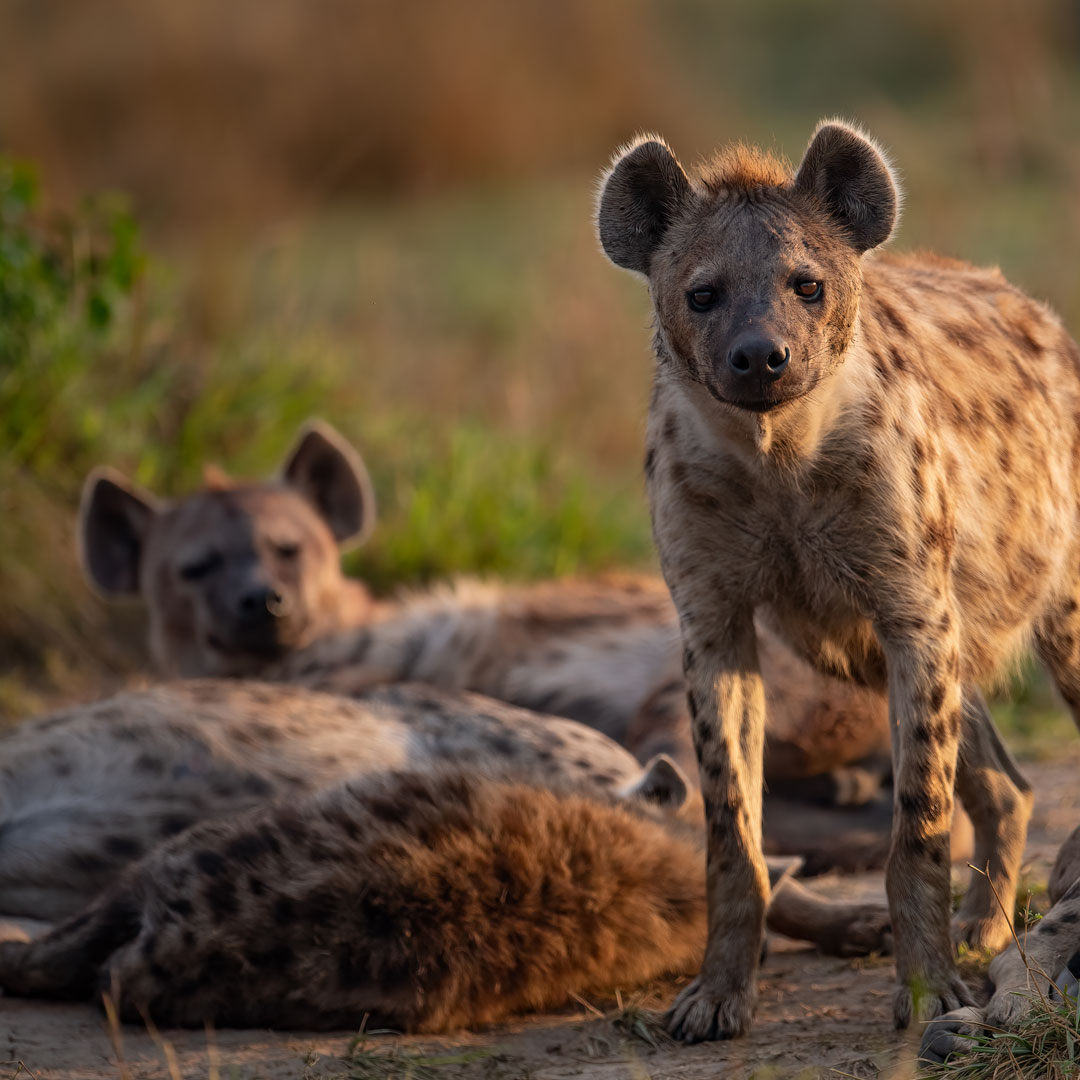
Spotted hyenas (Crocuta crocuta) have the widest natural range of any large African carnivore, occurring across sub-Saharan Africa from Senegal to Somalia and south through Eastern and Southern Africa. Striped hyenas (Hyaena hyaena) occupy a vast but more fragmented range: North Africa, the Sahel, East Africa, the Middle East, and across to South Asia as far as India. Brown hyenas (Parahyaena brunnea) are the most geographically restricted — almost entirely confined to Southern Africa, primarily the Kalahari, Namib, and Karoo biomes.
Spotted Hyena Habitat Preferences
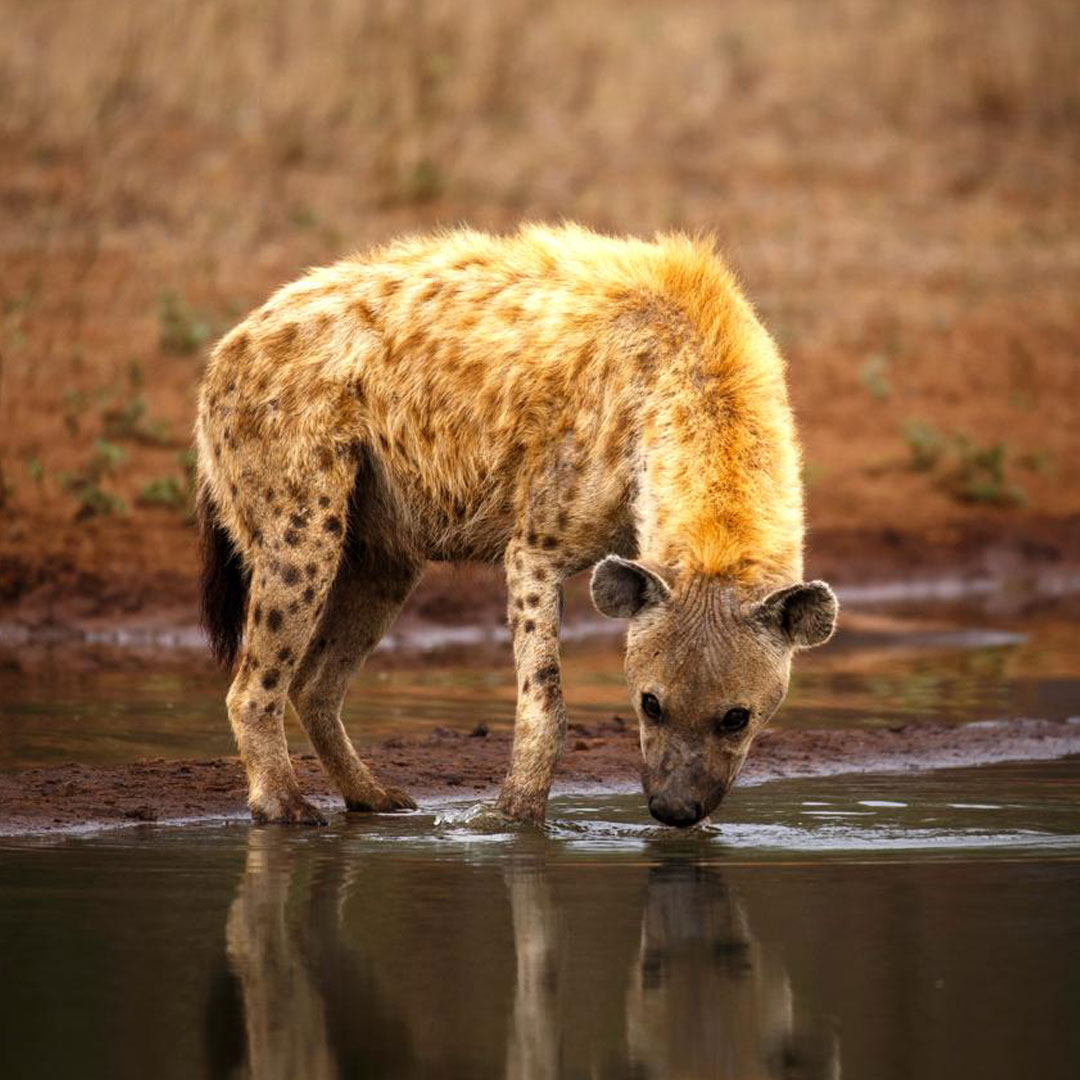
The spotted hyena is a generalist. It does well across a wide range of habitat types provided conditions are met: sufficient prey density, territory large enough to sustain a clan (typically 40 to 1,000 km² depending on prey availability), access to water, and adequate denning sites (rocky outcrops, aardvark burrows, or dense riverine vegetation).
Savanna and open woodland are optimal. But spotted hyenas also occur in semi-arid zones, montane grasslands, and forest edges. They are famously adaptable — more so than lions or leopards. This adaptability can work against them: because they persist near human settlements, they are perceived as a constant threat rather than a species needing protection.
Striped Hyena Habitat
Striped hyenas occupy arid and semi-arid landscapes that most large carnivores avoid — rocky hillsides, dry scrubland, thorn bush, and open steppe. They are solitary and largely nocturnal, which means they are rarely seen even where relatively common.
In parts of East Africa and the Middle East, striped hyenas occur close to human settlements, scavenging near villages and refuse sites. This proximity creates conflict — but also some cultural complexity. In Harar, Ethiopia, a centuries-old tradition of feeding wild striped hyenas at the city walls reflects a coexistence built on proximity rather than distance. Striped hyenas are Near Threatened by the IUCN, with range contraction in North Africa and the Middle East due to habitat loss and persecution.
Brown Hyena Habitat
Brown hyenas are the least-studied of the three and the most restricted in range. Their core habitat is the Kalahari and Namib of Botswana, Namibia, and South Africa — arid to hyper-arid landscapes with sparse vegetation. They also occur along the Skeleton Coast and southern Namibian coastline, scavenging marine carcasses.
Brown hyenas are predominantly solitary foragers, covering extraordinary distances nightly — up to 35–40 km — in search of carrion, eggs, small prey, and fruit. Social groups exist but are small (typically 4–14 individuals) and members forage independently. This makes them far harder to observe than spotted hyenas.
The Fragmentation Problem
Hyenas need space. Not just in terms of individual territory, but in terms of connectivity between populations. As agriculture, fencing, roads, and human settlement expand, hyena habitat is being broken into smaller and more isolated patches. Clans can no longer maintain viable territory sizes; dispersing young animals cannot reach other populations, creating genetic isolation; human–wildlife conflict increases as hyenas cross into livestock areas; and retaliatory killing removes animals from already-stressed local populations.
Landscape-level conservation — working across fences, farm boundaries, and country borders — is increasingly essential. Corridor conservation is not an abstract idea. For spotted hyenas, it is survival arithmetic.
Altitude Range
Spotted hyenas are not constrained to lowland savanna. They have been recorded above 4,000 metres on Mount Kilimanjaro and in the Ethiopian Highlands — a remarkable display of physiological adaptability. In Ethiopia’s Bale Mountains, spotted hyenas occur in afroalpine habitat alongside Ethiopian wolves, operating under ecological pressures completely different from savanna life.
This altitude range underscores the point that spotted hyenas are not a species on the edge of survival through any inherent biological fragility. They are failing in places where human pressure makes survival impossible — not because they are poorly adapted to Africa, but because they have run out of space within it.
What This Means for Where to See Them
Habitat shapes the safari experience. Different species in different landscapes create very different encounters: Kgalagadi Transfrontier Park for brown hyena sightings in open Kalahari; Kruger National Park and Greater Limpopo for reliable spotted hyena territory; the Okavango Delta and Chobe for exceptional spotted hyena sightings at night; the Masai Mara for one of the most studied and observable populations in the world. For specific location guidance, see our page on where to see hyenas in Africa.
Hyena Conservation Library
Everything you need to understand hyenas — their biology, behaviour, threats, and the work being done to protect them.
- Hyena conservation efforts explained →
- How many hyenas are left in Africa? →
- Are hyenas endangered? →
- Why are hyenas important to the ecosystem? →
- Human–hyena conflict explained →
- Human–hyena conflict solutions →
- Spotted, striped and brown hyenas →
- Where to see hyenas in Africa →
- Is a hyena conservation experience ethical? →
- What do hyenas eat? →
- Why do hyenas laugh? →
- Are hyenas scavengers or hunters? →
- How strong is a hyena’s bite? →
- Hyena intelligence & behaviour →
- Hyena myths vs facts →
- Hyena social structure & clans →
- Are hyenas dangerous? →
- How hyenas are monitored →
- Hyena threats: poisoning & snaring →
- Hyenas vs lions →
- Hyena vs leopard →
- Hyena vs wild dog →
- Hyena reproduction & cubs →
- Hyena habitat & range →
- Hyenas in African culture & folklore →
- Hyena conservation organisations →
- Hyena Conservation South Africa →
- Hyena Conservation Botswana →
- Hyena Conservation Zambia →
- Hyena Conservation Experience →
get in touch with us
+27 83 653 5776
+27 83 653 5776 (WhatsApp)
info@rangerbucksafaris.com
16 Lourie Close, Meyersdal Eco Estate,
Alberton, Gauteng
16 Lourie Close, Meyersdal Eco Estate, Alberton, Gauteng

Website by Keeden Marketing | 2024
