
Plan a trip
Spotted, Striped and Brown Hyenas: What’s the Difference?
Last updated: April 2026
Most people know hyenas as a single, somewhat misunderstood creature. In reality, there are four hyena species — and they are about as different from one another as a wolf is from a fox.
Three of the four are true hyenas: the spotted, the striped, and the brown. The fourth, the aardwolf, feeds almost exclusively on termites and is seldom discussed in conservation contexts. This page focuses on the three main species: what separates them biologically, where they live, how they behave, and why each faces distinct conservation pressures.
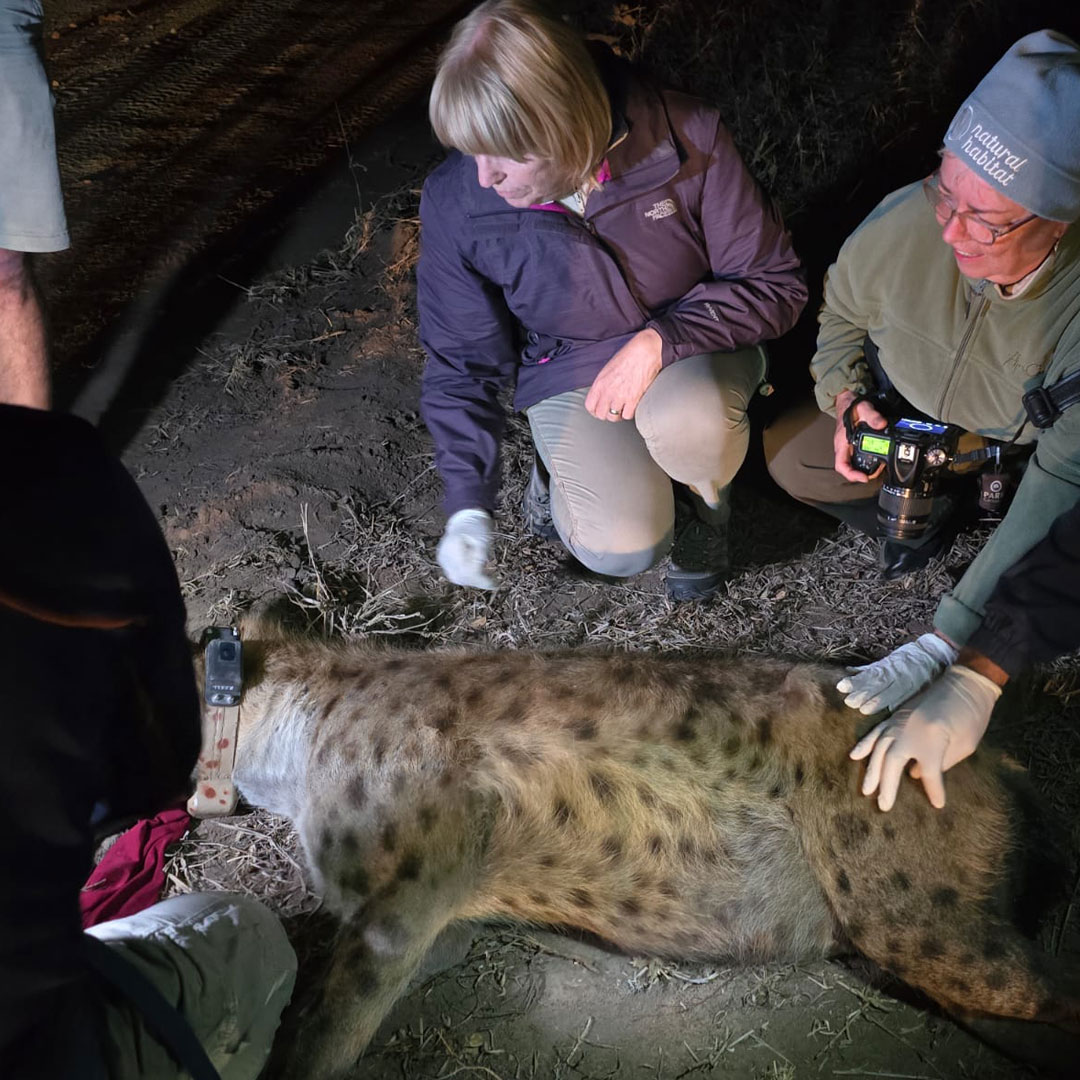
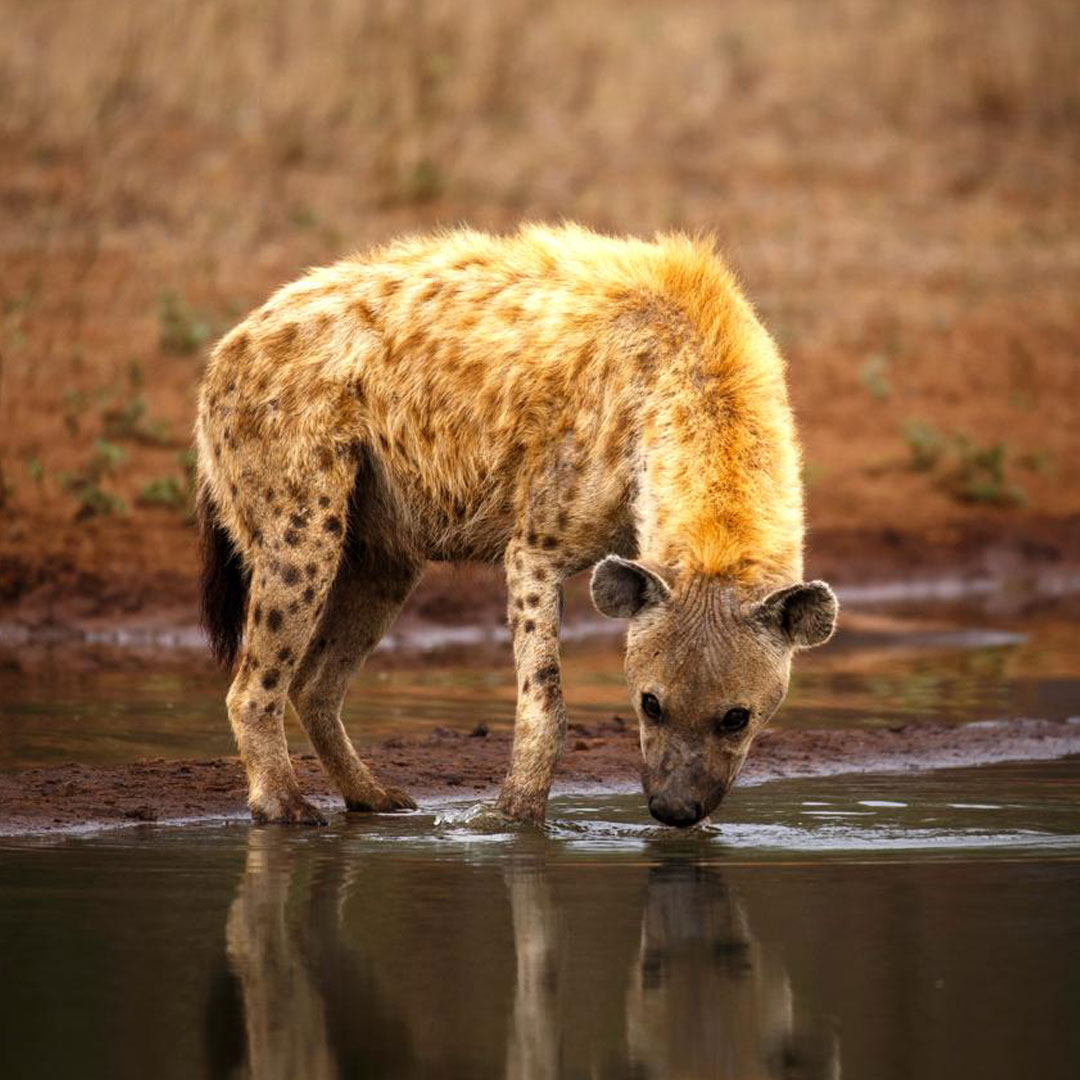
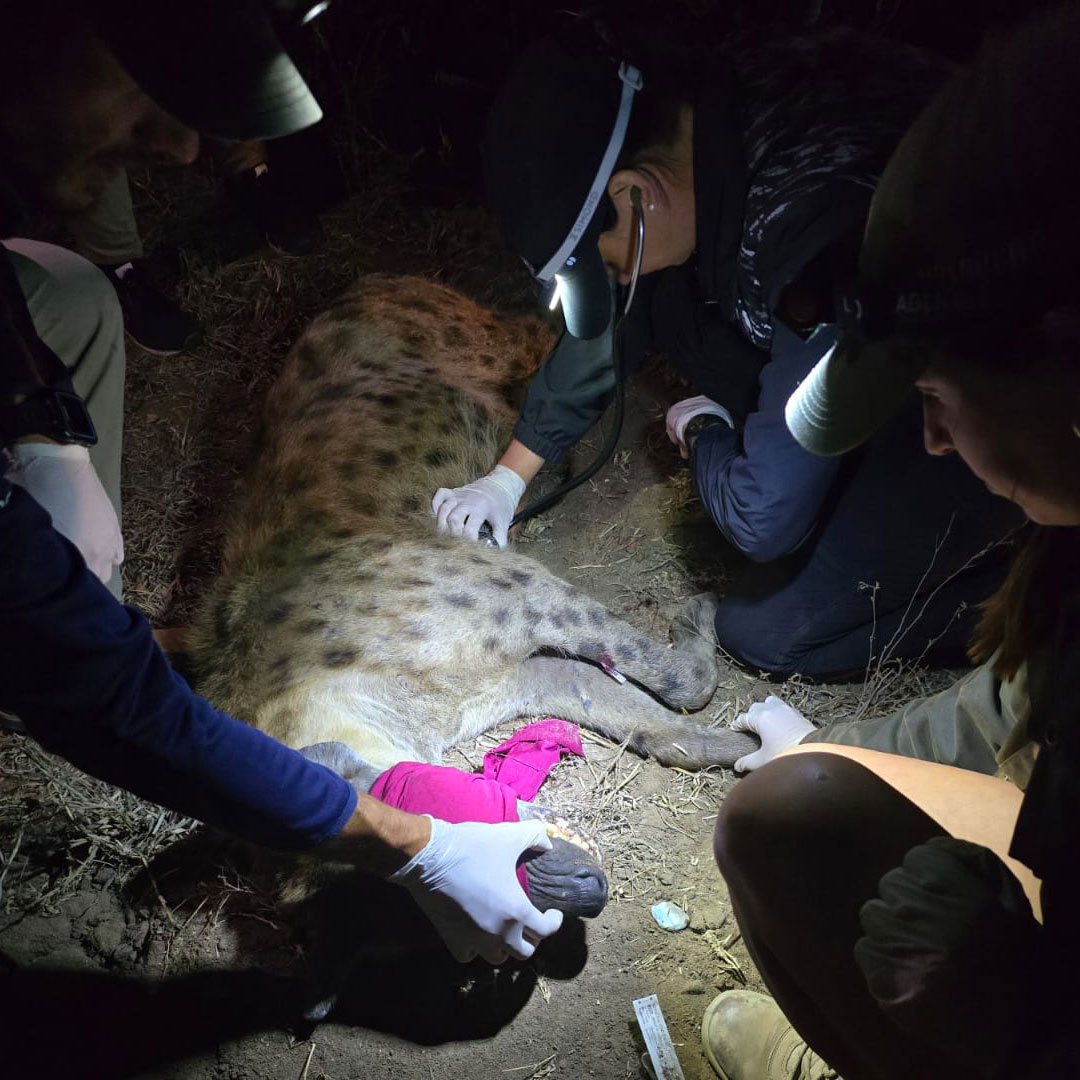
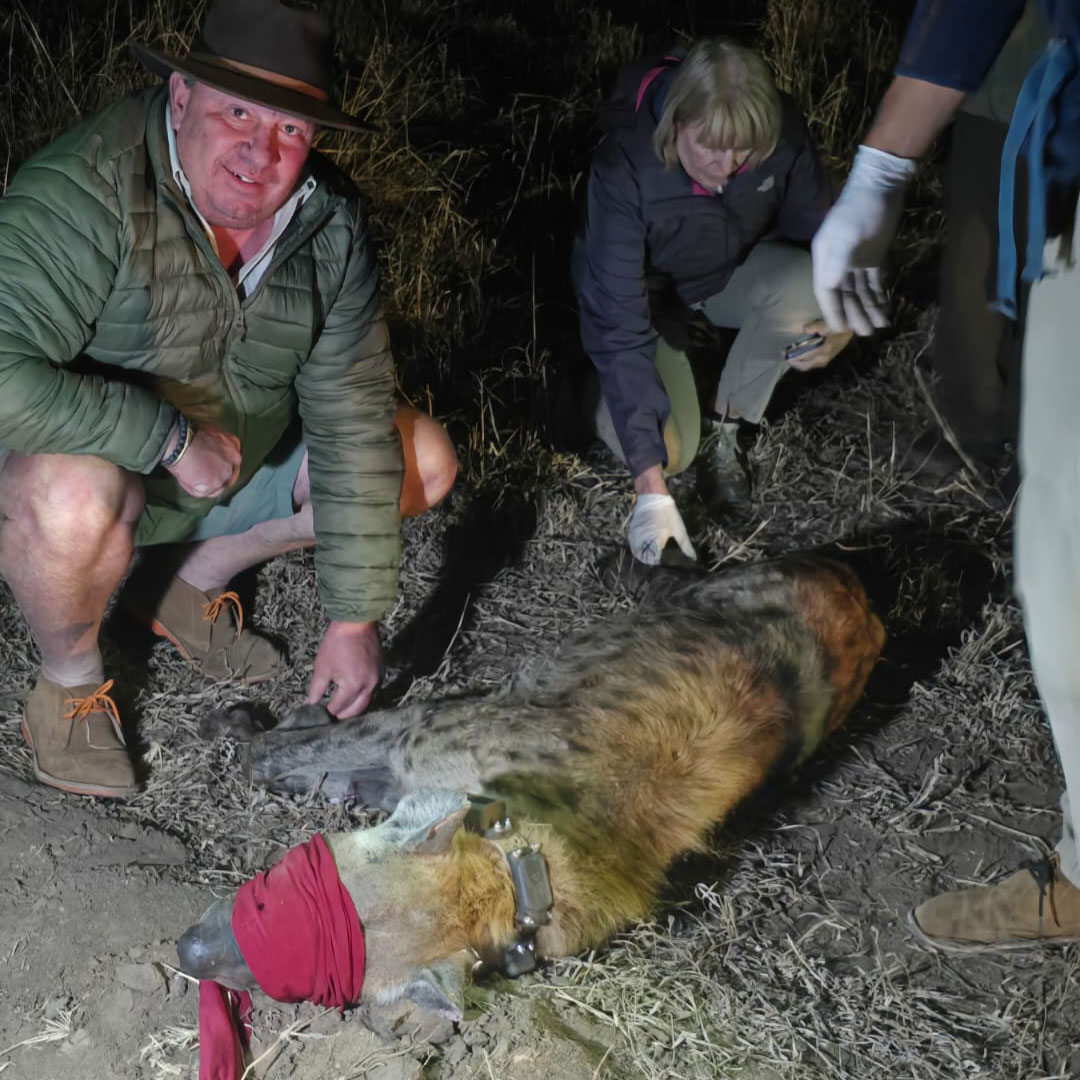
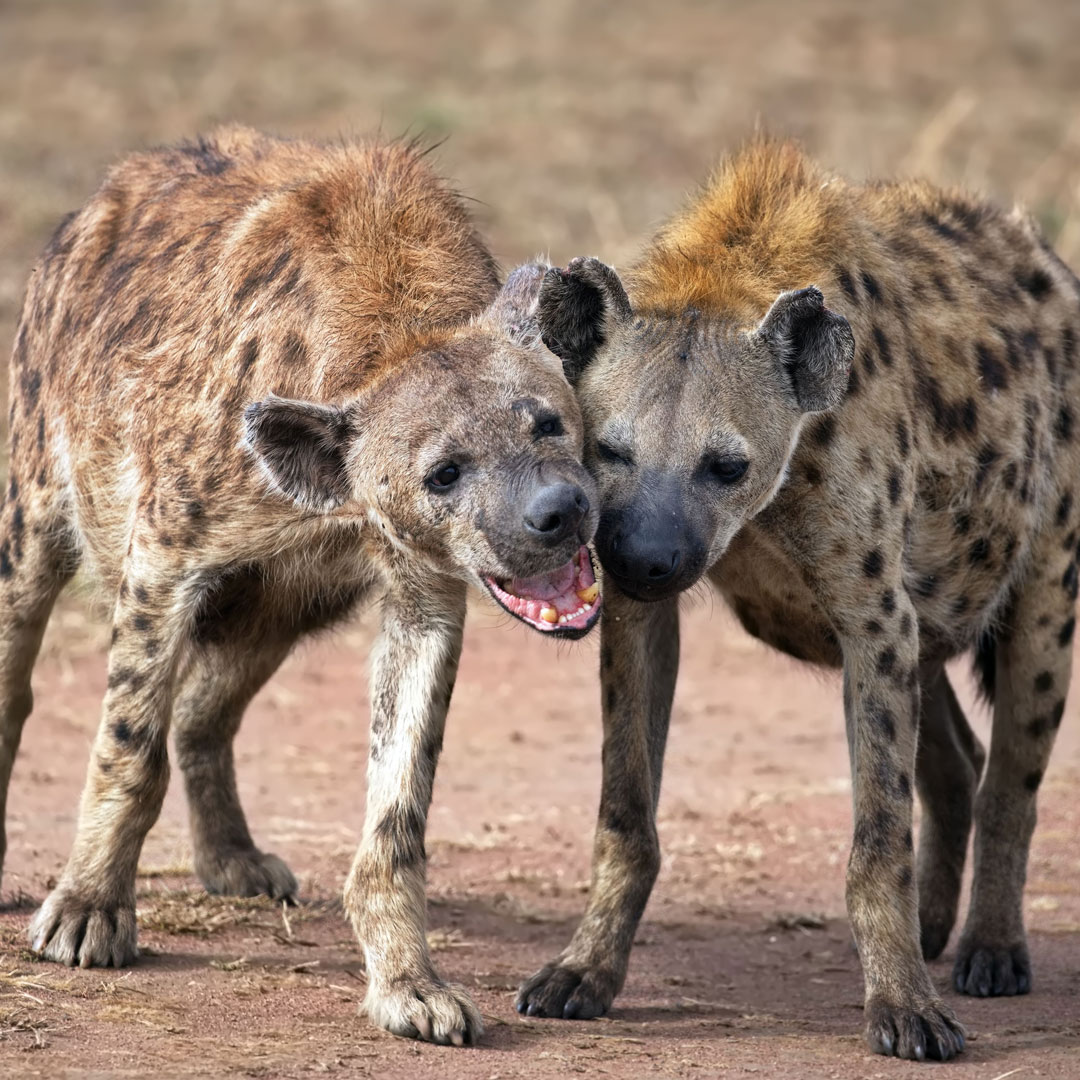
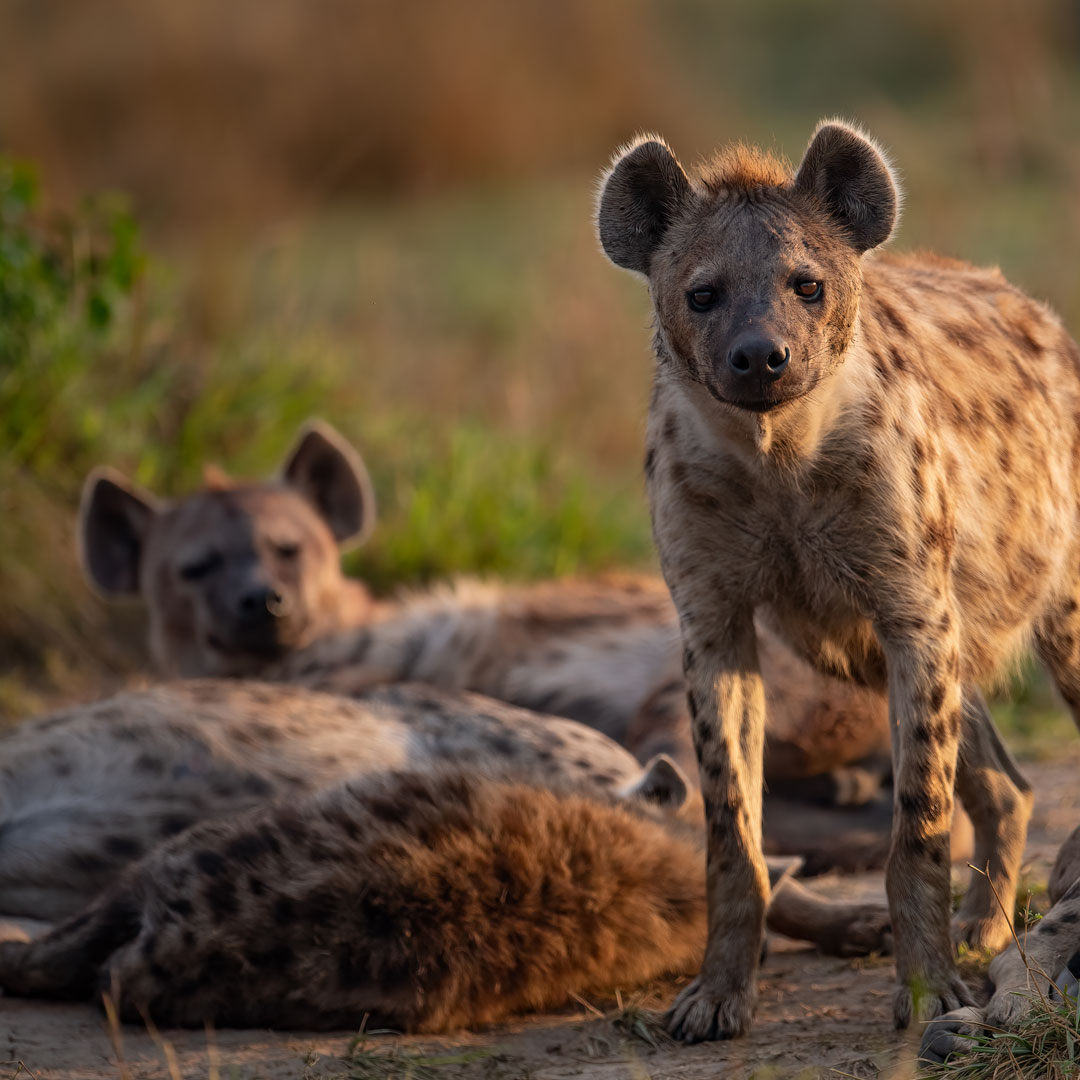
Spotted Hyena (Crocuta crocuta)
The spotted hyena is the largest and most widespread of the three. It ranges across sub-Saharan Africa and remains the most commonly encountered hyena on safari. Adults weigh 40–90 kg, with females larger than males — one of the few mammals where females consistently outsize males.
Socially, spotted hyenas are extraordinary. They live in matriarchal clans of up to 80 individuals, with females dominant over all males. The social hierarchy is rigid and inherited — a female cub born to a high-ranking mother enters the world with higher status than an adult male.
Spotted hyenas are, contrary to popular belief, highly skilled hunters. In some populations — particularly in the Serengeti and Kgalagadi — they kill up to 95% of the food they consume. Their biology is remarkable in other ways: females possess a pseudo-penis caused by androgen exposure in utero, making sex determination difficult in the field.
IUCN status: Least Concern — but populations outside protected areas are declining. Primary threats: persecution, habitat loss, snaring.
Striped Hyena (Hyaena hyaena)
The striped hyena has the widest geographic range of any hyena species. It is found from North and East Africa across the Middle East and into South Asia — as far east as India. Despite this broad range, it is rarer and far less studied than the spotted hyena.
Unlike the spotted hyena, striped hyenas are largely solitary or live in small family groups. They are primarily scavengers, relying heavily on carcasses and supplementing with insects, fruit, and small vertebrates. They are smaller than spotted hyenas and significantly less aggressive.
IUCN status: Near Threatened. Total population estimates range from 5,000 to 14,000 individuals globally, with numbers declining. Primary threats: persecution, road kills, habitat loss, declining prey base.
Brown Hyena (Parahyaena brunnea)
The brown hyena is the rarest of the three and the most restricted in range. It is found almost exclusively in Southern Africa — primarily South Africa, Namibia, Botswana, and Zimbabwe. Adults are smaller than spotted hyenas and unmistakable in appearance: shaggy dark brown coat, lighter mane, striped legs.
Brown hyenas are nocturnal and mostly solitary, though they live within loose clan structures and share territory. They are primarily scavengers, travelling up to 30 kilometres a night in search of food. They also consume eggs, small mammals, fruit, and marine carcasses along the Namibian and South African coasts.
IUCN status: Near Threatened. Population estimated at 5,000 to 10,000 individuals. Primary threats: persecution by farmers (often based on perceived rather than actual livestock predation), habitat fragmentation, incidental poisoning.
Different Species, Different Conservation Approaches
These three species share a family but not a conservation profile. The spotted hyena needs large-scale coexistence programmes and protection of land corridors outside reserves. The striped hyena needs better data collection and road safety measures across its vast, under-monitored range. The brown hyena needs targeted protection in the farming interface zones of Southern Africa, where most persecution occurs.
One thing all three have in common: their decline is driven almost entirely by humans, and it can be reversed by humans. Persecution is not inevitable — it is a response to perceived threat, and that perception can be changed.
Southern Africa — the range of both the spotted and brown hyena — is where Ranger Buck Safaris operates. Our hyena conservation experiences are built around fieldwork in this region, with a direct focus on the animals and the people sharing the landscape with them.
Plan a Hyena Conservation Safari
Whether you want to encounter spotted hyenas in the Kruger ecosystem, brown hyenas in the Kalahari, or understand the broader conservation picture across all three species, Ranger Buck Safaris can build an itinerary that puts you in the field alongside real conservation teams.
We design every experience around what is actually happening on the ground. No staged encounters. No guaranteed ‘show’. Real fieldwork, real animals, real conservation. Reach out to find out what is scheduled and when.
Hyena Conservation Library
If you’re exploring hyena conservation, these guides will help you understand the challenges facing Africa’s most misunderstood predators — and what a real hands-on conservation experience involves.
- Hyena conservation efforts explained →
- How many hyenas are left in Africa? →
- Are hyenas endangered? →
- Why are hyenas important to the ecosystem? →
- Human–hyena conflict explained →
- Human–hyena conflict solutions →
- Spotted, striped and brown hyenas: what’s the difference? →
- Where to see hyenas in Africa →
- Is a hyena conservation experience ethical? →
- Hyena Conservation Experience →
get in touch with us
+27 83 653 5776
+27 83 653 5776 (WhatsApp)
info@rangerbucksafaris.com
16 Lourie Close, Meyersdal Eco Estate,
Alberton, Gauteng
16 Lourie Close, Meyersdal Eco Estate, Alberton, Gauteng

Website by Keeden Marketing | 2024
