
Plan a trip
Hyena vs Wild Dog: Africa’s Competing Pack Hunters
Last updated: April 2026
Both hunt in coordinated groups. Both are highly social. Both are in decline across much of Africa.
The relationship between spotted hyenas and African wild dogs is one of the most consequential in predator conservation — not because they fight, but because they compete in ways that directly affect wild dog survival.
Why This Comparison Matters
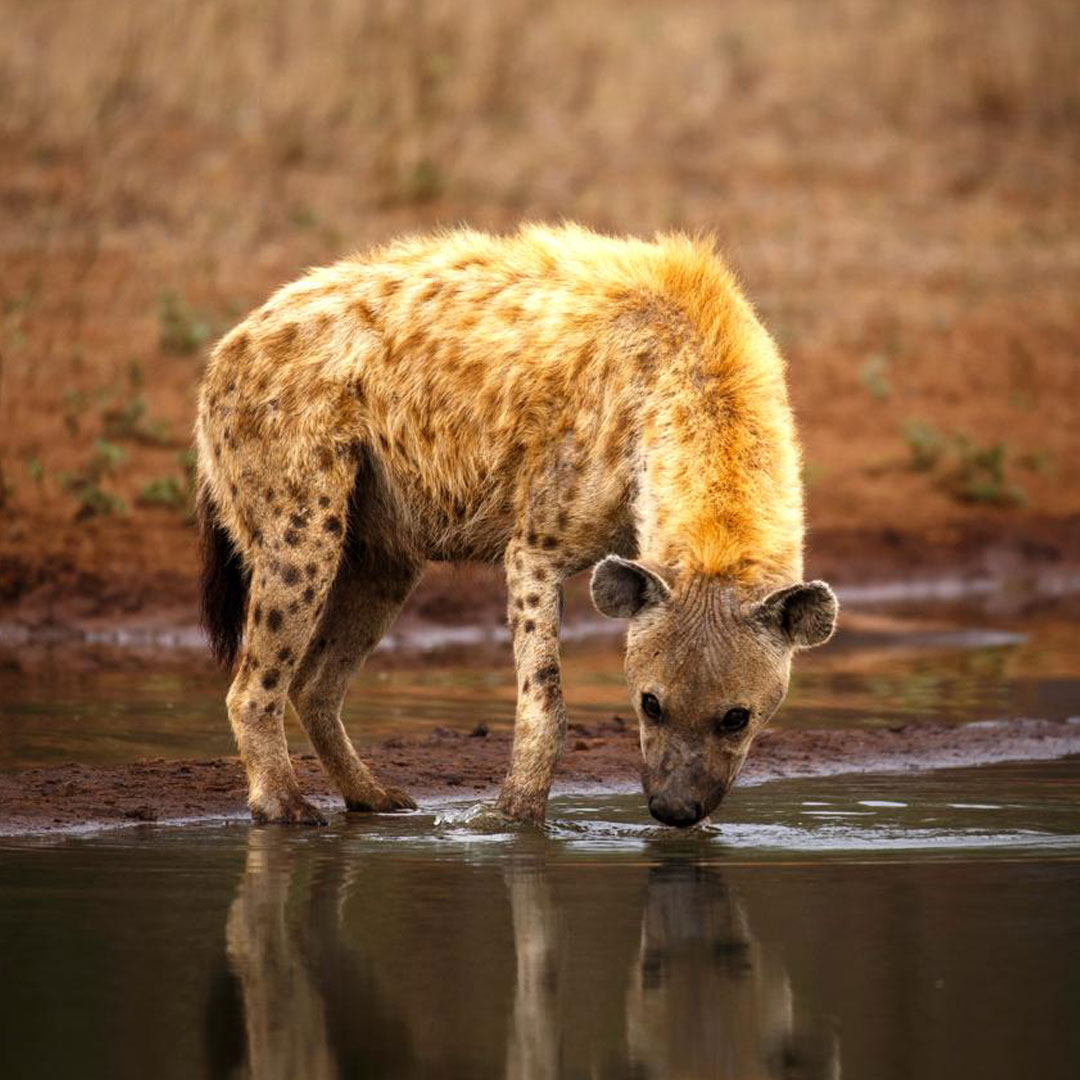
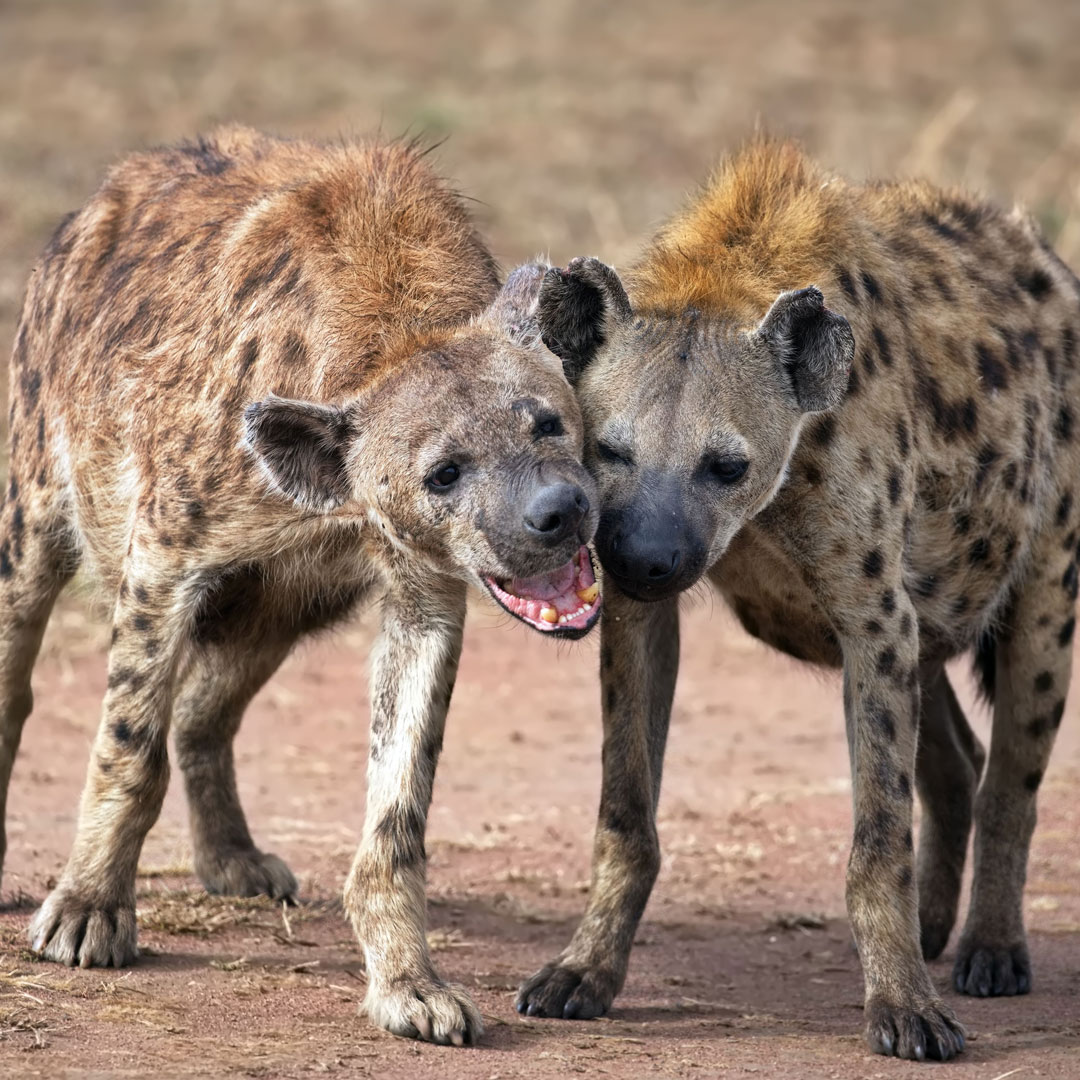
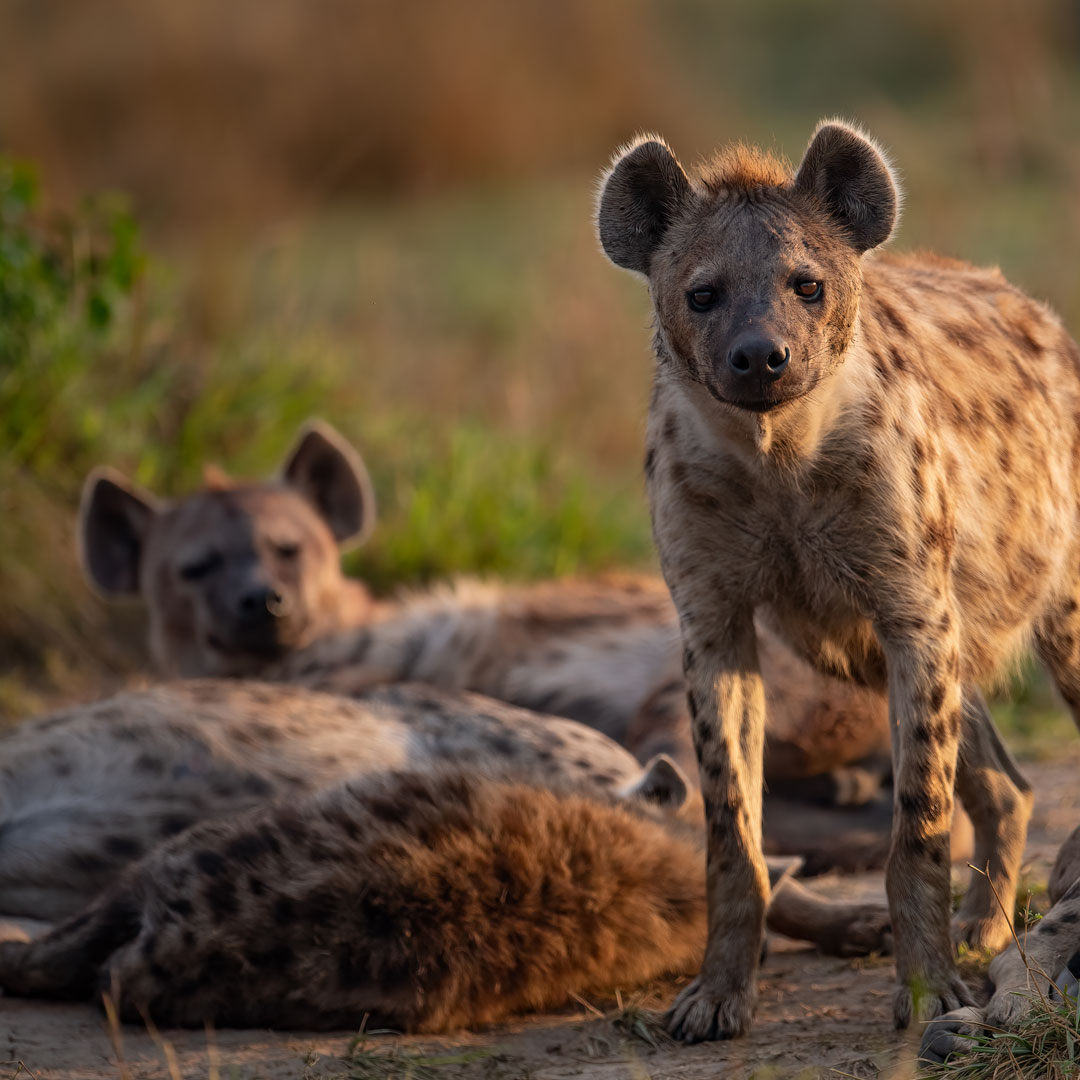
Hyenas and wild dogs are Africa’s two most highly social, cooperative pack hunters. Both evolved complex group strategies to maximise hunting efficiency. Both occupy similar ecological niches in similar landscapes. But they are not equal in numbers or conservation status — wild dogs are Endangered, with approximately 6,600 individuals remaining. This page connects two of Ranger Buck’s conservation clusters because protecting one often requires understanding the other.
Hunting Strategy
African wild dogs have the highest hunt success rate of any large predator in Africa — approximately 80% of hunts result in a kill. They achieve this through relentless pursuit, precise communication, and role specialisation within the pack. Spotted hyenas are also highly efficient hunters, but their strategy is more flexible — small groups or solo hyenas will opportunistically hunt, while large clans coordinate on bigger prey. Both species are far more efficient hunters than lions, whose success rate is typically 20–30% per attempt.
Speed and Stamina
Wild dogs can sustain speeds of around 60 km/h over extended distances of several kilometres. They run prey to exhaustion rather than catching it in a burst of speed. Spotted hyenas match this profile closely — they too can maintain high speeds over long distances and regularly outrun lions. Both species use stamina as a primary hunting tool. In a direct footrace, wild dogs and hyenas are roughly matched. The differences in hunting outcomes come from pack structure, communication and prey selection rather than pure speed.
Kleptoparasitism: The Real Battleground
The most significant interaction between these two species is theft. Hyenas frequently steal wild dog kills. A pack that has just brought down an impala will often lose it within minutes to a small group of hyenas, or even a single determined hyena. This is one of the most significant population pressures on wild dog packs:
- Packs in high-hyena-density areas must eat faster, consuming meat in minutes
- Packs move territory more frequently, trying to stay ahead of hyena pressure
- Smaller packs with fewer members to defend a kill are disproportionately affected
- Pup survival rates can be lower in areas with intense hyena competition
This is why wild dog conservation cannot be addressed in isolation. Managing the broader predator community matters.
Conservation Status
The numbers tell a clear story:
- African wild dog: Endangered. Approximately 6,600 individuals remaining. Population fragmented across Southern and East Africa.
- Spotted hyena: Least Concern. But populations are declining outside protected areas due to habitat loss, conflict and prey depletion.
Wild dogs have a much more urgent conservation status. But ‘Least Concern’ does not mean stable, and spotted hyena declines in key areas should not be overlooked.
Why Conserving Both Matters
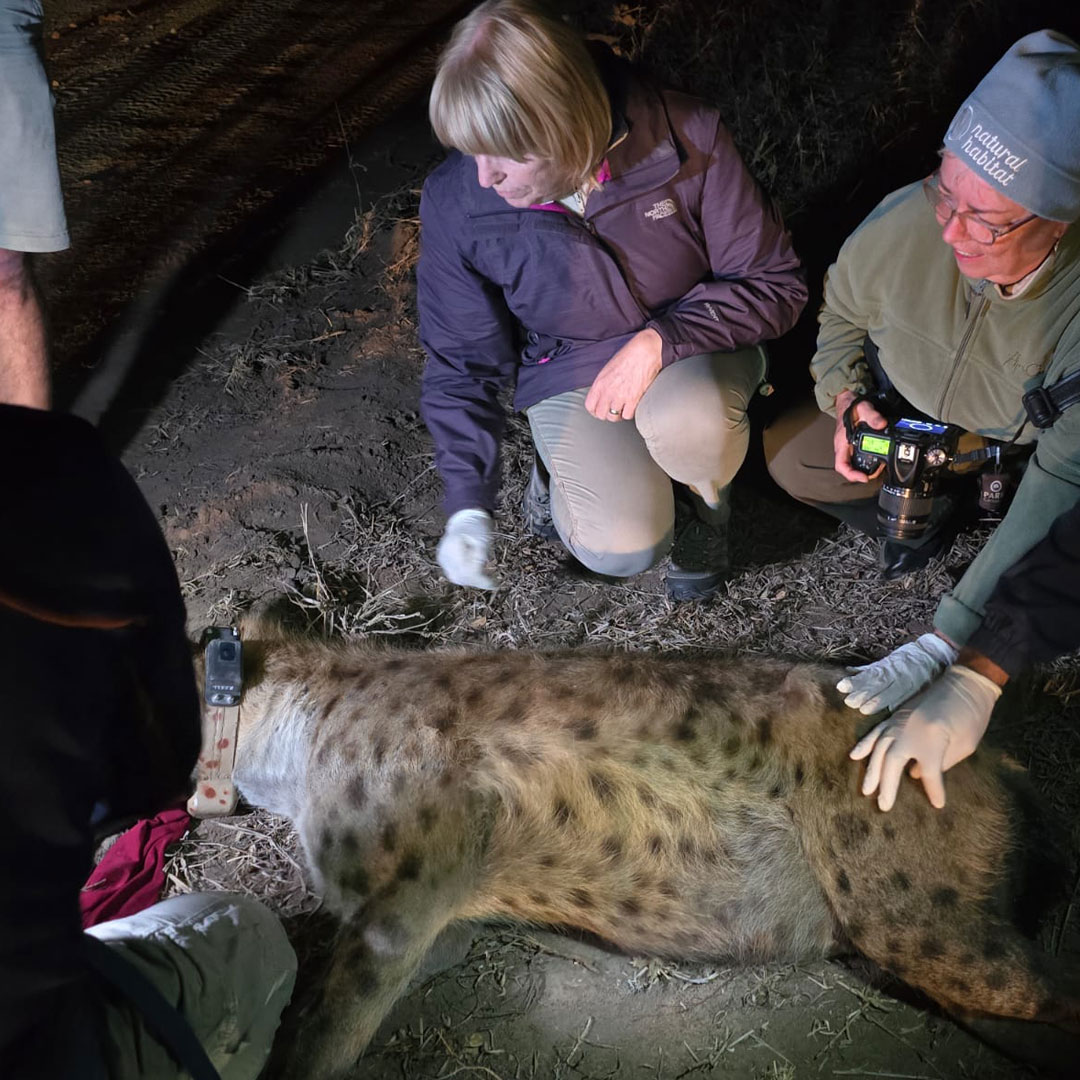
Both species are ecological indicator species. Their presence signals a healthy, functioning predator community with sufficient prey base and habitat connectivity. Protecting hyena habitat often protects wild dog habitat — the landscape requirements overlap significantly. A conservation investment that secures habitat for hyenas in the Limpopo Transfrontier area benefits wild dogs in the same corridor.
Plan a Wild Dog and Hyena Safari with Ranger Buck
Ranger Buck builds itineraries specifically designed for travellers who want to see both species in the context of their conservation challenges. The Kruger ecosystem — Sabi Sands, Timbavati, Klaserie — offers the best combination of wild dog and hyena sightings in Southern Africa. Hwange National Park in Zimbabwe and the Limpopo Transfrontier area provide further opportunities.
Night drives, predator tracking, and access to conservation fieldwork set these itineraries apart from standard safari packages. Contact us to discuss what’s currently scheduled in the field.
Hyena Conservation Library
Everything you need to understand hyenas — their biology, behaviour, threats, and the work being done to protect them.
- Hyena conservation efforts explained →
- How many hyenas are left in Africa? →
- Are hyenas endangered? →
- Why are hyenas important to the ecosystem? →
- Human–hyena conflict explained →
- Human–hyena conflict solutions →
- Spotted, striped and brown hyenas →
- Where to see hyenas in Africa →
- Is a hyena conservation experience ethical? →
- What do hyenas eat? →
- Why do hyenas laugh? →
- Are hyenas scavengers or hunters? →
- How strong is a hyena’s bite? →
- Hyena intelligence & behaviour →
- Hyena myths vs facts →
- Hyena social structure & clans →
- Are hyenas dangerous? →
- How hyenas are monitored →
- Hyena threats: poisoning & snaring →
- Hyenas vs lions →
- Hyena vs leopard →
- Hyena vs wild dog →
- Hyena reproduction & cubs →
- Hyena habitat & range →
- Hyenas in African culture & folklore →
- Hyena conservation organisations →
- Hyena Conservation South Africa →
- Hyena Conservation Botswana →
- Hyena Conservation Zambia →
- Hyena Conservation Experience →
get in touch with us
+27 83 653 5776
+27 83 653 5776 (WhatsApp)
info@rangerbucksafaris.com
16 Lourie Close, Meyersdal Eco Estate,
Alberton, Gauteng
16 Lourie Close, Meyersdal Eco Estate, Alberton, Gauteng

Website by Keeden Marketing | 2024
