
Plan a trip
Are Hyenas Endangered?
Last updated: April 2026
Technically, no — not in the way the word is usually meant. But the real answer is more complicated than a single IUCN listing can capture.
Two of Africa’s three hyena species are classified as Near Threatened. The third, the spotted hyena, is Least Concern — but it is declining across large parts of its range. Understanding the difference matters for anyone interested in hyena conservation.


IUCN Conservation Status by Species
The International Union for Conservation of Nature (IUCN) Red List is the global standard for assessing extinction risk. Here is where each African hyena species currently sits:
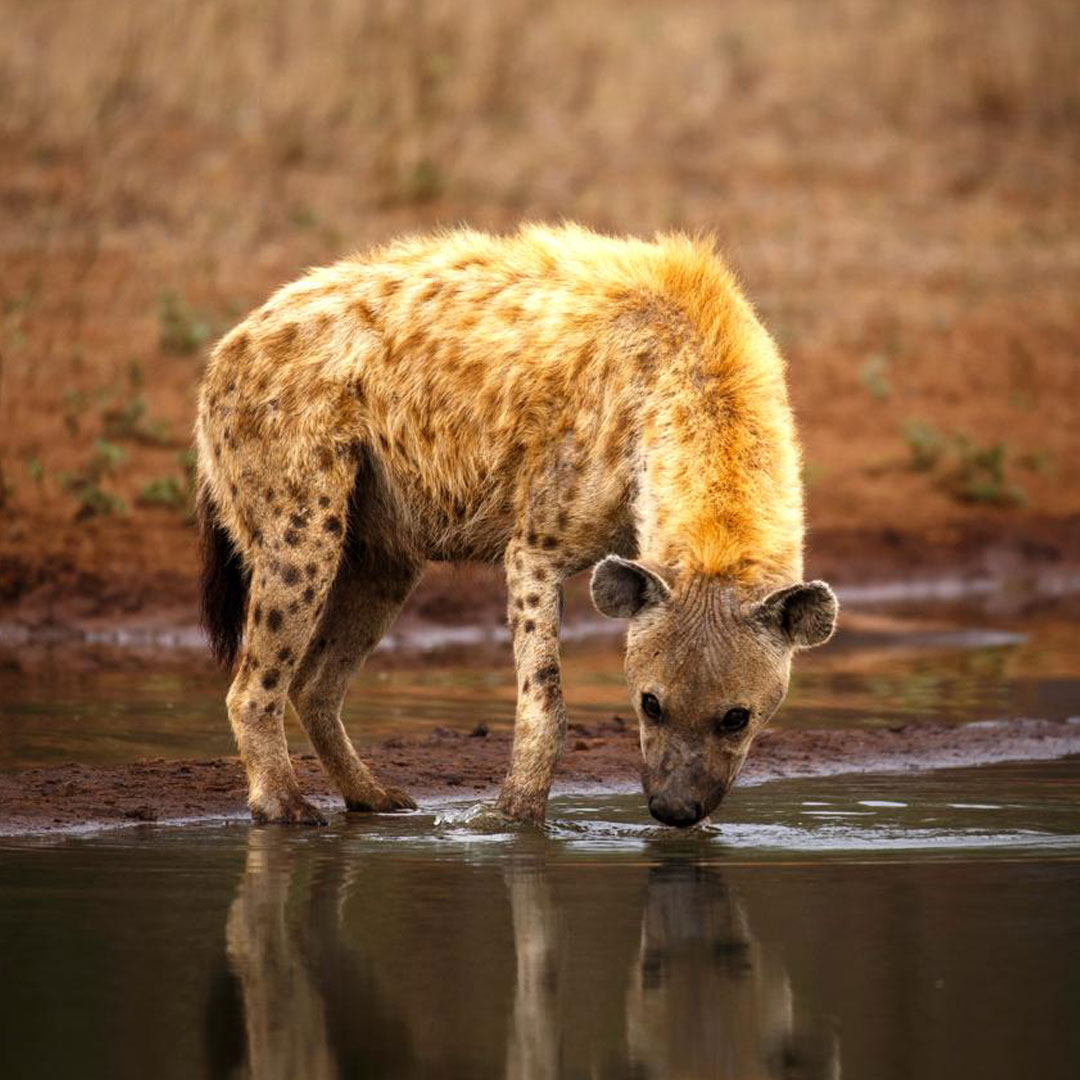
Spotted hyena (Crocuta crocuta) — Least Concern
The largest and most numerous hyena species. Least Concern reflects the fact that the species as a whole is not facing imminent extinction. However, populations outside protected areas are declining and the species has already been lost from much of its historic range in North and West Africa.
Striped hyena (Hyaena hyaena) — Near Threatened
The striped hyena has the widest geographic range of the three, extending from East Africa through the Middle East to South Asia. Despite this, it is classified as Near Threatened, with numbers declining due to persecution, habitat loss, and road casualties.
Brown hyena (Parahyaena brunnea) — Near Threatened
The rarest of the three, confined to Southern Africa. Estimated at 5,000 to 10,000 individuals and Near Threatened. Particularly vulnerable to persecution on farmland, where it is commonly blamed for livestock losses.
What ‘Least Concern’ Actually Means — and What It Doesn’t
A Least Concern classification means a species does not currently meet the criteria for Vulnerable, Endangered, or Critically Endangered. It does not mean the species is thriving or that conservation action is not needed.
For spotted hyenas, Least Concern is a global-level assessment. It averages out the relatively healthy populations inside major protected areas against the declining populations outside them. A species can be Least Concern globally while losing ground rapidly in specific regions.
Conservation status is also a lagging indicator. Species can be in significant decline for decades before they meet the formal threshold for uplisting. By the time a species moves from Least Concern to Near Threatened, a great deal has already been lost.
Key Threats Across All Three Species
The threats facing hyenas are consistent across species, varying mainly in intensity and geographic concentration:
Habitat loss and fragmentation
Agricultural expansion, human settlement, and infrastructure development reduce available habitat and fragment populations. Isolated populations lose genetic diversity and become more vulnerable to local extinction events.
Human–wildlife conflict and retaliatory killing
This is the most direct and widespread cause of hyena mortality outside protected areas. Farmers kill hyenas in retaliation for livestock losses, sometimes using poison bait that kills indiscriminately across multiple species.
Snaring and bushmeat trade
Hyenas are not usually the primary target of bushmeat snares, but they are caught and killed in them regularly. In some parts of East and West Africa, hyena parts are also traded for traditional medicine.
Disease
Canine distemper virus and anthrax have caused significant mortality events in hyena populations, particularly in East Africa. As populations become smaller and more isolated, disease risk increases.
Road casualties
Road networks expanding into previously wild areas create collision risk for wide-ranging carnivores. Road kills are a measurable source of mortality, particularly for striped hyenas.
Why Hyenas Are Uniquely Vulnerable to Persecution
Among Africa’s large carnivores, hyenas face a particularly intense cultural bias. They are widely associated with witchcraft, bad luck, and death across multiple African cultures. In parts of East Africa, hyenas are believed to be ridden by witches at night. In others, encountering a hyena is considered an omen.
This cultural stigma makes it harder to build the public support that conservation requires. Species like lions and leopards attract sympathy and funding. Hyenas, despite their ecological importance, are often actively disliked — and killing them carries less social cost than killing other carnivores.
The result is that retaliatory killing of hyenas often goes unreported, unpunished, and culturally unchallenged. Conservation programmes working with hyenas have to address both the practical conflict and the underlying attitudes simultaneously.
Frequently Asked Questions
Are hyenas protected by law?
Legal protection varies by country. In most range states, spotted hyenas have some level of legal protection, but enforcement is inconsistent. Brown and striped hyenas generally have stronger protections given their Near Threatened status, but again, enforcement varies significantly by region.
Are hyenas more endangered than lions?
Lions are listed as Vulnerable on the IUCN Red List — a higher risk category than spotted hyenas (Least Concern). However, striped and brown hyenas are Near Threatened, which places them in a similar risk tier to lions. The comparison depends on which hyena species you are referring to.
Could hyenas go extinct?
A global extinction of spotted hyenas in the near term is unlikely given current population sizes. For striped and brown hyenas, the risk of significant further decline — and of local extinctions across large parts of their range — is real if current trends continue.
What is being done to protect hyenas?
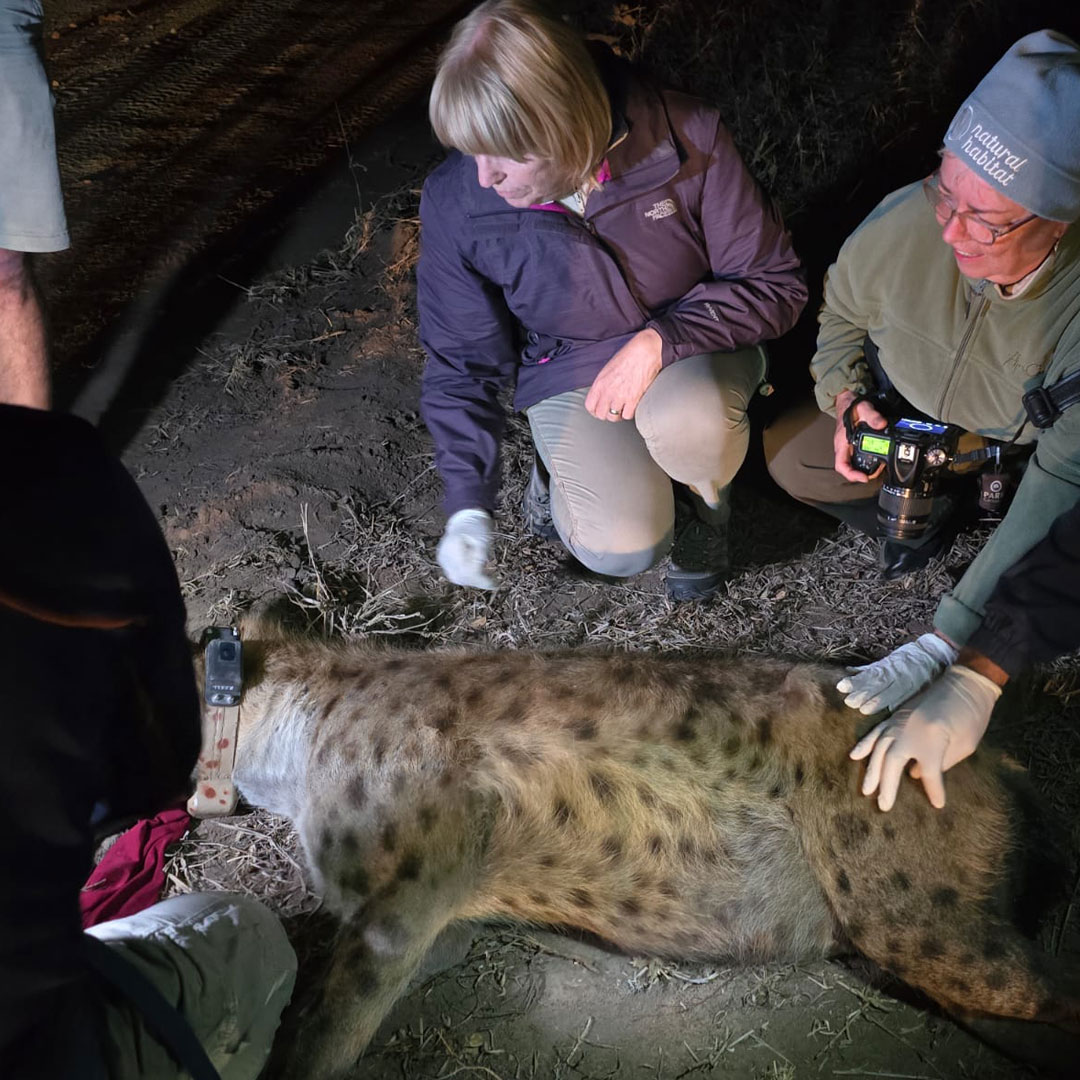
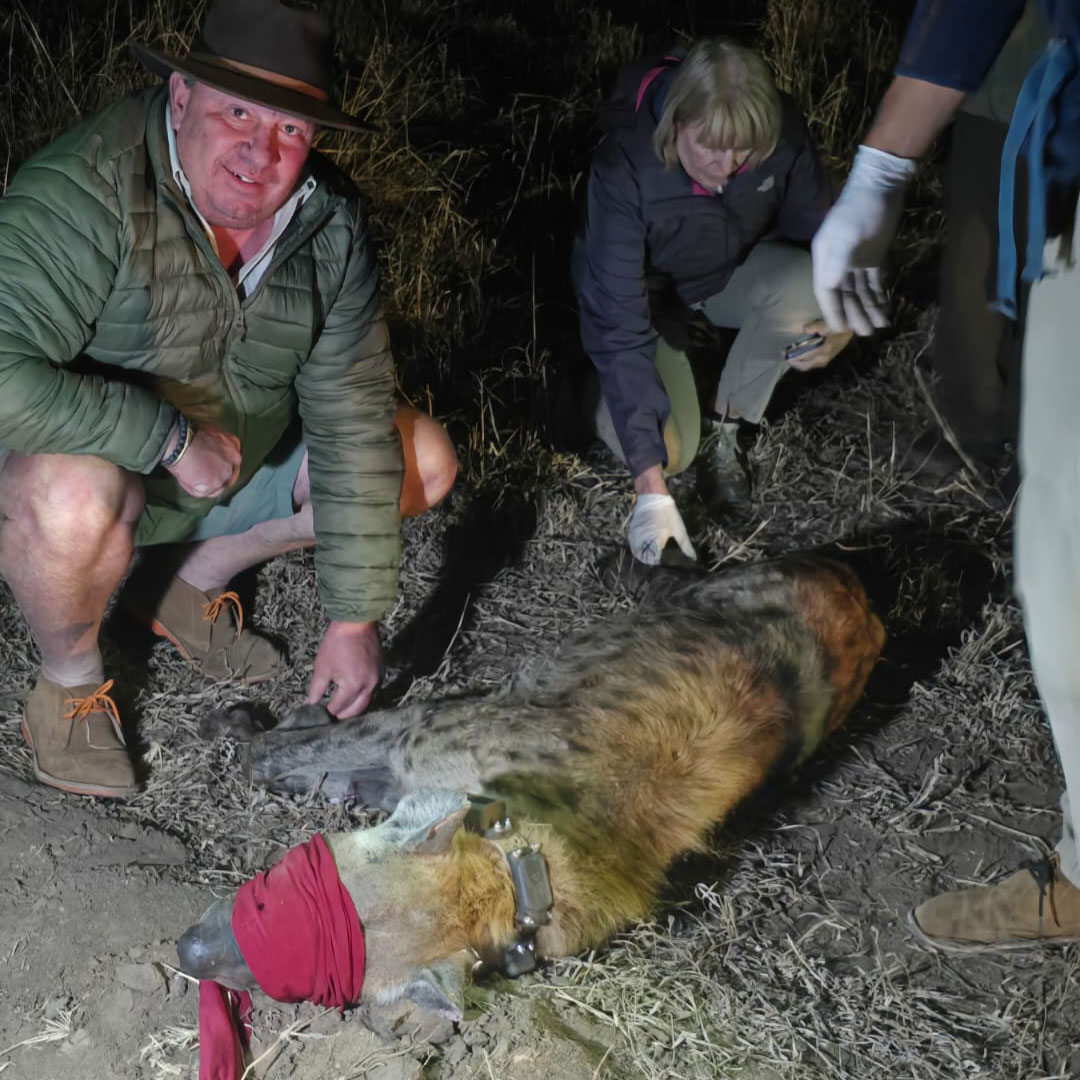
Conservation teams work on anti-persecution patrols, GPS monitoring, community-based conflict reduction, and education programmes that aim to shift cultural attitudes. Several NGOs run dedicated hyena research and protection programmes across East and Southern Africa.
Hyena Conservation Library
If you’re exploring hyena conservation, these guides will help you understand the challenges facing Africa’s most misunderstood predators — and what a real hands-on conservation experience involves.
- Hyena conservation efforts explained (how protection works, what conservation teams actually do) →
- How many hyenas are left in Africa? (population context + why numbers vary by species) →
- Are hyenas endangered? (conservation status explained + what the IUCN listing means) →
- Why are hyenas important to the ecosystem? (the ecological role no other species can fully replace) →
- Human–hyena conflict explained (why it happens + where it is most severe) →
- Human–hyena conflict solutions (what actually works in the field) →
- Spotted, striped and brown hyenas: what’s the difference? (three species, different threats) →
- Where to see hyenas in Africa (best regions + responsible viewing tips) →
- Is a hyena conservation experience ethical? (what ethical looks like + red flags) →
- Hyena Conservation Experience (plan a tailored itinerary) →
get in touch with us
+27 83 653 5776
+27 83 653 5776 (WhatsApp)
info@rangerbucksafaris.com
16 Lourie Close, Meyersdal Eco Estate,
Alberton, Gauteng
16 Lourie Close, Meyersdal Eco Estate, Alberton, Gauteng

Website by Keeden Marketing | 2024
