
Plan a trip
Hyena Social Structure & Clans
Last updated: April 2026
Spotted hyenas are not loners. They live in some of the most complex social structures of any carnivore on Earth.
Understanding how hyena clans work — who leads, how rank is earned, how groups form and dissolve — changes everything about how you see them in the field.
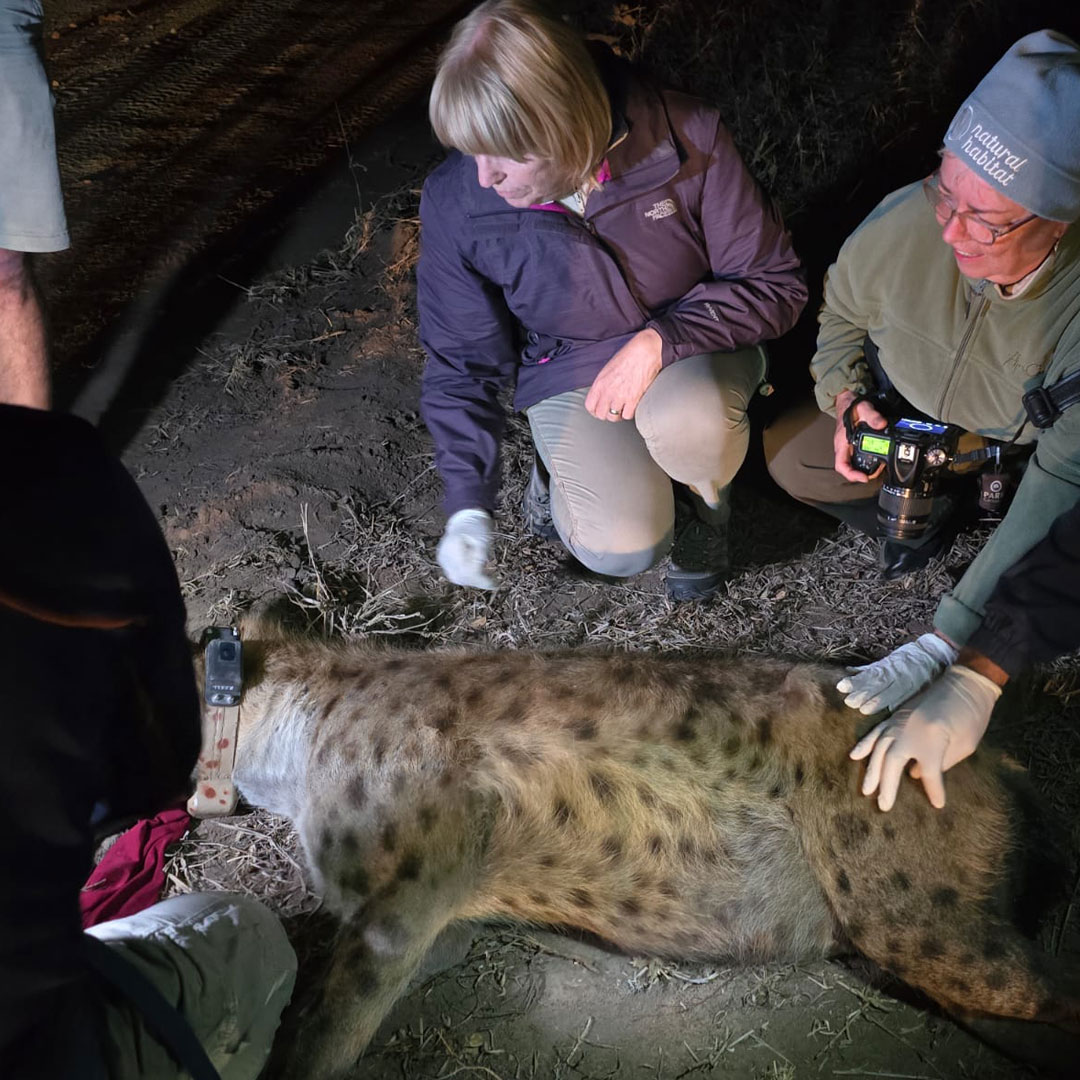
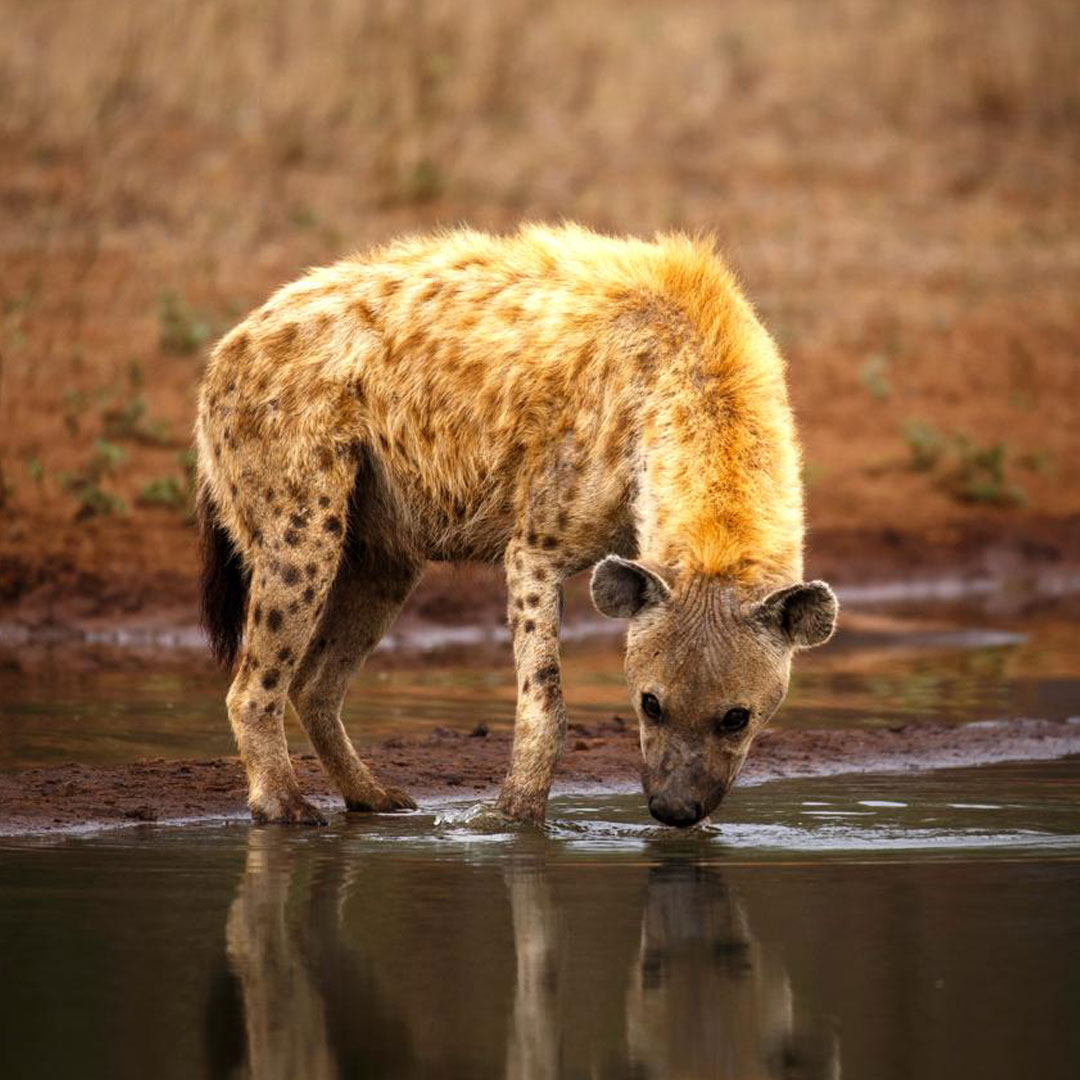
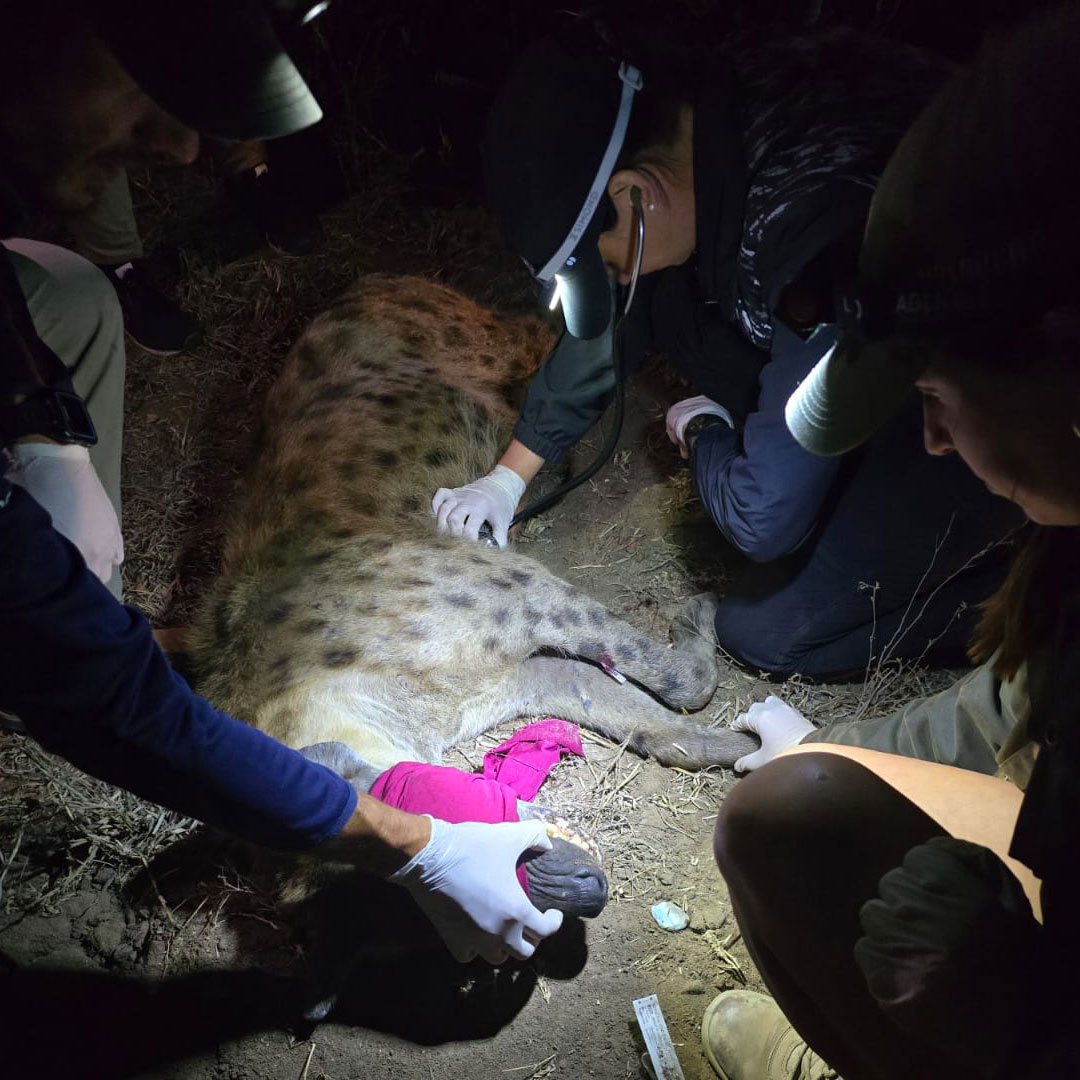
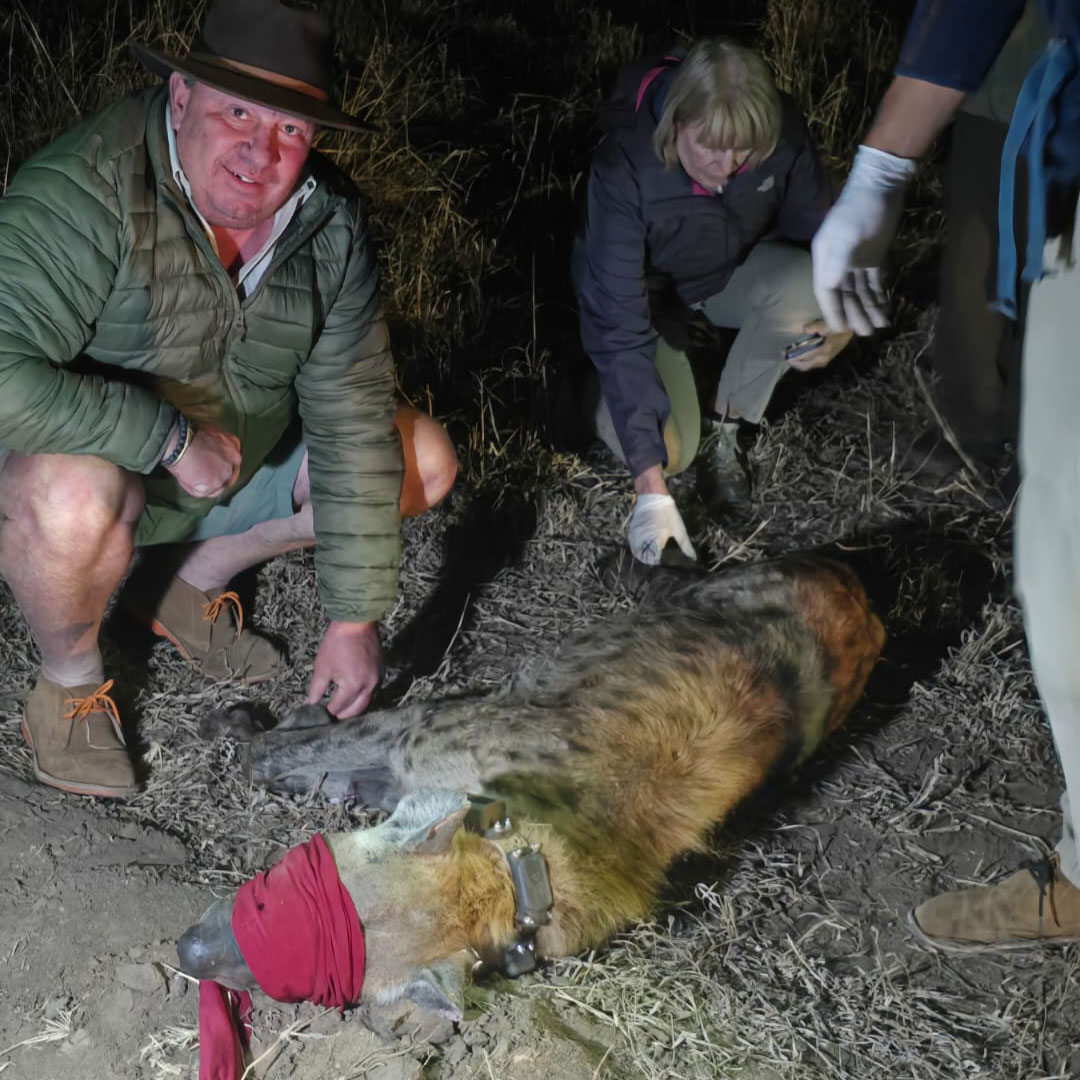
The Clan — Size and Territory
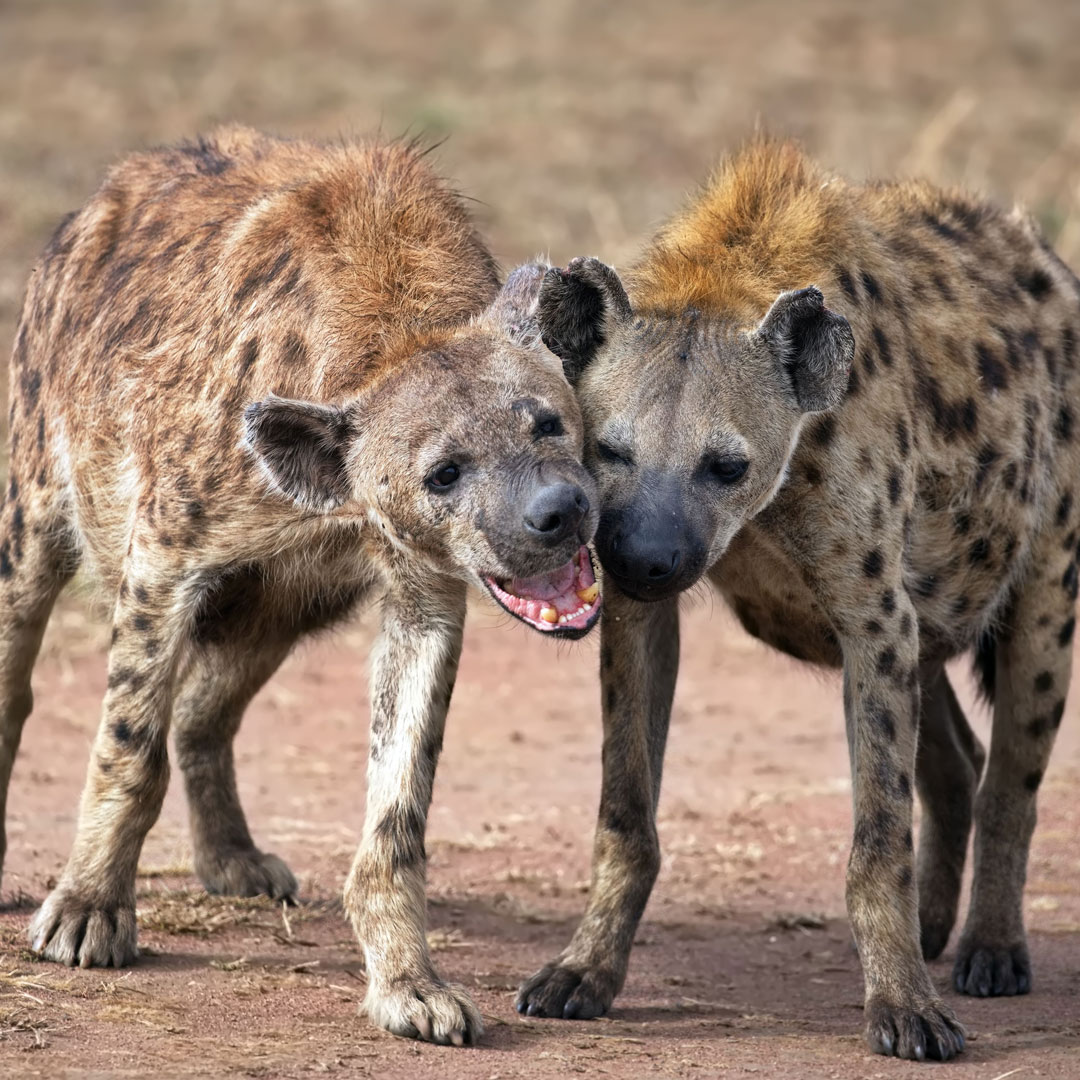
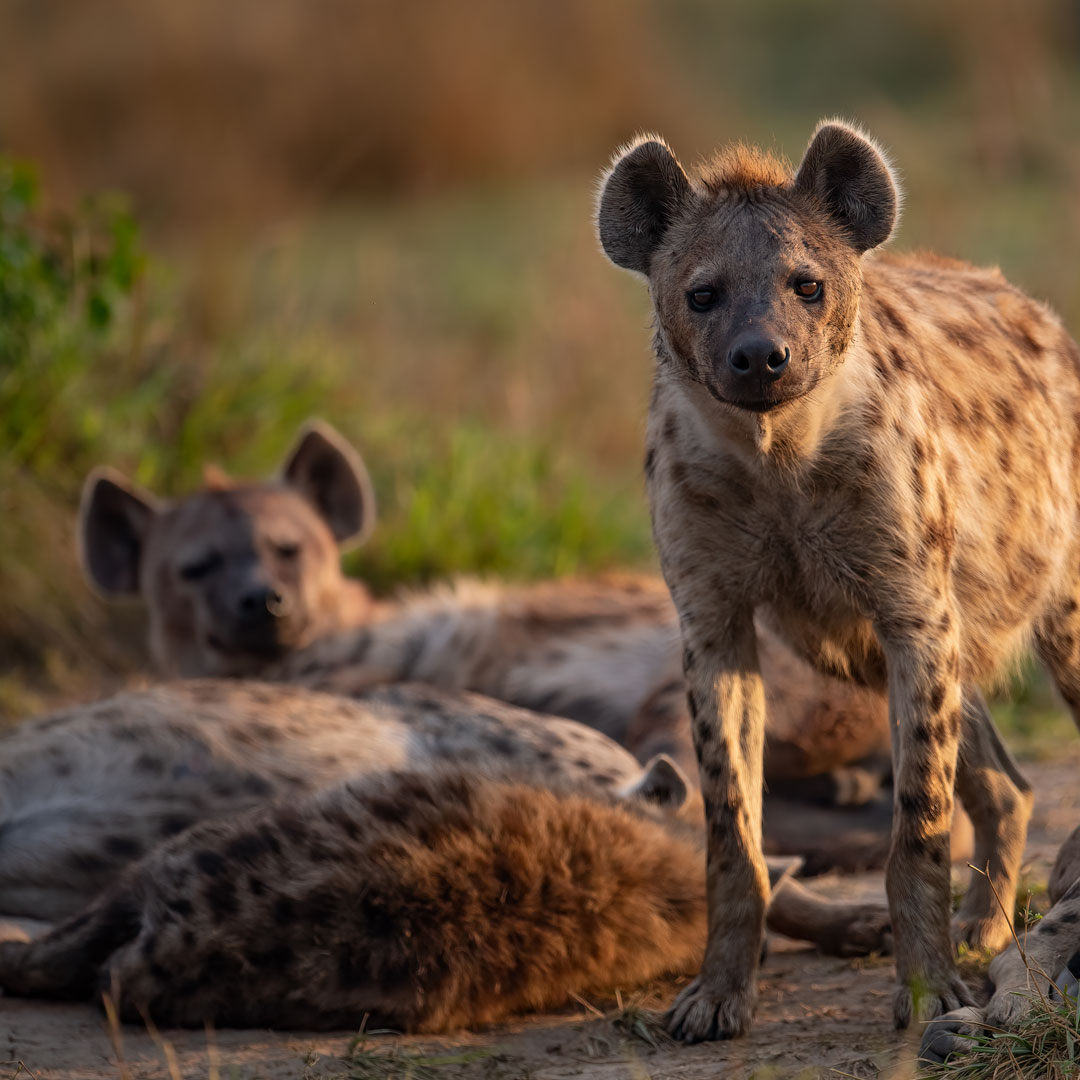
Spotted hyenas live in groups called clans. A clan can range from as few as 5 individuals to over 80, depending on habitat and prey availability. Each clan holds a defined territory, ranging from around 40 km² in prey-rich areas to over 1,000 km² in arid, low-density environments. Clan members patrol and scent-mark boundaries regularly — territorial disputes between clans can be intense.
Clan members do not always move together. The clan is the social unit, but daily life happens in smaller subgroups that form and re-form constantly. This fission-fusion dynamic places extraordinary demands on individual social memory.
Female Dominance
Spotted hyena clans are matriarchal. This is one of the most striking facts in African wildlife biology. Even the lowest-ranking adult female in the clan outranks the highest-ranking male. Males — including large, experienced males — defer to females in feeding priority, movement decisions, and access to resources at all times.
This level of consistent female dominance across an entire species is extremely rare among mammals. It shapes everything about how the clan operates, from cub development to territorial defence.
Social Hierarchy and How It Is Maintained
Rank within the clan is not purely earned through aggression. It is partly inherited. Cubs born to high-ranking females begin life with elevated social status, supported by their mother’s position and alliances. Over time they build their own coalitions.
Rank is maintained through coalition support (allied females back each other in disputes), submission signals (posture, vocalisation, avoidance behaviour), and feeding priority (higher-ranking individuals eat first at kills). The system is sophisticated — hyenas track who outranks whom across the whole clan and adjust behaviour accordingly.
Fission-Fusion Dynamics
One of the defining features of spotted hyena society is that the clan is rarely all in one place at once. Small subgroups — sometimes just two or three animals — form for hunting, territorial patrols, or social bonding, then re-merge with the larger group. This is called fission-fusion dynamics.
It places high demands on social memory. Each individual needs to track relationships, alliances, and ranks across many animals it may not have seen in days. Research suggests this cognitive demand is part of what drives spotted hyena intelligence — managing complex, shifting social networks requires a capable brain.
Males and Dispersal
Male spotted hyenas follow a distinctive life pattern. At adolescence, males leave their birth clan and move to a new clan as outsiders. They join at the bottom of the social hierarchy — below every female — and spend years slowly building rank through persistence and the death or departure of higher-ranking males.
Females stay in their birth clan for life. This means the matrilineal structure of the clan is stable across generations, while males cycle through. Female knowledge of territory, prey patterns, and social history accumulates over decades.
Striped and Brown Hyenas — Different Structures
Not all hyenas live this way. Striped hyenas are largely solitary, occasionally forming small family groups — they are the most widely distributed hyena species, ranging from North Africa across the Middle East to South Asia. Brown hyenas are more social than striped, but still live in small groups of 4–10 rather than large clans, found mainly in Southern Africa. Aardwolves — the smallest hyena — are monogamous, living in mated pairs.
The spotted hyena’s large, matriarchal clan system is the outlier among the four species — and the most studied.
What Clan Disruption Means for Conservation
The social structure of a spotted hyena clan is not just a behavioural curiosity. It is ecologically functional, and fragile. When clans are disrupted — by habitat loss, persecution, or the removal of dominant individuals — the consequences go beyond numbers. Social knowledge is lost. Hunting coordination breaks down. Territory defence weakens.
Recovery from clan disruption is slow, because the structure that makes a clan effective takes years to build. This is why protecting existing populations matters more than attempting to reintroduce animals into a depleted landscape. At Ranger Buck Safaris, clan-level monitoring is central to the conservation work our guests support.
Hyena Conservation Library
Everything you need to understand hyenas — their biology, behaviour, threats, and the work being done to protect them.
- Hyena conservation efforts explained →
- How many hyenas are left in Africa? →
- Are hyenas endangered? →
- Why are hyenas important to the ecosystem? →
- Human–hyena conflict explained →
- Human–hyena conflict solutions →
- Spotted, striped and brown hyenas →
- Where to see hyenas in Africa →
- Is a hyena conservation experience ethical? →
- What do hyenas eat? →
- Why do hyenas laugh? →
- Are hyenas scavengers or hunters? →
- How strong is a hyena’s bite? →
- Hyena intelligence & behaviour →
- Hyena myths vs facts →
- Hyena social structure & clans →
- Are hyenas dangerous? →
- How hyenas are monitored →
- Hyena threats: poisoning & snaring →
- Hyenas vs lions →
- Hyena reproduction & cubs →
- Hyena habitat & range →
- Hyenas in African culture & folklore →
- Hyena conservation organisations →
- Hyena Conservation Experience →
get in touch with us
+27 83 653 5776
+27 83 653 5776 (WhatsApp)
info@rangerbucksafaris.com
16 Lourie Close, Meyersdal Eco Estate,
Alberton, Gauteng
16 Lourie Close, Meyersdal Eco Estate, Alberton, Gauteng

Website by Keeden Marketing | 2024
