Plan a trip
Hyena Conservation Organisations
Last updated: April 2026
Conservation tourism is most valuable when it connects to real fieldwork. Knowing which organisations are doing that fieldwork — and what they actually do — helps you ask better questions and make better decisions as a conservation traveller.
This page maps the key organisations working on hyena research, monitoring, and conservation across Africa and beyond.
Why Knowing Who Does the Work Matters
The safari industry is full of conservation claims. When you travel with a conservation-focused operator, the meaningful question is: which organisations does this trip support, and what are they actually doing on the ground? Knowing who the organisations are means you can do your own research, ask direct questions, and hold operators accountable. That is healthy for the industry and for the animals.
Key International Organisations
IUCN Hyaenidae Specialist Group — The body responsible for assessing and monitoring all four hyena species globally. Their work feeds into the Red List assessments that classify each species as Least Concern, Near Threatened, Vulnerable, and so on. These classifications carry weight with governments, funders, and policy-makers worldwide.
UC Berkeley Masai Mara Hyena Project — The longest-running continuous study of spotted hyenas in the world, established by Dr Kay Holekamp in the Masai Mara, Kenya, and running since 1988. The project has followed known individuals and clans across multiple generations. Much of what we understand about hyena social structure, matrilineal rank, intelligence, cooperative behaviour, and communication comes from this dataset.
Key Organisations in Southern Africa
Endangered Wildlife Trust (EWT) — Based in South Africa, the EWT works across a broad range of species with significant programmes in predator conflict mitigation. Their Carnivore Conservation Programme engages with farmers, communities, and reserve managers to address the primary causes of hyena mortality outside protected areas.
Botswana Predator Conservation (BPC) — Research and monitoring of large carnivores in Botswana, including spotted and brown hyenas. Their community engagement work focuses on building tolerance for large predators among farming and pastoral communities adjacent to protected areas.
African Wildlife Foundation (AWF) — Community-based conservation programmes across East and Southern Africa, linking conservation outcomes to community benefit and addressing cultural attitudes toward predators including hyenas.
Key Organisations in East Africa
Zambia Carnivore Programme (ZCP) — Research and monitoring of large carnivores in Zambia’s protected areas, including spotted hyenas. Population estimates, movement data, and conflict mapping inform management decisions for park authorities.
Ethiopian Wolf Conservation Programme (EWCP) — While focused primarily on Ethiopian wolves, the EWCP works in habitats where spotted hyenas also occur. Their community engagement and monitoring infrastructure has contributed to broader carnivore data across highland Ethiopia.
Striped hyena research in Ethiopia and the wider Horn of Africa region remains underfunded and fragmented — a gap in the global conservation picture that represents both a challenge and an opportunity.
What These Organisations Actually Do
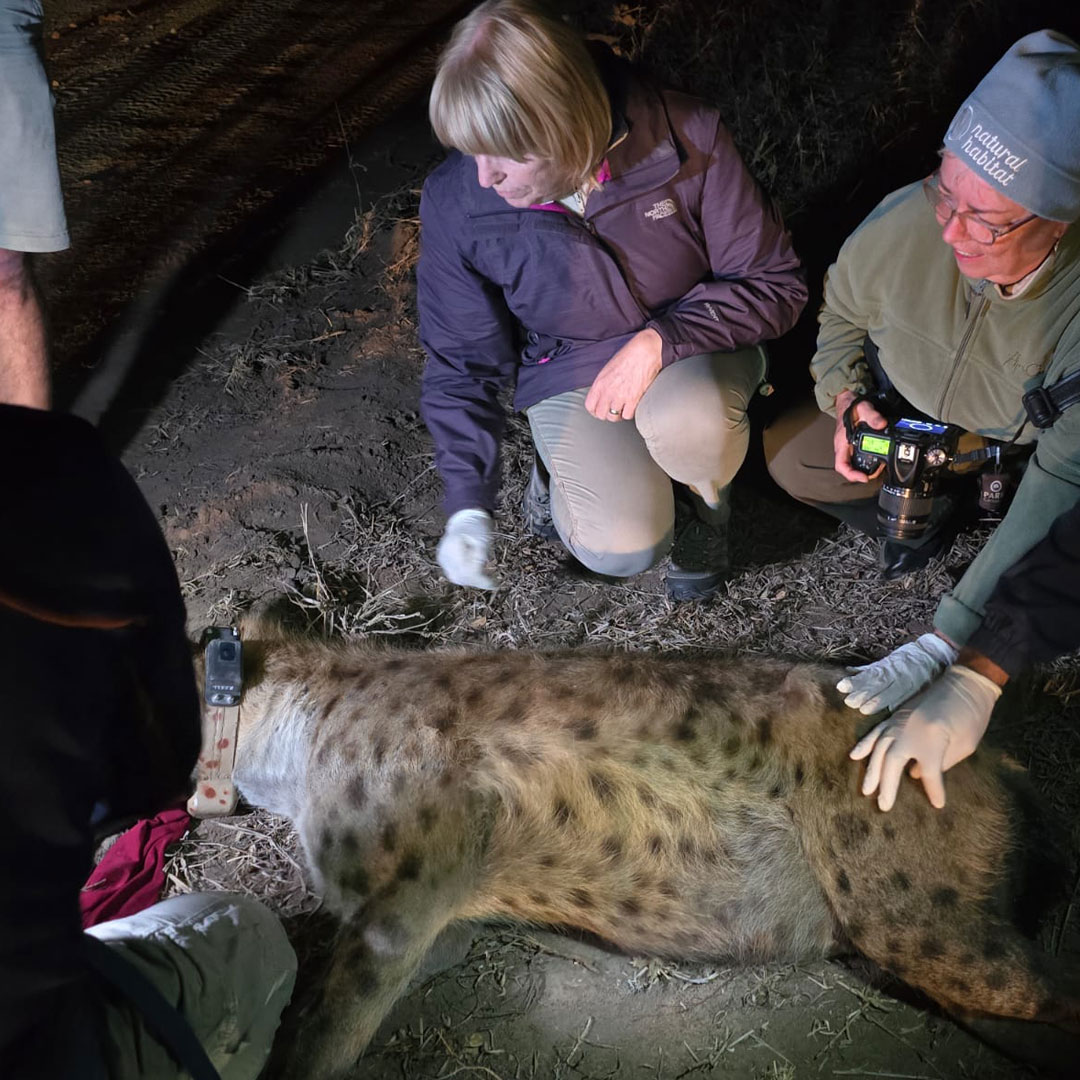
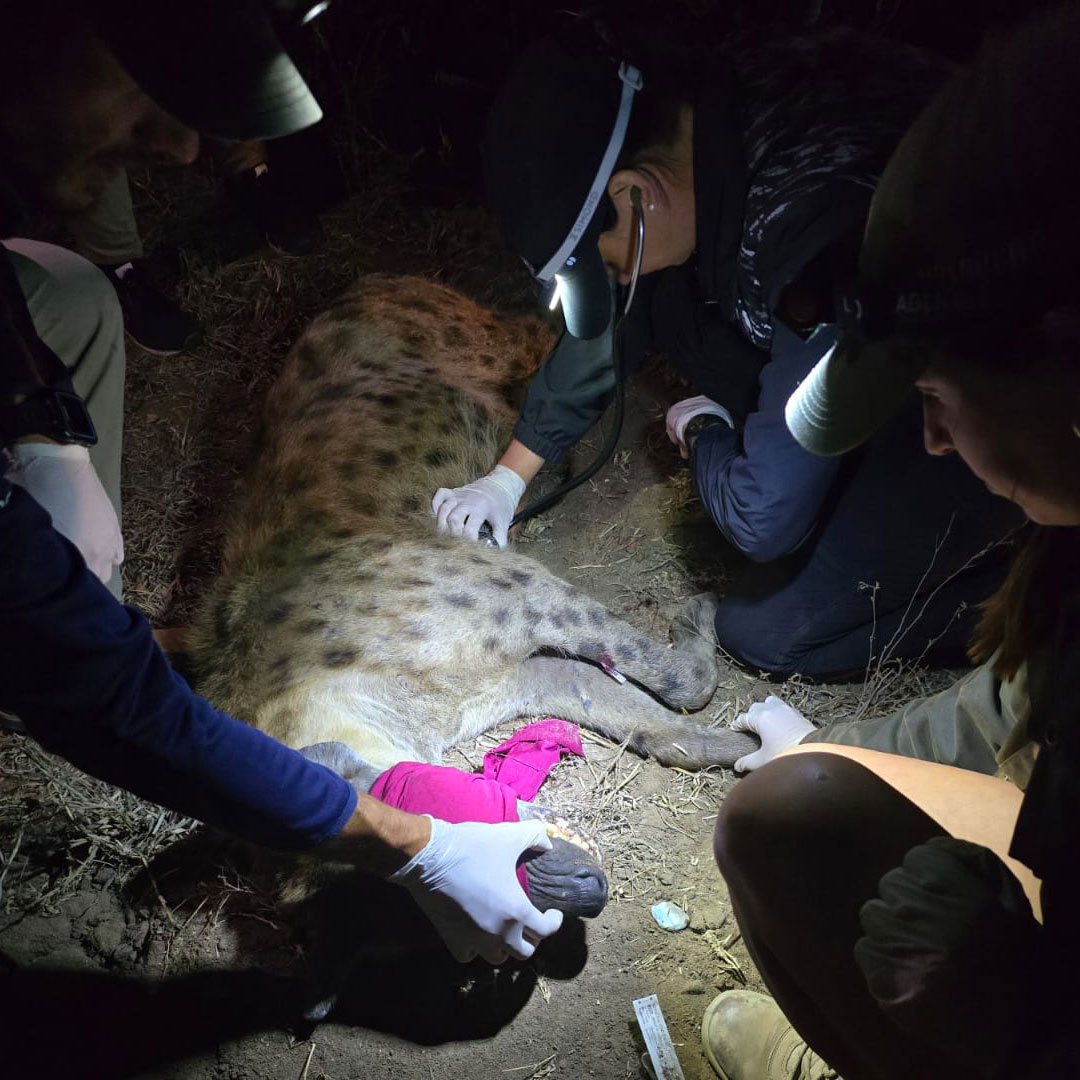
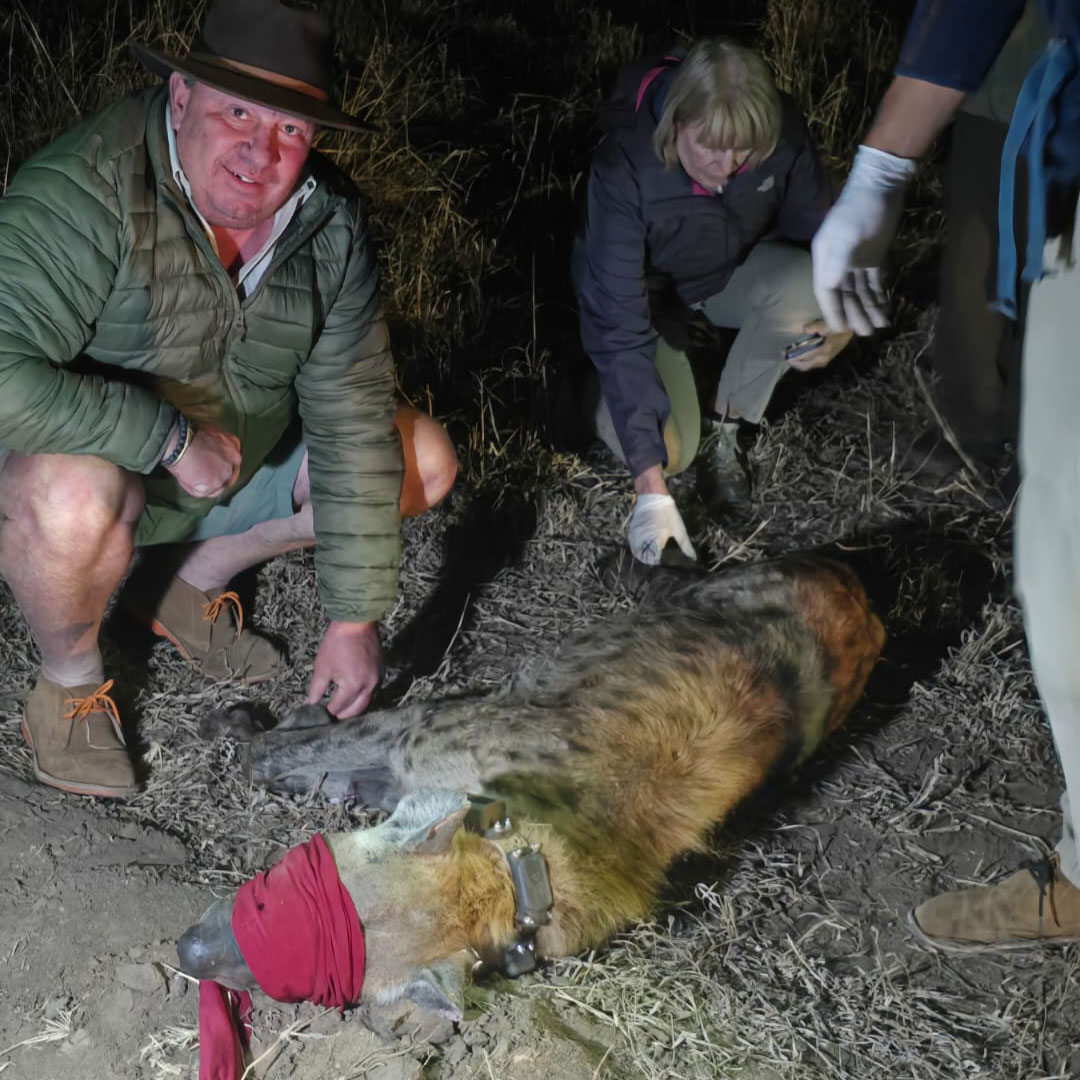
The range of activities across conservation organisations working on hyenas includes population monitoring (camera traps, GPS collaring, individual ID from spot patterns), research (behaviour, ecology, genetics, disease, reproductive biology), conflict mitigation (livestock protection, compensation schemes, farmer engagement), community education (changing cultural attitudes, building local conservation champions), policy advocacy (influencing land-use decisions and protected area management), and capacity building (training local rangers, researchers, and conservation managers).
The work is rarely glamorous. It involves long hours in the field, difficult conversations with communities under pressure, and slow institution-building. It is also irreplaceable.
How Conservation Safari Revenue Connects to This Work
At Ranger Buck Safaris, a portion of safari revenue supports field conservation operations. This is not a vague commitment — it means specific programmes, specific teams, and specific outcomes that guests can ask about directly. We believe that the value of a conservation safari is only as real as the fieldwork it funds. When you book a hyena conservation experience with us, you are not just observing. You are contributing to the organisations and the operations that keep these animals in the landscape.
How to Support Hyena Conservation If You Cannot Travel Now
If a safari is not possible right now, there are other ways to contribute:
- Donate directly to the EWT Carnivore Conservation Programme (ewt.org.za)
- Support Botswana Predator Conservation (bpctrust.org)
- Contribute to the African Wildlife Foundation’s community conservation work (awf.org)
- Follow and share the work of the UC Berkeley Hyena Project — public communication builds political will
Citizen science platforms including iNaturalist also accept hyena sightings and contribute to range mapping. If you are travelling independently in Africa and see hyenas, reporting sightings with photographs is a genuine contribution to population data.
Hyena Conservation Library
Everything you need to understand hyenas — their biology, behaviour, threats, and the work being done to protect them.
- Hyena conservation efforts explained →
- How many hyenas are left in Africa? →
- Are hyenas endangered? →
- Why are hyenas important to the ecosystem? →
- Human–hyena conflict explained →
- Human–hyena conflict solutions →
- Spotted, striped and brown hyenas →
- Where to see hyenas in Africa →
- Is a hyena conservation experience ethical? →
- What do hyenas eat? →
- Why do hyenas laugh? →
- Are hyenas scavengers or hunters? →
- How strong is a hyena’s bite? →
- Hyena intelligence & behaviour →
- Hyena myths vs facts →
- Hyena social structure & clans →
- Are hyenas dangerous? →
- How hyenas are monitored →
- Hyena threats: poisoning & snaring →
- Hyenas vs lions →
- Hyena vs leopard →
- Hyena vs wild dog →
- Hyena reproduction & cubs →
- Hyena habitat & range →
- Hyenas in African culture & folklore →
- Hyena conservation organisations →
- Hyena Conservation South Africa →
- Hyena Conservation Botswana →
- Hyena Conservation Zambia →
- Hyena Conservation Experience →
get in touch with us
+27 83 653 5776
+27 83 653 5776 (WhatsApp)
info@rangerbucksafaris.com
16 Lourie Close, Meyersdal Eco Estate,
Alberton, Gauteng
16 Lourie Close, Meyersdal Eco Estate, Alberton, Gauteng
Website by Keeden Marketing | 2024
