
Plan a trip
How Strong Is a Hyena’s Bite?
Last updated: April 2026
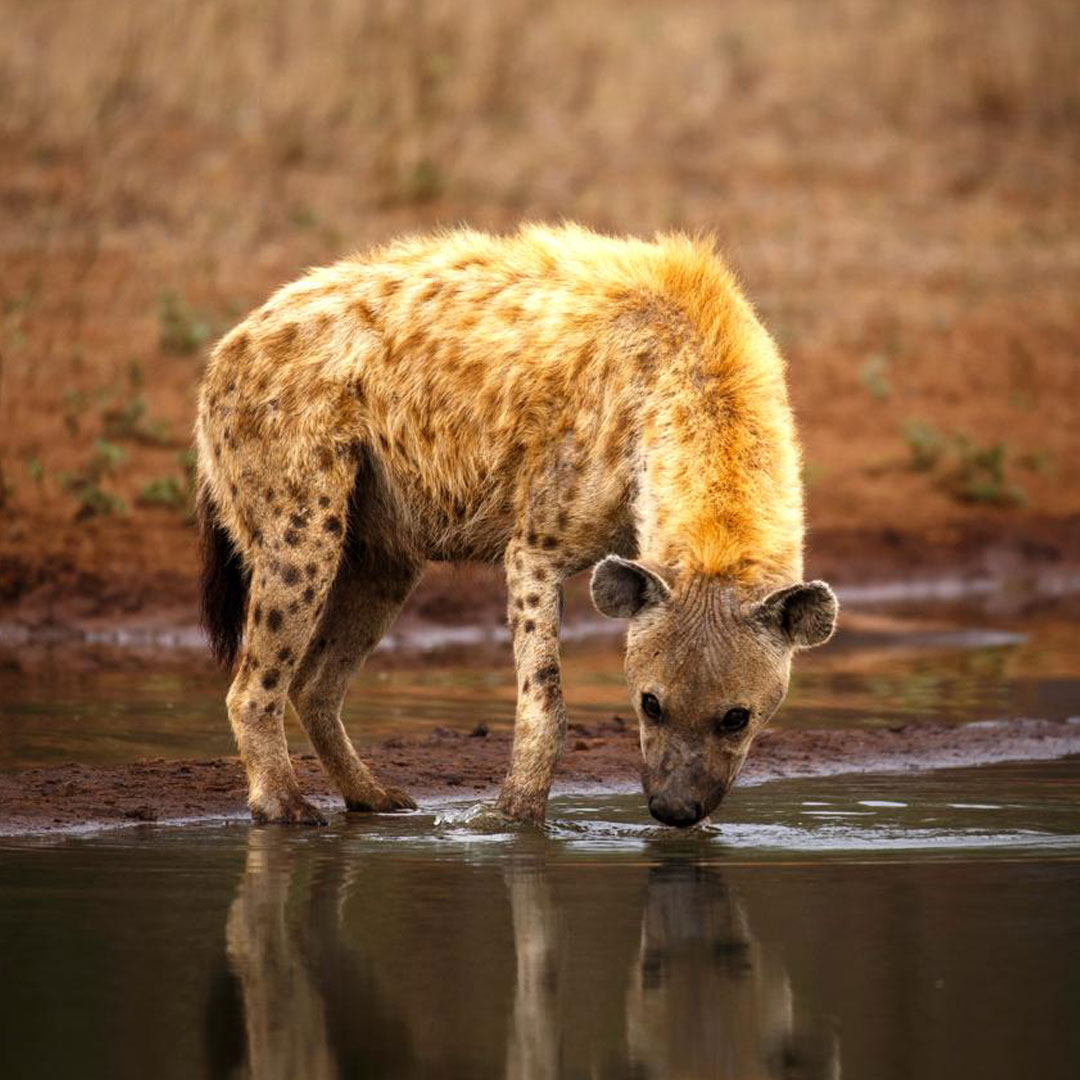
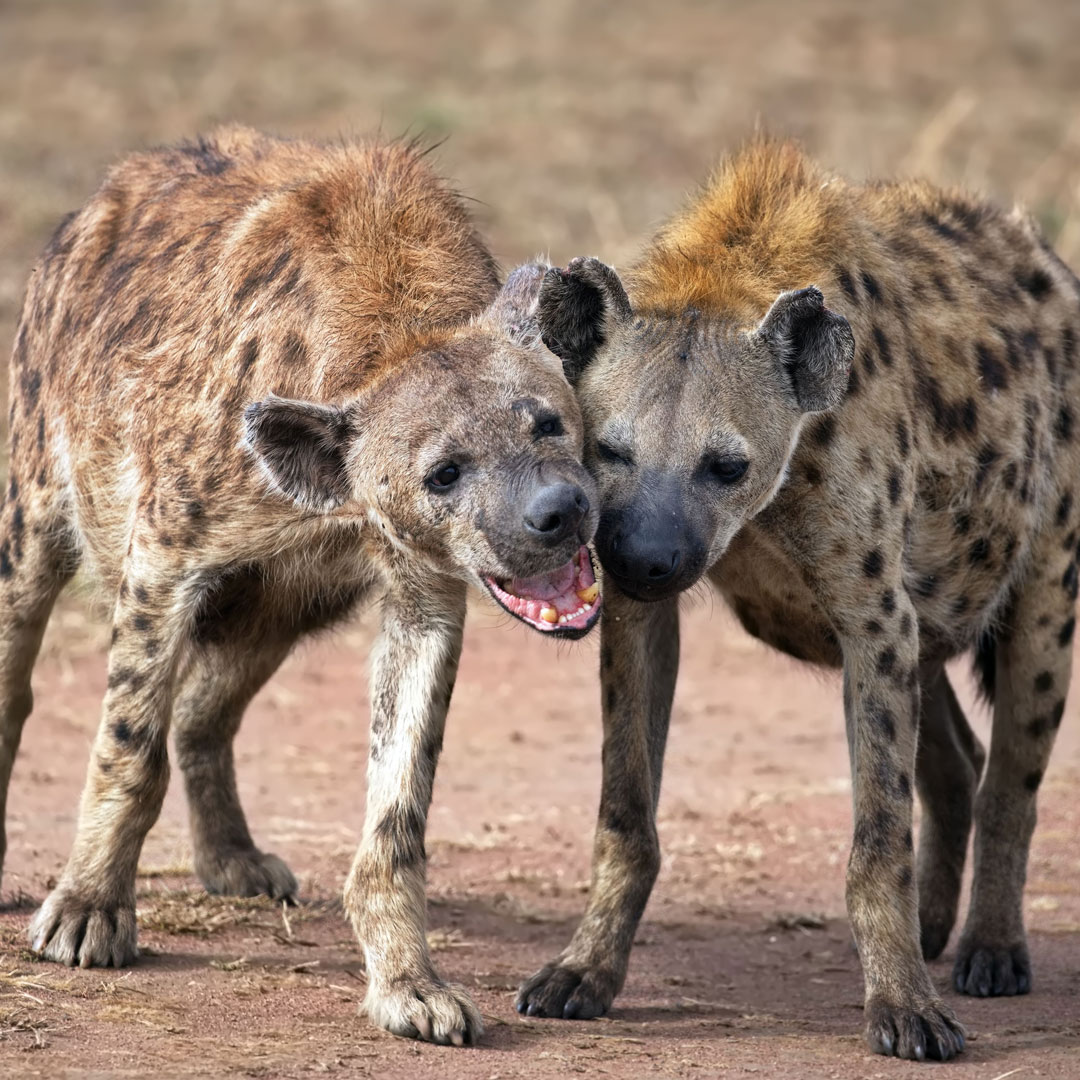
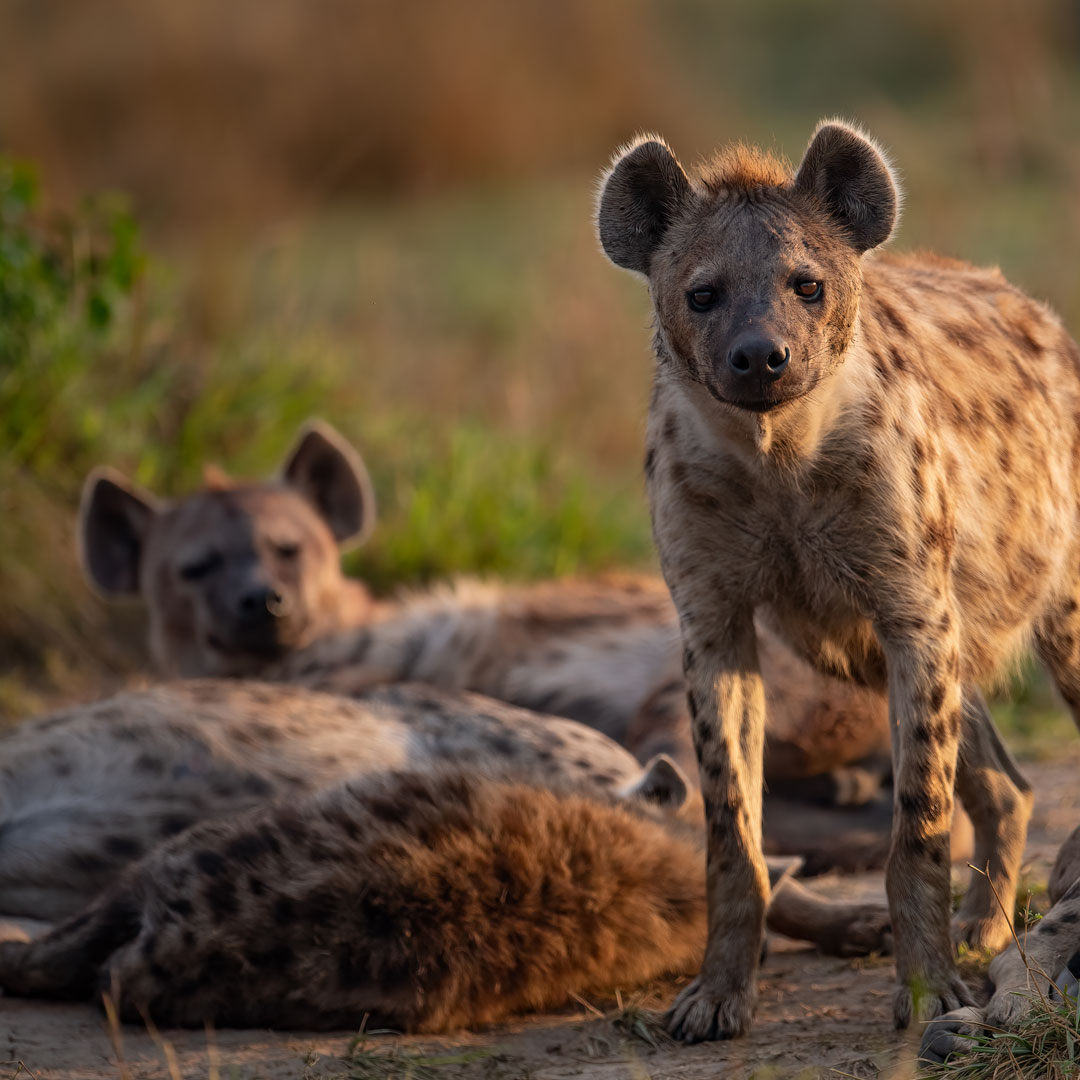
The spotted hyena has the strongest bite of any land carnivore relative to its body size. That is not a claim made loosely — it is a measurement backed by biomechanical research.
Understanding why that bite force exists, what it is used for, and what it means for the ecosystem reframes the hyena entirely. This is not brute power without purpose. It is one of the most refined evolutionary adaptations in the animal kingdom.
The Numbers
Bite force is measured in PSI (pounds per square inch) — the pressure exerted at the point of contact between the teeth. Comparative bite forces:
- Spotted hyena: approximately 1,100 PSI
- Lion: approximately 650 PSI
- Leopard: approximately 310 PSI
- Wolf: approximately 400 PSI
- German Shepherd: approximately 238 PSI
- Human: approximately 160 PSI
The spotted hyena’s bite force is not just the strongest among African carnivores — it is nearly double that of the lion. For an animal frequently portrayed as the inferior of the lion, that number demands attention.
Why Such a Powerful Bite?
The answer lies in the hyena’s ecological role, not its predatory aggression. The spotted hyena evolved to eat what other carnivores cannot. When a predator kills, it typically leaves bones, hooves and horn cores behind. These nutrient-dense materials are largely inaccessible to other species. The hyena evolved specifically to exploit this gap.
Bone marrow is extraordinarily rich in fat and nutrients — a high-value food source locked inside material that most teeth cannot breach. Hyenas crack open femurs, tibias and skulls to access marrow that would otherwise be wasted. Hooves, horns and teeth also contain keratin and mineral content that the hyena’s system can process. The result is a carcass that is consumed in its entirety. Nothing is wasted.
The Jaw Anatomy
The bite force comes from a highly specialised skeletal and muscular architecture. Key anatomical features:
- Temporalis muscles — massively enlarged; run from the skull to the lower jaw and generate primary closing force
- Masseter muscles — thick and powerful, reinforcing the bite from the side
- Bone-cracker premolars — blunt, heavily built teeth specifically shaped to apply maximum shearing and crushing force; distinct from the slicing carnassials used for meat
- Skull reinforcement — the hyena skull is heavily buttressed at the zygomatic arch and temporal ridge to withstand the reactive forces generated during bone crushing
The result is a jaw system that functions as both a meat-cutting tool and a bone-crushing vice — a dual-function apparatus with no equivalent among African land mammals.
The Ecological Payoff
The bite force is not just a personal advantage for the hyena. It is an ecosystem service. When a hyena cracks open and consumes bone, it accelerates the return of calcium and phosphorus to the soil. These minerals are locked in bone for months when left to natural decomposition.
White hyena droppings — pale from calcium content — are themselves a mineral deposit. They have been observed being licked by other wildlife seeking calcium. The hyena, in passing its waste, is fertilising the landscape. In landscapes with large herbivore populations and frequent mortality events, the presence of hyenas keeps the nutrient cycle moving efficiently.
Does Bite Force Make Hyenas Dangerous to Humans?
Spotted hyenas are cautious around healthy, upright humans. Unprovoked attacks are rare. The vast majority of documented human–hyena conflicts involve one of three contexts:
- Sick, sleeping or incapacitated individuals — particularly in rural areas where hyenas associate human spaces with food
- Food conditioning — hyenas that have been fed by or near humans lose their natural wariness
- Defence of cubs or a kill when an animal feels cornered
Hyenas are not predators of humans by default. They are wary, intelligent animals that weigh risk carefully. Their bite force is a tool for bone, not a weapon evolved for human conflict.
Bite Force Across the Animal Kingdom
To put the hyena’s 1,100 PSI in broader perspective:
- Saltwater crocodile: approximately 3,700 PSI
- Hippopotamus: approximately 1,800 PSI
- Spotted hyena: approximately 1,100 PSI
- Gorilla: approximately 1,300 PSI
- Grizzly bear: approximately 1,200 PSI
- Lion: approximately 650 PSI
Among land-based mammalian carnivores, the hyena sits at or near the top. Its position reflects not aggression but function — it is doing a job that requires extraordinary force, and it is built precisely for that job. The hyena is not powerful because it is dangerous. It is powerful because it is essential. That distinction matters for how we think about its conservation.
Hyena Conservation Library
Everything you need to understand hyenas — their biology, behaviour, threats, and the work being done to protect them.
- Hyena conservation efforts explained →
- How many hyenas are left in Africa? →
- Are hyenas endangered? →
- Why are hyenas important to the ecosystem? →
- Human–hyena conflict explained →
- Human–hyena conflict solutions →
- Spotted, striped and brown hyenas →
- Where to see hyenas in Africa →
- Is a hyena conservation experience ethical? →
- What do hyenas eat? →
- Why do hyenas laugh? →
- Are hyenas scavengers or hunters? →
- How strong is a hyena’s bite? →
- Hyena intelligence & behaviour →
- Hyena myths vs facts →
- Hyena social structure & clans →
- Are hyenas dangerous? →
- How hyenas are monitored →
- Hyena threats: poisoning & snaring →
- Hyenas vs lions →
- Hyena reproduction & cubs →
- Hyena habitat & range →
- Hyenas in African culture & folklore →
- Hyena conservation organisations →
- Hyena Conservation Experience →
get in touch with us
+27 83 653 5776
+27 83 653 5776 (WhatsApp)
info@rangerbucksafaris.com
16 Lourie Close, Meyersdal Eco Estate,
Alberton, Gauteng
16 Lourie Close, Meyersdal Eco Estate, Alberton, Gauteng

Website by Keeden Marketing | 2024
