



Plan a trip
Rhino Conservation Safari: A Guide for UAE Travellers
Last updated: August 2026
South Africa protects the world’s largest national population of African rhinos and remains central to both the poaching crisis and the conservation response. Ranger Buck Safaris helps travellers from Dubai, Abu Dhabi and across the United Arab Emirates understand the veterinary, monitoring and security work behind rhino protection.
This is a conservation-led journey rather than a staged wildlife encounter. Any field operation depends on genuine management need, permits, animal welfare and the decisions of qualified professionals. This guide explains how an ethical rhino experience can fit into a wider African safari package from the UAE.
Why UAE Travellers Are Choosing Rhino Conservation Safaris
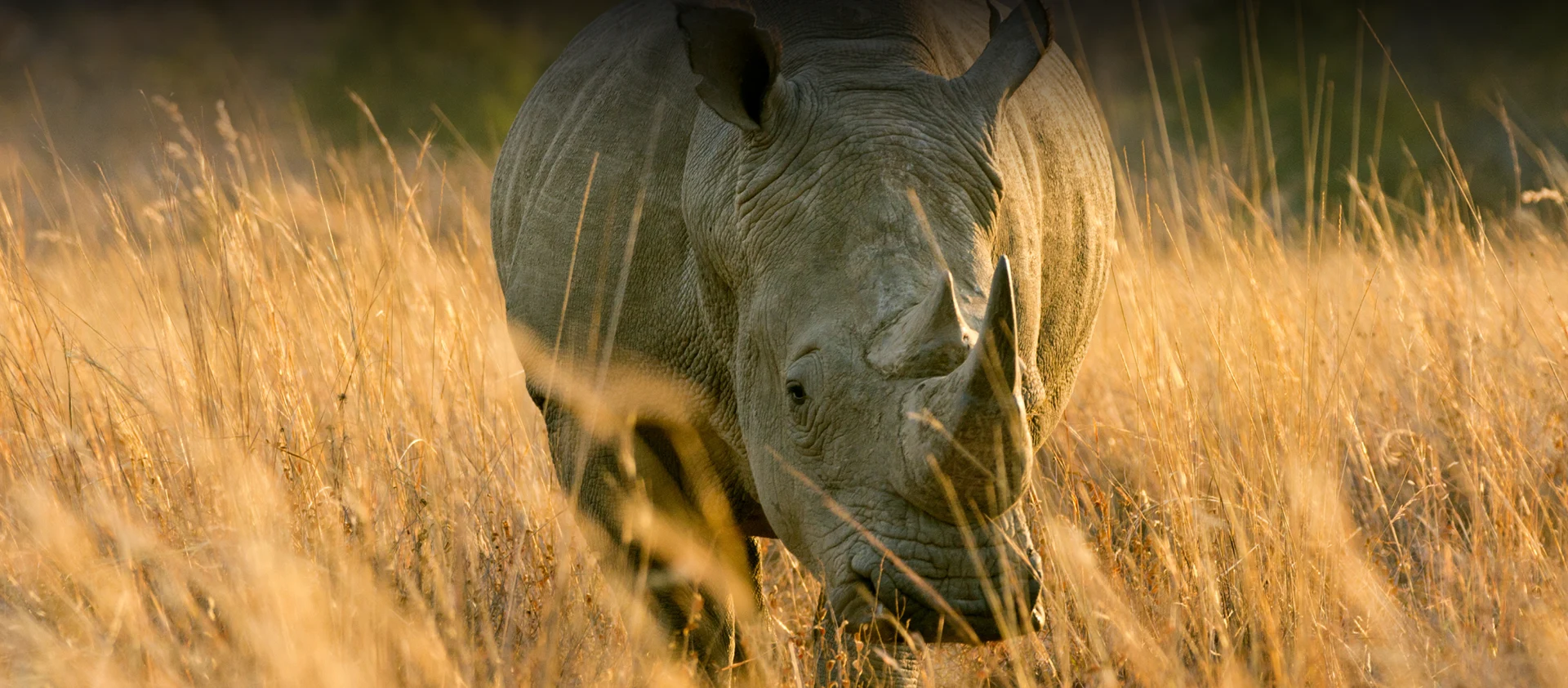
Rhino conservation is one of Africa’s most urgent and technically demanding wildlife challenges. The black rhino remains Critically Endangered, while white rhinos continue to face severe pressure from poaching, habitat constraints and the difficulty of maintaining healthy, connected populations. For travellers who want their safari to contribute to something measurable, direct insight into this work can be profoundly meaningful.
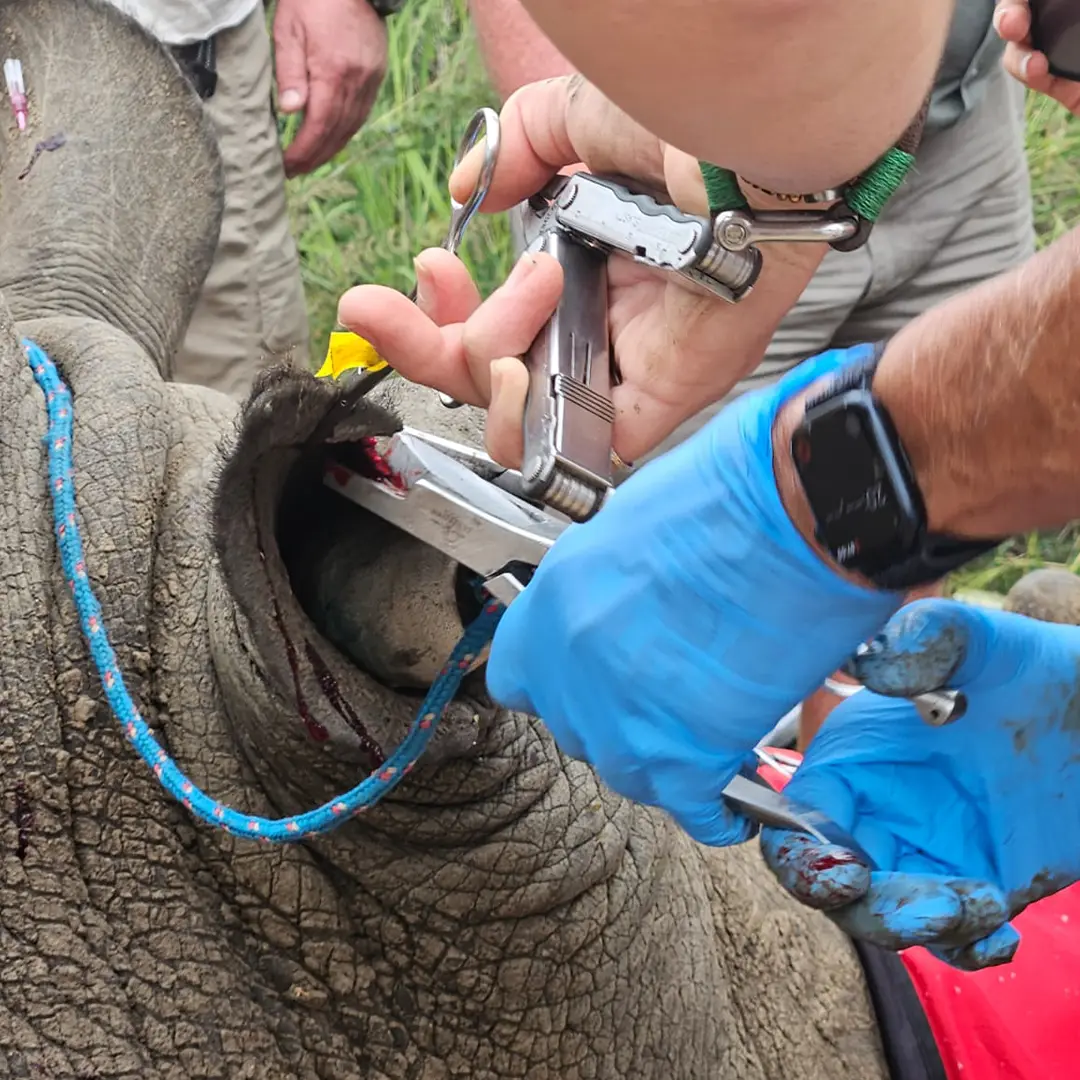
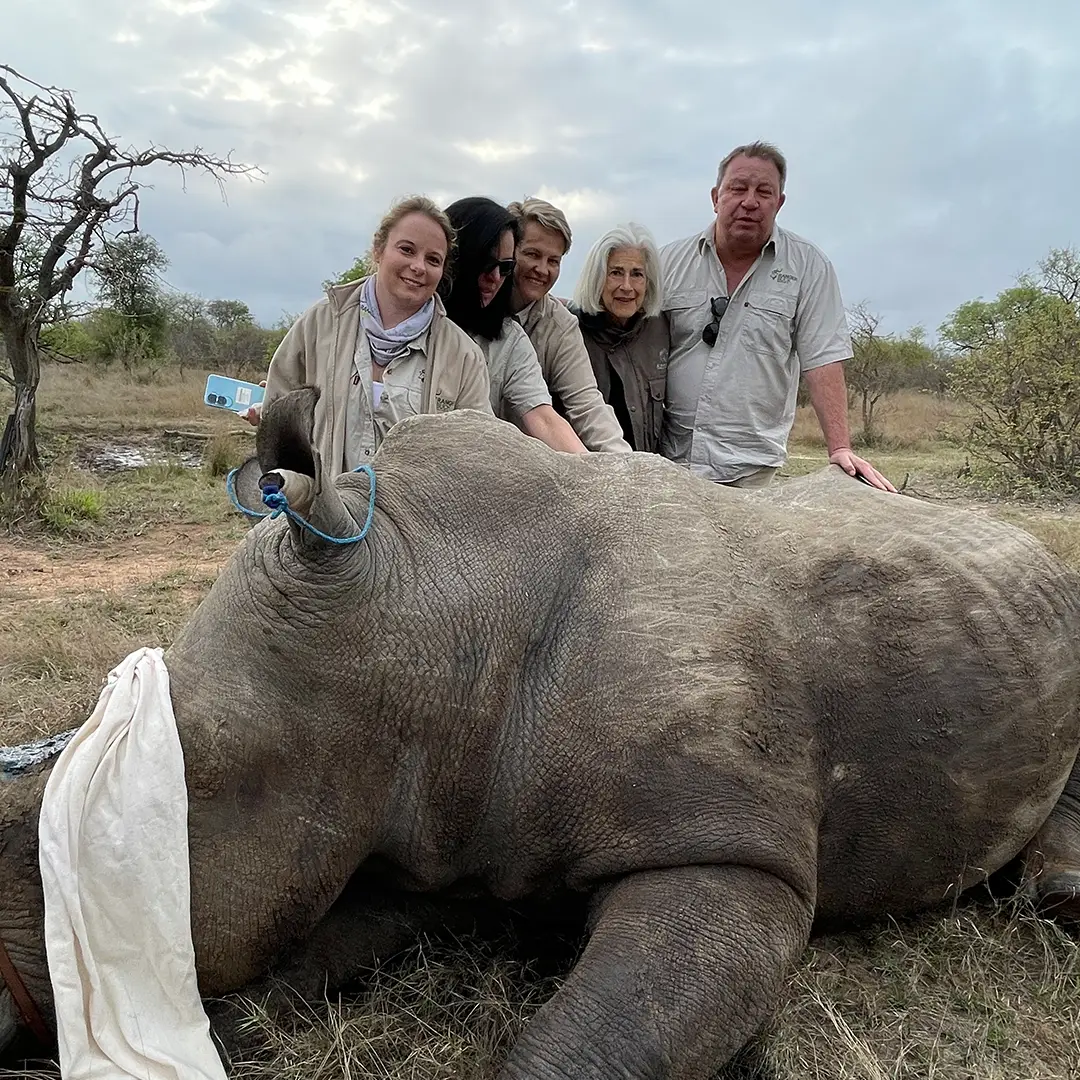
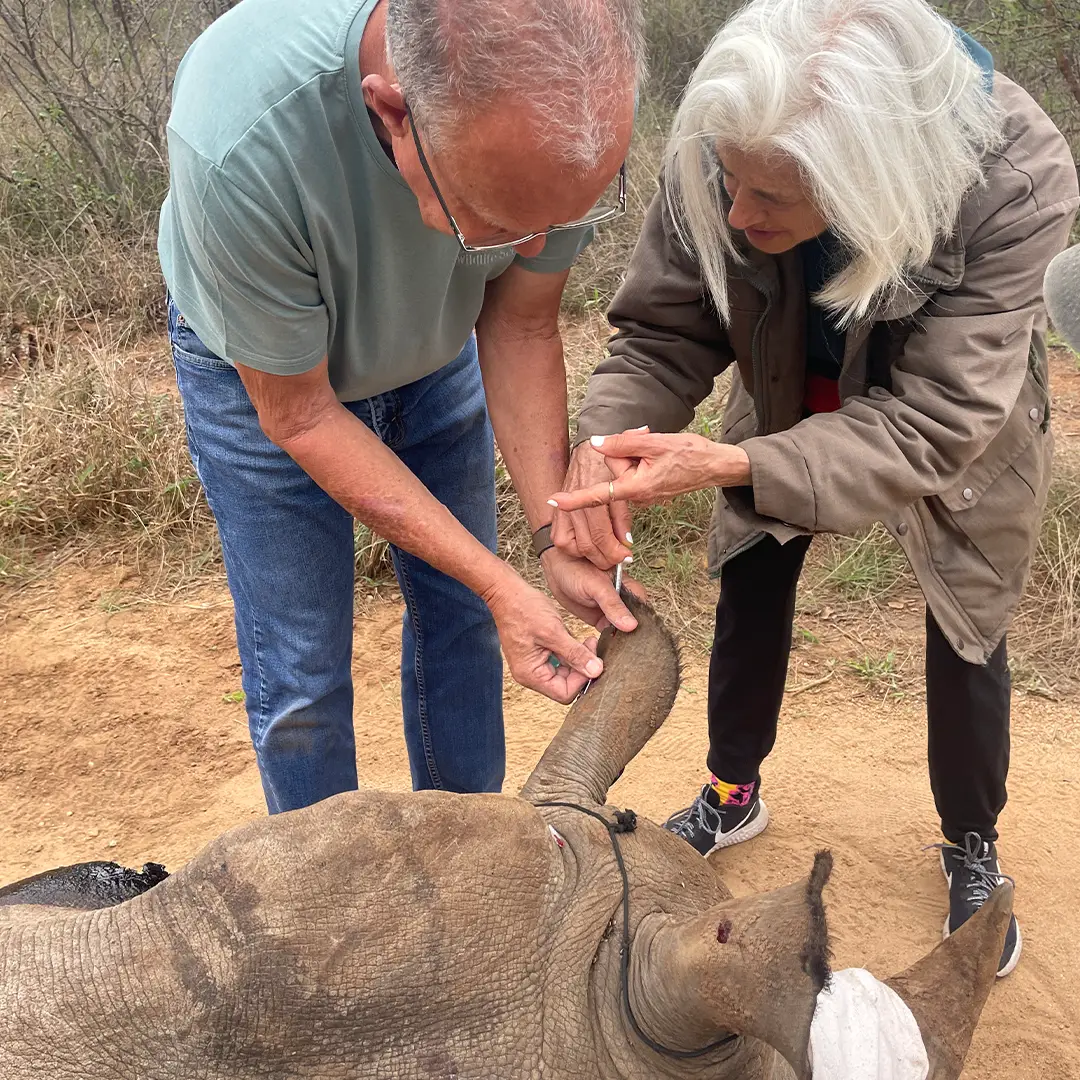
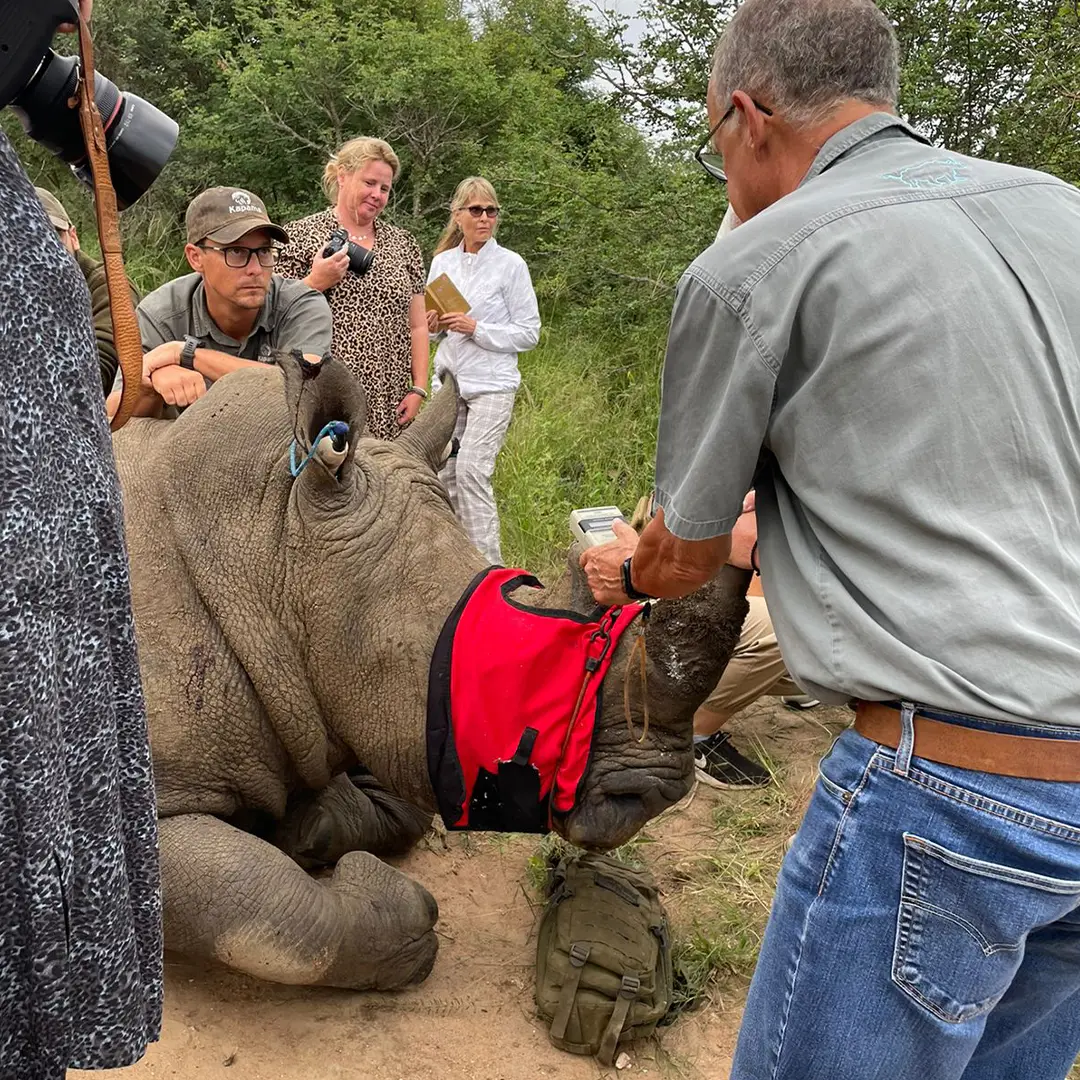
Ranger Buck can build a private, conservation-first programme around premium lodge accommodation, professional guiding and broader Big Five viewing. Depending on the confirmed operation, travellers may learn how teams use ear notching, microchips, DNA sampling, health checks, telemetry, dehorning and translocation as part of long-term management. The experience can sit within a luxury safari package from the UAE without compromising welfare or scientific purpose.
Nonstop flights, a two-hour time difference and flexible regional connections make South Africa practical for an Eid break, school holiday or longer annual leave. Private vehicles, exclusive-use villas and carefully paced days can suit couples, executive groups and multigenerational families. Parents can compare Ranger Buck’s broader family safari options from the UAE, while noting that specialist field operations may have minimum-age rules.
Getting to South Africa from the UAE
Emirates operates nonstop services from Dubai International Airport (DXB) to Johannesburg (JNB), and Etihad connects Zayed International Airport in Abu Dhabi (AUH) with Johannesburg. Published nonstop journey times are approximately 8 hours 10 minutes, depending on the date and service. Travellers from Sharjah and the Northern Emirates can connect through Dubai or Abu Dhabi. Ranger Buck can include international and domestic sectors in safari packages with flights from the UAE.
South Africa is two hours behind the UAE throughout the year, so jet lag is generally limited. From Johannesburg, a short domestic flight reaches Hoedspruit for Greater Kruger, followed by a road or lodge transfer. Some rhino projects operate elsewhere in South Africa, and the final route must follow the actual conservation programme rather than assuming that every operation takes place near Kruger.
Passports, Visas and Health Planning
UAE passport holders can currently visit South Africa without a visa for stays of up to 90 days. Entry rules are determined by the passport used for travel, not UAE residency alone, so expatriate residents may have different requirements. Every traveller should confirm passport validity, blank-page, minor-child and transit rules before tickets are issued.
Parts of Greater Kruger and some other safari regions have malaria risk. Seek advice from a qualified travel-health professional for the exact itinerary, season and personal medical history. Comprehensive insurance should cover treatment, evacuation, cancellation, delays and any specialist activity confirmed in the final programme. The African safari safety guide for UAE travellers covers transfers, cities, reserves and sensible precautions.
What to Pack When Leaving the UAE
Dry-season mornings, helicopter staging areas and open vehicles can be cold, even when afternoons are warm. Bring layers, a warm jacket, neutral clothing, closed shoes, sun protection and personal medication. Loose items may be restricted around aircraft or veterinary equipment. Use Ranger Buck’s African safari packing list for UAE travellers and follow any additional instructions supplied by the field team.
Best Time to Visit from the UAE
Rhino conservation work may take place throughout the year, but May to October often provides dry roads, lower vegetation and comfortable daytime field conditions. This period overlaps with the UAE’s hottest months and long school summer holiday. July and August are therefore popular for families, while May, June, September and October may offer different lodge availability.
No month can guarantee a veterinary operation. Darting, dehorning, notching, sampling or translocation happens only when the reserve’s management plan requires it and when weather, permits, aircraft, veterinarians and animal welfare conditions align. Ranger Buck should confirm the conservation objective before the itinerary is sold. Book approximately 3–6 months ahead and earlier for a private group or fixed holiday window.
A focused experience can work in 7–10 nights, while 12–14 nights provides enough flexibility for Greater Kruger, a second reserve and Cape Town. Compare seasonal conditions across the continent in the guide to the best time to visit Africa from the UAE. First-time visitors can also read the first-time safari guide for UAE travellers.
What Your Rhino Conservation Experience Involves
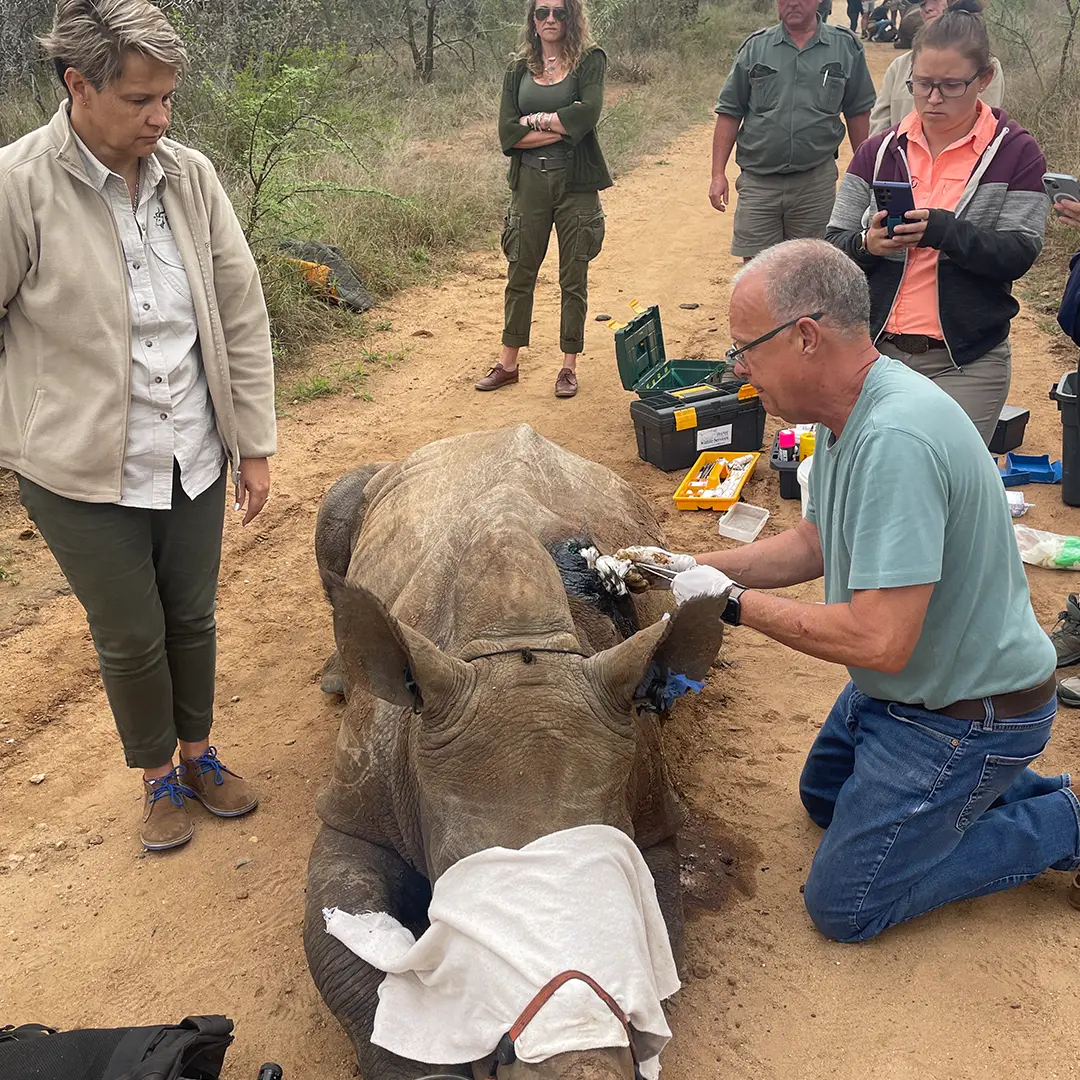
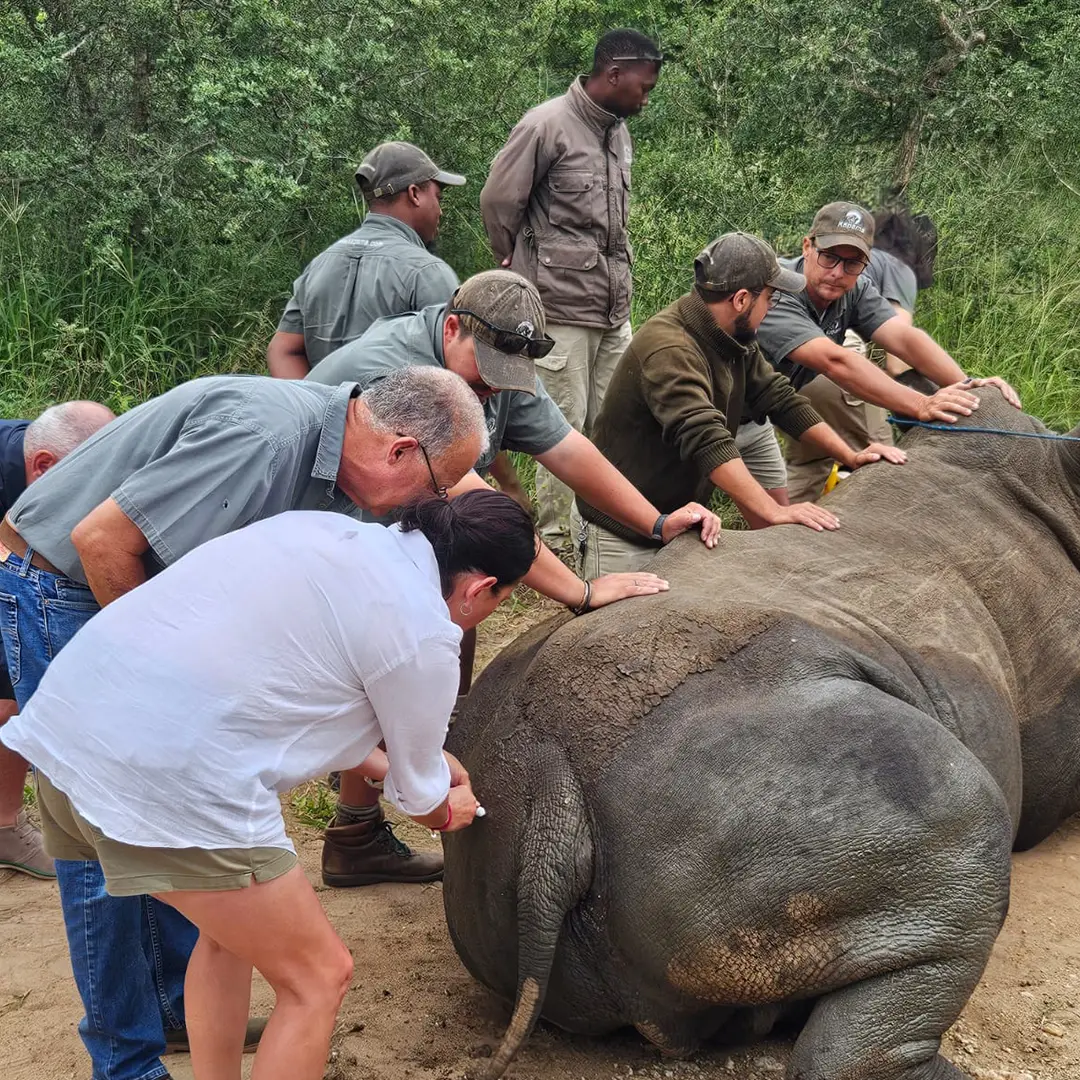
A genuine operation begins with the conservation purpose, not with the guest. The reserve, veterinarian and wildlife-management team identify an animal or population need—such as identification, health assessment, DNA collection, microchipping, ear notching, horn management or relocation—and decide whether an intervention is justified. Guests receive a safety and welfare briefing before entering any operational area.
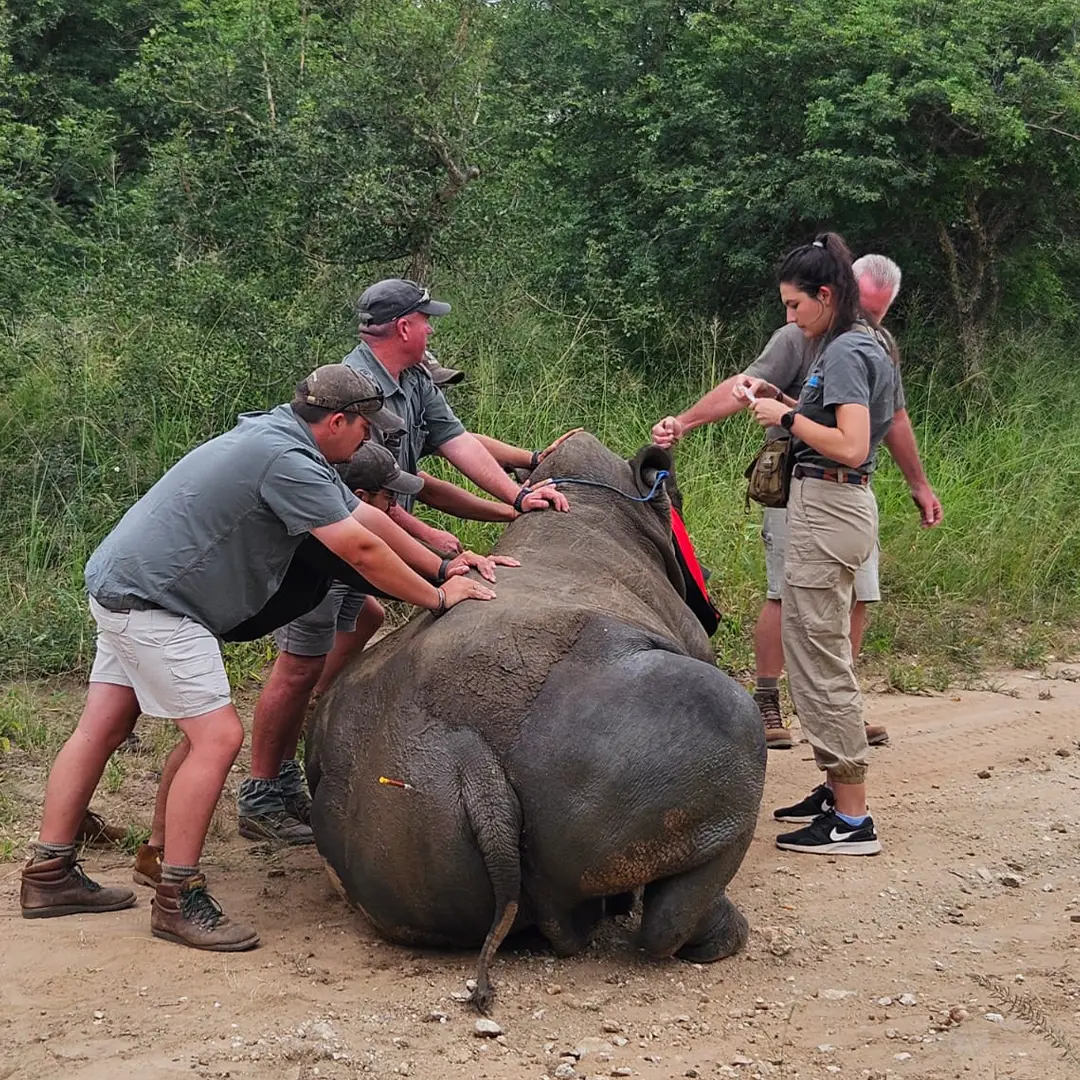
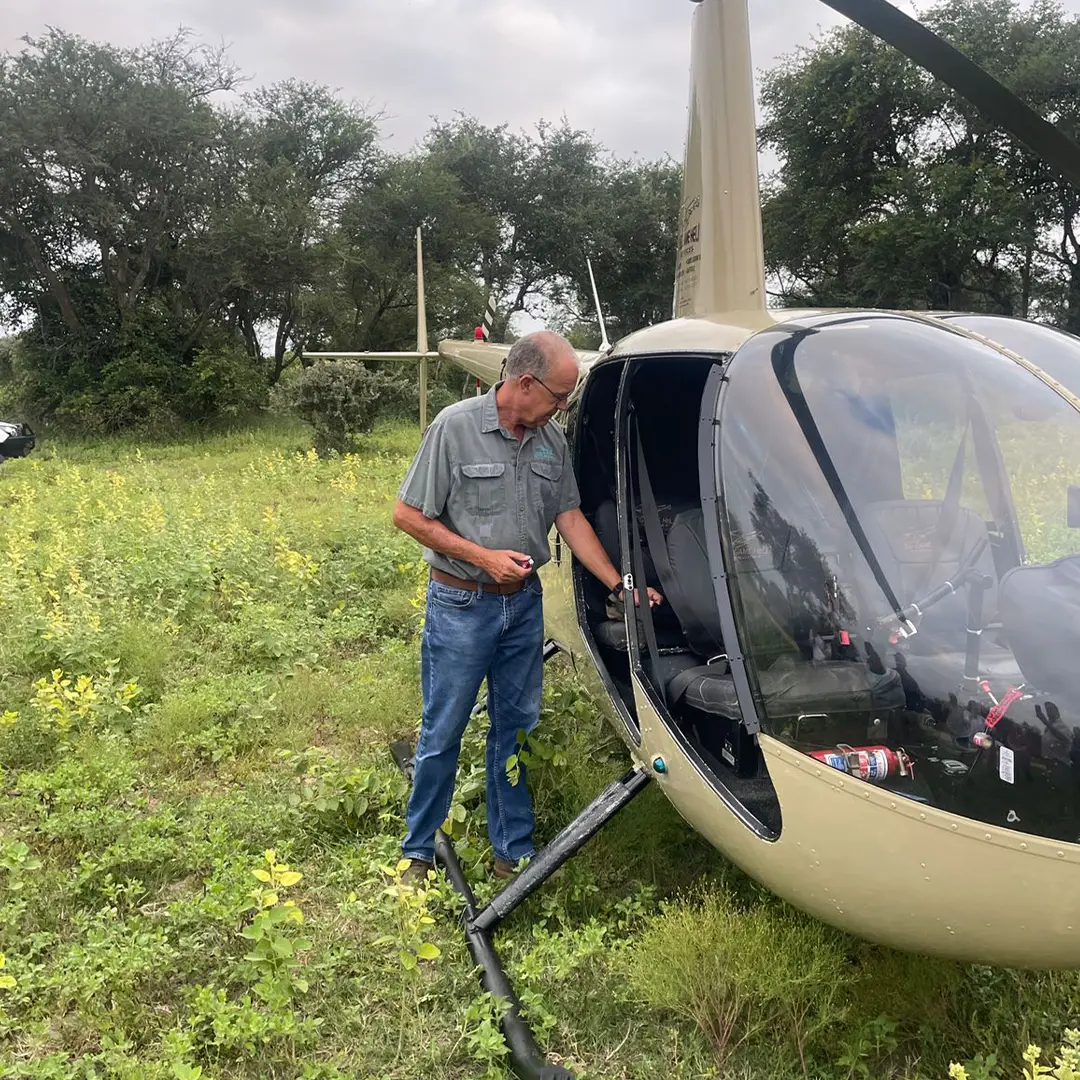
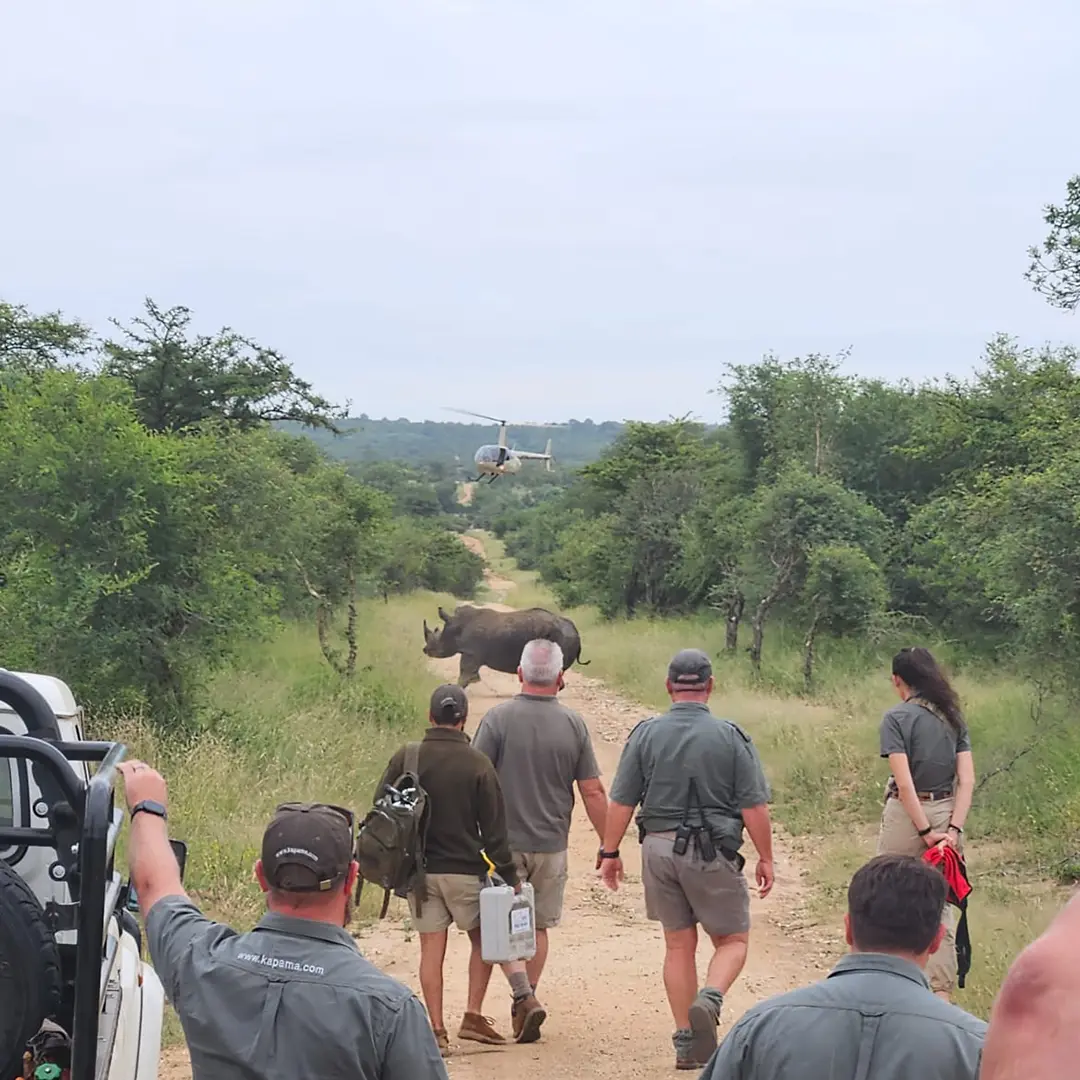
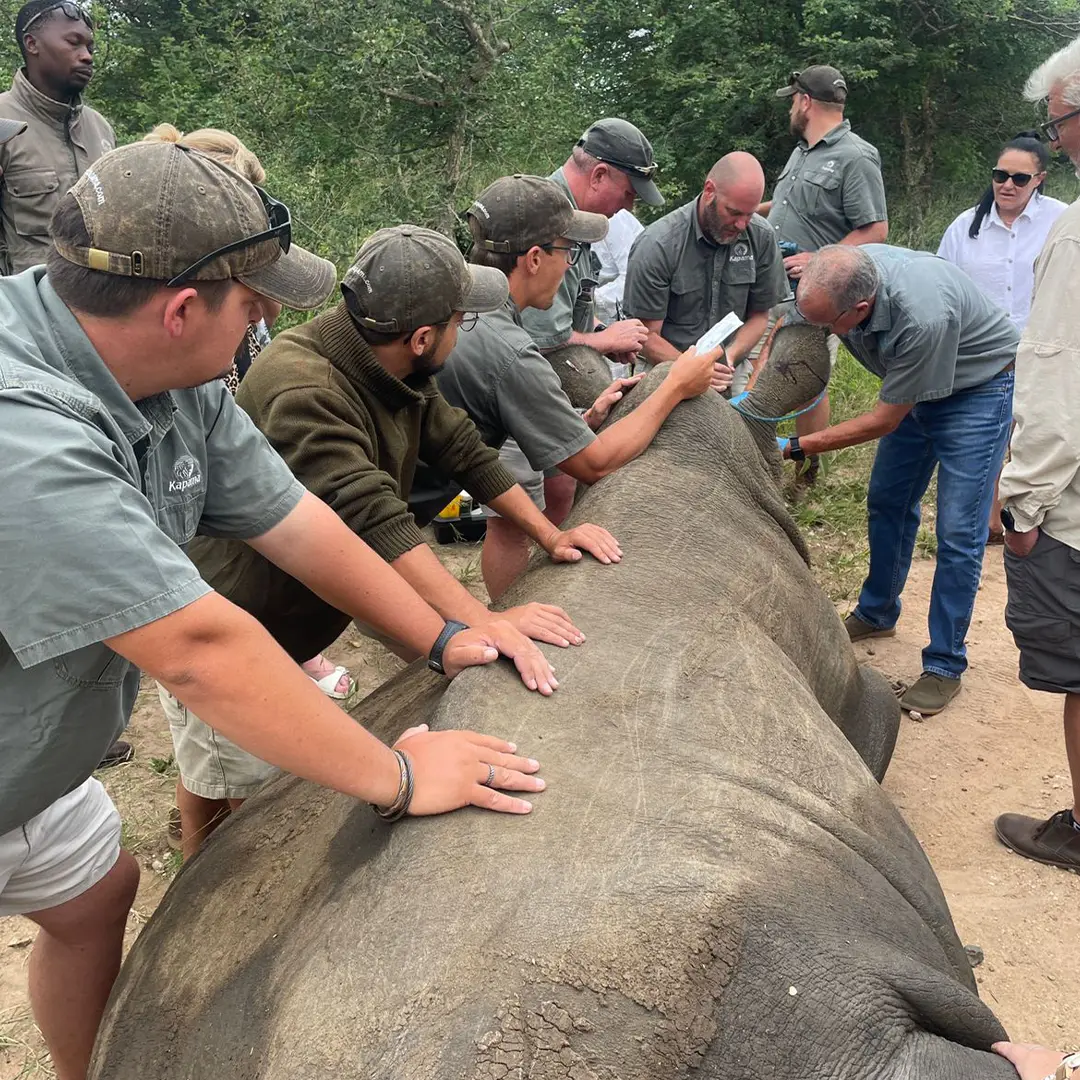
If a rhino must be located from the air, a licensed wildlife veterinarian may work with an experienced helicopter pilot and ground team. Once the animal is safely immobilised and the site secured, the professionals monitor breathing, temperature, oxygenation and the effect of the anaesthetic. Measurements, photographs and biological samples can contribute to individual records and population management. The veterinarian then administers the reversal drug and the team observes the rhino’s recovery from a safe distance.
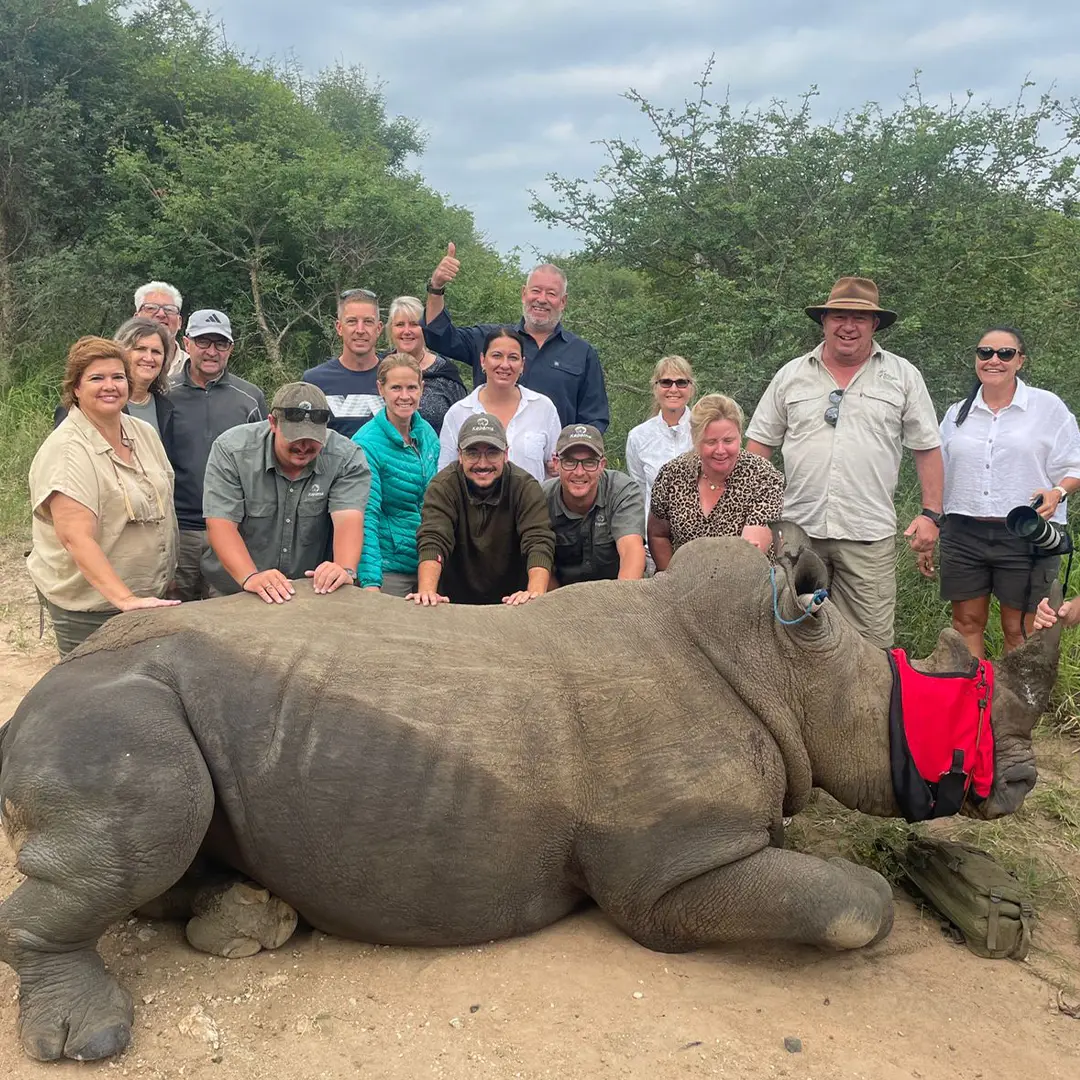
Guest involvement varies. Under direct instruction, and only where regulations and the supervising team allow it, a traveller may be invited to help with a simple non-invasive task. In other cases, guests observe from a designated position and learn through the briefing and debrief. Touching, handling, approaching the animal, using medical equipment or assisting with sampling must never be assumed. The operation proceeds exactly as it would without tourists, and the rhino’s welfare takes priority over photographs or participation.
The broader conservation picture extends far beyond one procedure. Rhino protection includes ranger patrols, intelligence-led anti-trafficking work, habitat management, population monitoring, genetic planning, carefully managed translocations and collaboration with communities near protected areas. South Africa recorded 352 rhinos poached in 2025, a decline from 420 in 2024 but still a severe and continuing threat. A responsible itinerary explains both the immediate field task and the long-term strategy behind it.
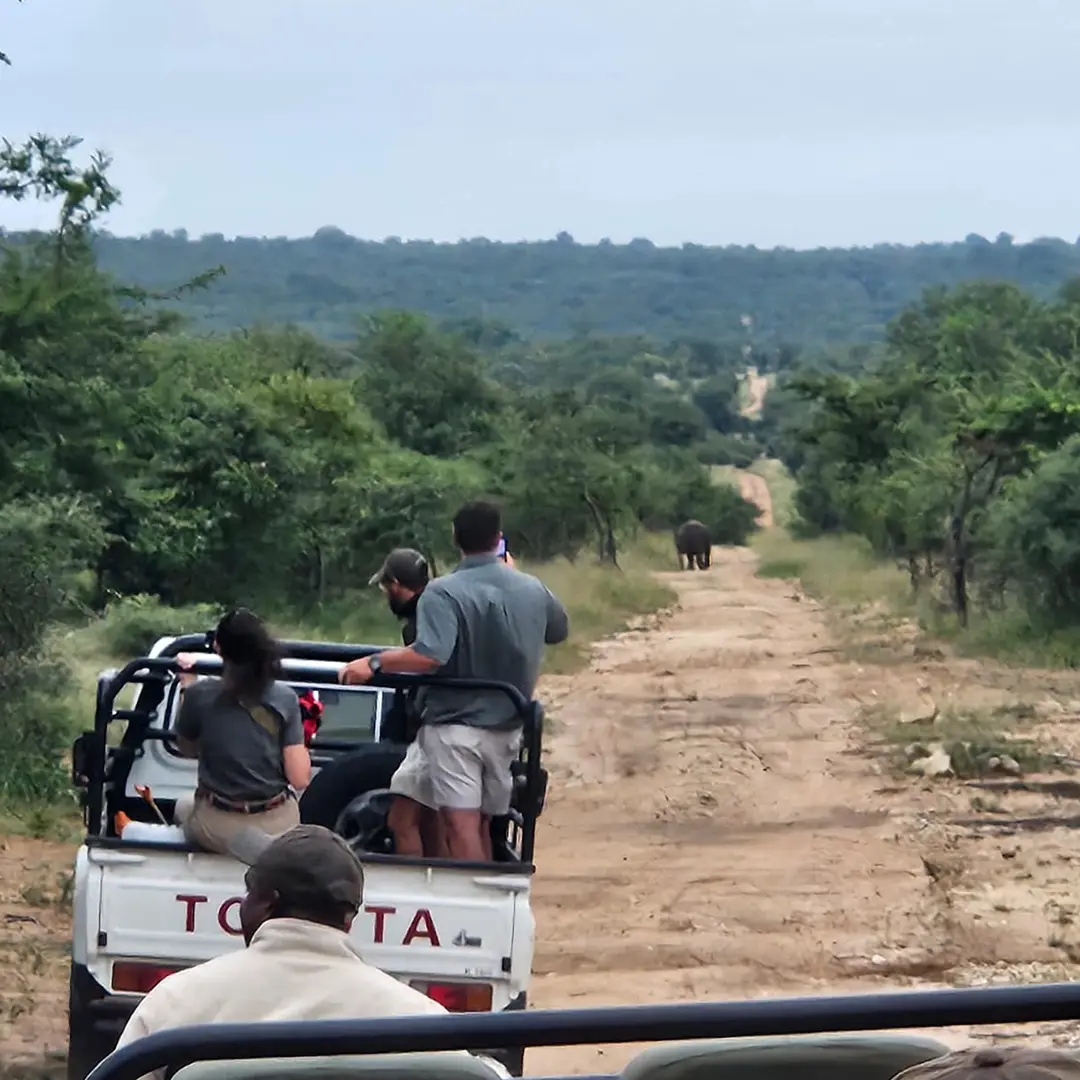
Ranger Buck can combine the conservation day with morning and afternoon game drives, specialist talks and several nights in a quality private reserve. Explore the available Kruger safari packages from the UAE or compare the wider South Africa safari packages from the UAE.
How to Recognise an Ethical Rhino Operation
The conservation partner should be identifiable, the management objective should be explained and the veterinarian must retain complete authority over timing, proximity and guest conduct. Promotional language should never place photography or physical contact above the animal’s welfare. A credible programme also states what happens if weather, aircraft availability, animal movement or a change in management priority causes the operation to be postponed.
Ask how the contribution is allocated and what records the operation creates. A useful intervention may support identification, genetic management, disease surveillance, security planning or movement between populations; it should not exist simply because guests paid to be present. Ethical programmes limit group size, protect sensitive location data and control how images are captured and shared. Rhino locations, security procedures and identifiable staff details should never be published in ways that could compromise protection.
Travellers should also understand the limits of one day in the field. A veterinary operation can be an important part of a conservation plan, but viable rhino populations depend on years of habitat management, breeding success, law enforcement, scientific monitoring and collaboration among reserves. The best journey uses the operation as an entry point into that larger story.
Meals, Privacy and Family Requirements
Many premium lodges can arrange halal-friendly meals, alcohol-free room setups, private vehicles, dietary requirements, interconnecting rooms or exclusive-use villas when asked in advance. Facilities and certification differ, so each requirement must appear in the confirmed proposal. Children may be excluded from a helicopter or veterinary operation because of age, safety or insurance rules; alternative lodge activities can be planned.
What a Rhino Conservation Safari Costs from the UAE
A private rhino operation requires a veterinarian, aircraft or specialist tracking, trained ground staff, equipment, permits and reserve coordination. For planning purposes, a compact three-night programme for four people—combining a confirmed conservation operation, quality lodge accommodation, domestic flights or transfers and game drives—may begin around AED 28,000 per person sharing. The exact amount depends on group size, operation type, lodge category and what the conservation partner includes.
A complete 10–14-night journey combining the specialist experience with a private reserve and Cape Town may range from approximately AED 40,000–85,000 per person. International economy flights from the UAE often begin around AED 2,500 return but can rise substantially during school holidays, Eid periods or for premium cabins. These are indicative planning figures, not fixed package prices, and currency movements can change the final AED quotation.
The proposal should identify the conservation contribution, veterinary and aircraft costs, accommodation, meals, drinks, reserve levies, transfers, flights, private vehicle, insurance requirements and exclusions. Use the African safari cost guide for UAE travellers for a broader breakdown. Travellers who prefer a single comprehensive quotation can consider an all-inclusive South Africa package from the UAE, with every inclusion confirmed in writing.
Building Your Rhino Conservation Itinerary
7–10 nights — Rhino and Greater Kruger: Arrive in Johannesburg, fly to Hoedspruit and spend four or five nights in the reserve linked to the confirmed conservation operation. Add a second Greater Kruger lodge for broader game viewing and a slower pace. This is the most efficient structure for travellers with limited leave.
10–12 nights — Conservation and Botswana: Combine the South African field programme with a contrasting wetland or savanna camp selected from Ranger Buck’s Botswana safari options from the UAE. Regional flights and passport requirements must be checked before ticketing.
12–14 nights — Rhino, Victoria Falls and Cape Town: Begin with the conservation programme, continue to a Victoria Falls extension from the UAE, and finish with a Cape Town stay. This balances a demanding field experience with scenery, culture, food and time to unwind.
Every itinerary depends on the conservation schedule, lodge and specialist availability, traveller ages, dietary and privacy needs, cabin class and the passports used for regional entry. Review Ranger Buck’s African safari itineraries from the UAE, then submit your dates and group details for a personalised proposal. The final itinerary must name the conservation partner, explain the intended operation and state clearly which activities are conditional.
Rhino Conservation Library
Everything you need to understand the rhino conservation crisis — and what a real hands-on veterinary conservation experience involves.
- Rhino Conservation Experience (the hub — start here) →
- Rhino conservation efforts explained (how protection works, what’s involved) →
- How many rhinos are left in South Africa? (latest context + why it matters) →
- Join the veterinary team (notching, DNA sampling, the real behind-the-scenes operation) →
- Ethical rhino conservation safari checklist (what to avoid + what to choose) →
- Black rhino conservation experience (South Africa) →
- Custom rhino conservation experience (Southern Africa) →
get in touch with us
+27 83 653 5776
+27 83 653 5776 (WhatsApp)
info@rangerbucksafaris.com
16 Lourie Close, Meyersdal Eco Estate,
Alberton, Gauteng
16 Lourie Close, Meyersdal Eco Estate, Alberton, Gauteng

Website by Keeden Marketing | 2024
