



Plan a trip
Wild Dog Conservation Safari: A Guide for Australian Travellers
Last updated: April 2026
African wild dogs are among the rarest large carnivores on earth. With approximately 6,600 remaining, the species is more endangered than lions, leopards, or cheetahs. Ranger Buck Safaris offers Australian travellers direct access to the GPS pack tracking, snare removal, and community work that is making a difference for wild dogs in Southern Africa.
Here is everything you need to plan your wild dog conservation safari from Australia.
This short video shows the type of behind-the-scenes conservation work that may form part of a trip. Every operation is guided by animal welfare protocols and professional conservation teams, and activities can change based on conservation priorities, permits, and conditions on the ground.
Ranger Buck and a family of conservationists embark on a wild dog conservation mission in Madikwe Game Reserve.
The team plans to head out in the afternoon to track a pack of African wild dogs, and they already have a general idea of the pack’s location from prior monitoring.
A wildlife veterinarian accompanies the group to assist with a targeted darting operation.
The focus is specifically on the alpha female, the primary breeding individual in the pack.
As the dominant breeder, the alpha female plays a critical role in the survival and future population growth of the pack.
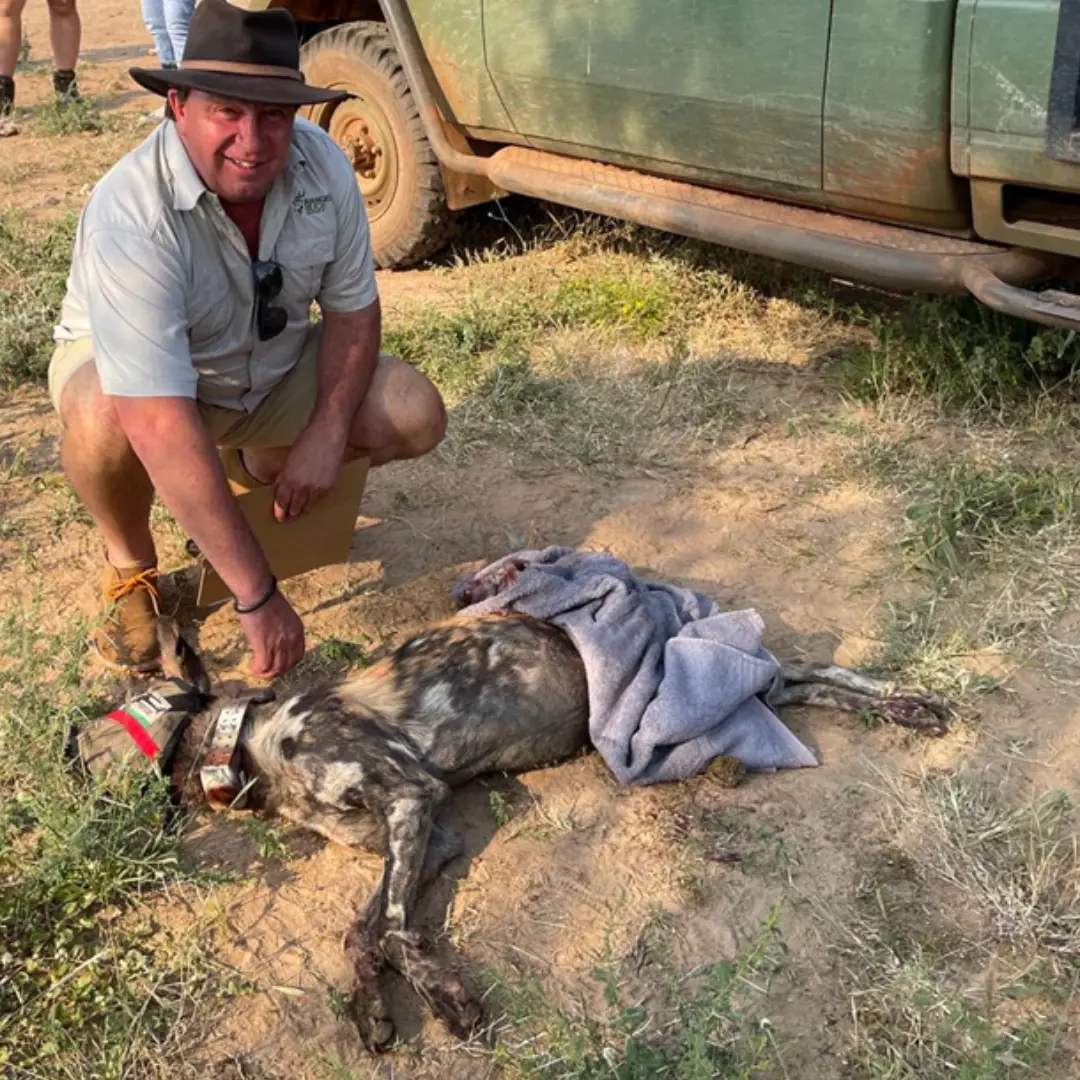
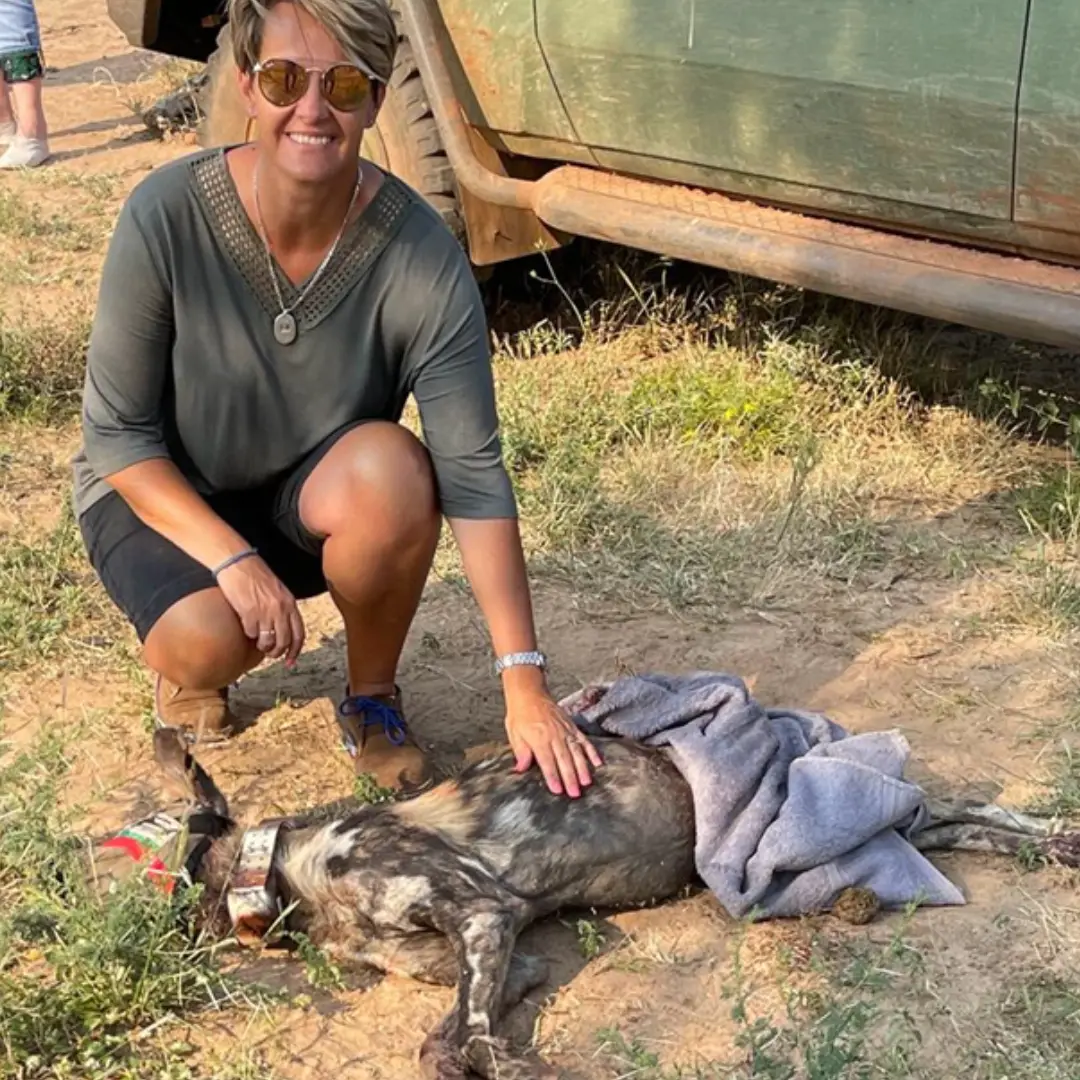
Once safely darted, the team collects essential biological data, including body measurements and blood samples.
She is also inoculated against canine distemper, a disease that can devastate wild dog populations.
The collected data helps researchers assess her health and reproductive status, which directly impacts pup production and pack stability.
Protecting the alpha female helps prevent pack fragmentation, which often occurs if a breeding female is lost.
All findings are shared with the Endangered Wildlife Trust, contributing to broader African wild dog conservation research.
The operation highlights the importance of scientific monitoring, veterinary care, and targeted intervention in conserving endangered species.
While the video does not specify tracking tools used in this case, broader conservation efforts commonly rely on GPS collars, VHF telemetry, camera traps, drones, spoor tracking, and direct observation.
These combined monitoring methods allow conservationists to understand movement patterns, manage threats, and protect critical habitats.
Archie from Ranger Buck Safari thanks the clients and contributors who made the conservation experience possible, emphasizing the role of tourism-supported conservation.
Why Australian Travellers Are Choosing Wild Dog Conservation Safaris
African wild dogs are Endangered. Approximately 6,600 remain — a number that puts the species in a genuinely precarious position globally. They are Africa’s most efficient pack hunters, with a social structure and cooperative intelligence that Australian wildlife researchers have specifically studied as a parallel to dingo pack behaviour. For Australian travellers making the long trip to Africa, wild dog conservation offers the depth of engagement that justifies the journey.
The Ranger Buck wild dog conservation experience delivers GPS collar tracking access, camera trap fieldwork, snare removal patrols, and community engagement sessions — all built into a luxury Southern Africa safari. Wild dogs are elusive without proper field access. With Ranger Buck, you work alongside the conservation team that knows where the packs are and what the data means.
Getting to Southern Africa from Australia
Perth (PER) has a direct South African Airways service to Johannesburg — approximately 10–11 hours, the shortest route from any Australian city. From Sydney or Melbourne, Emirates via Dubai reaches Johannesburg in approximately 14–15 hours total; Singapore Airlines via Changi takes 15–16 hours. Australian citizens do not require a visa for South Africa or Zimbabwe. From Johannesburg, domestic flights reach Hoedspruit (HDS) for the Greater Kruger private reserves (30–50 min), or Harare/Victoria Falls (HRE/VFA) for Zimbabwe. Perth travellers benefit from minimal time zone adjustment.


Best Time to Visit from Australia
Wild dogs are active year-round but the Southern African dry season (May–October) provides the best tracking conditions and coincides with the Australian winter. The mid-year school holidays (late June to mid-July) are the top booking window for Australian families. September–October school holidays also catch excellent late dry season conditions. Greater Kruger private reserves offer night drives year-round — essential for catching wild dog dawn and dusk hunting behaviour. Book 4–6 months ahead for peak season availability.
What Your Wild Dog Conservation Experience Involves
African wild dogs operate as highly coordinated packs. Depending on the field schedule during your visit, a Ranger Buck wild dog conservation experience may include: joining field staff to track pack movements using GPS collar data and VHF telemetry; assisting with camera trap deployment and retrieval contributing to long-term population monitoring; supporting snare removal patrols in buffer zones bordering reserve boundaries; participating in community engagement work addressing human–wild dog conflict in farming areas; and learning how pack composition data informs management decisions across the broader landscape.
Sightings of wild dogs on the hunt are among the most dramatic in African wildlife — their 80% kill success rate and coordinated pursuit strategies are unlike anything else on the continent. The conservation experience is integrated into a full luxury safari with premium lodge accommodation and expert guiding throughout. No staged encounters. The programme follows genuine conservation need.
What It Costs
Greater Kruger private reserve pricing runs approximately AUD 920–AUD 2,300 per person per night all-inclusive. A 12–14 night wild dog conservation itinerary covering two destinations runs between AUD 13,000 and AUD 27,000 per person including internal flights. Return flights from Sydney/Melbourne add approximately AUD 1,800–AUD 3,500; Perth direct adds approximately AUD 1,400–AUD 2,200.
Building Your Itinerary
12 nights — Kruger and Zimbabwe: Johannesburg + 4 nights Greater Kruger private reserve (wild dog conservation fieldwork, Big Five) + 4 nights Hwange National Park, Zimbabwe + Victoria Falls extension. One of the strongest wild dog circuits available from Australia.
14 nights — Full circuit: Johannesburg + 5 nights Greater Kruger (Sabi Sands or Timbavati) + 4 nights Hwange + Victoria Falls + Cape Town. For Australian travellers wanting the complete Southern Africa experience built around wild dog conservation. Enquire with your travel window and group composition for a costed itinerary within 48 hours.
Wild Dog Conservation Library
Everything you need to understand African wild dog conservation — why they are endangered, how conservation works in practice, and what an ethical experience looks like.
- Wild Dog Conservation Experience (the hub — start here) →
- Wild dog conservation explained (how protection works, what conservation teams actually do) →
- How many African wild dogs are left? (population context + why counts vary) →
- Why are wild dogs endangered? (biggest threats + why packs are vulnerable) →
- Where to see African wild dogs (regions + responsible viewing tips) →
- How wild dog conservation works (painted wolves) →
- African wild dog population 2026 (trends, stability and future outlook) →
- Is a wild dog conservation experience ethical? (what ethical looks like + red flags) →
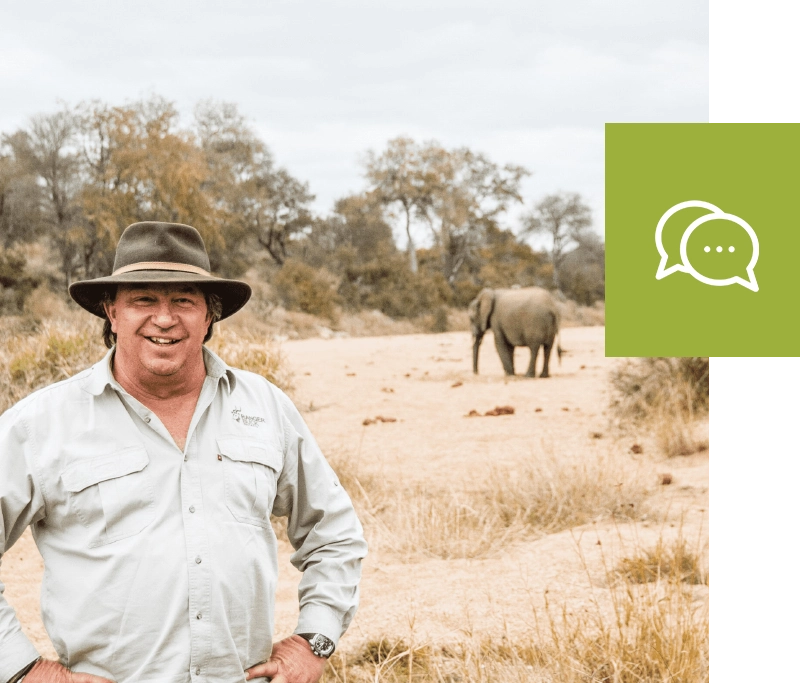
Curate Your Own
Personalised Travel Itinerary
Curate Your Own Personalised Travel Itinerary
We specialise in creating completely personalised travel itineraries tailored to your personal needs and expectations. Simply click on the button below to chat to one of our ecosafari specialists and lets start planning your very best African safari to your very favourite destination.
get in touch with us
+27 83 653 5776
+27 83 653 5776 (WhatsApp)
info@rangerbucksafaris.com
16 Lourie Close, Meyersdal Eco Estate,
Alberton, Gauteng
16 Lourie Close, Meyersdal Eco Estate, Alberton, Gauteng
Website by Keeden Marketing | 2024
