




Plan a trip
How Wild Dog (Painted Wolf) Conservation Work
Wild dog conservation is not about dramatic rescues or emotional headlines.
It is about stability.
Because African wild dogs live in small, fragmented subpopulations, conservation focuses on one core objective:
Protect the pack. Protect the landscape. Protect the breeding structure.
Understanding how this works gives deeper meaning to any conservation-aligned safari.
Explore the Wild Dog Guides:
How many are left → Why endangered → How conservation works → Ethics checklist →Where can you see African wild dogs?→ Plan an experience → African Wild Dog Population Trends →
The Foundation: Monitoring Packs
Wild dogs are wide-ranging and unpredictable. Without monitoring, conservation teams cannot understand:
Where packs are moving
Whether dispersers are forming new packs
Whether conflict zones are emerging
If disease outbreaks are occurring
Monitoring may involve:
GPS collar tracking
VHF telemetry
Camera traps
Spoor tracking
Direct field observation
This data allows conservation teams to make evidence-based decisions rather than reactive ones.
→ Related: How Many Wild Dogs Are Left?
Video: Seeing African Wild Dog Conservation in Action
Wild dog conservation is rarely loud or theatrical. More often, it is quiet, careful work carried out to protect something fragile — the stability of a pack.
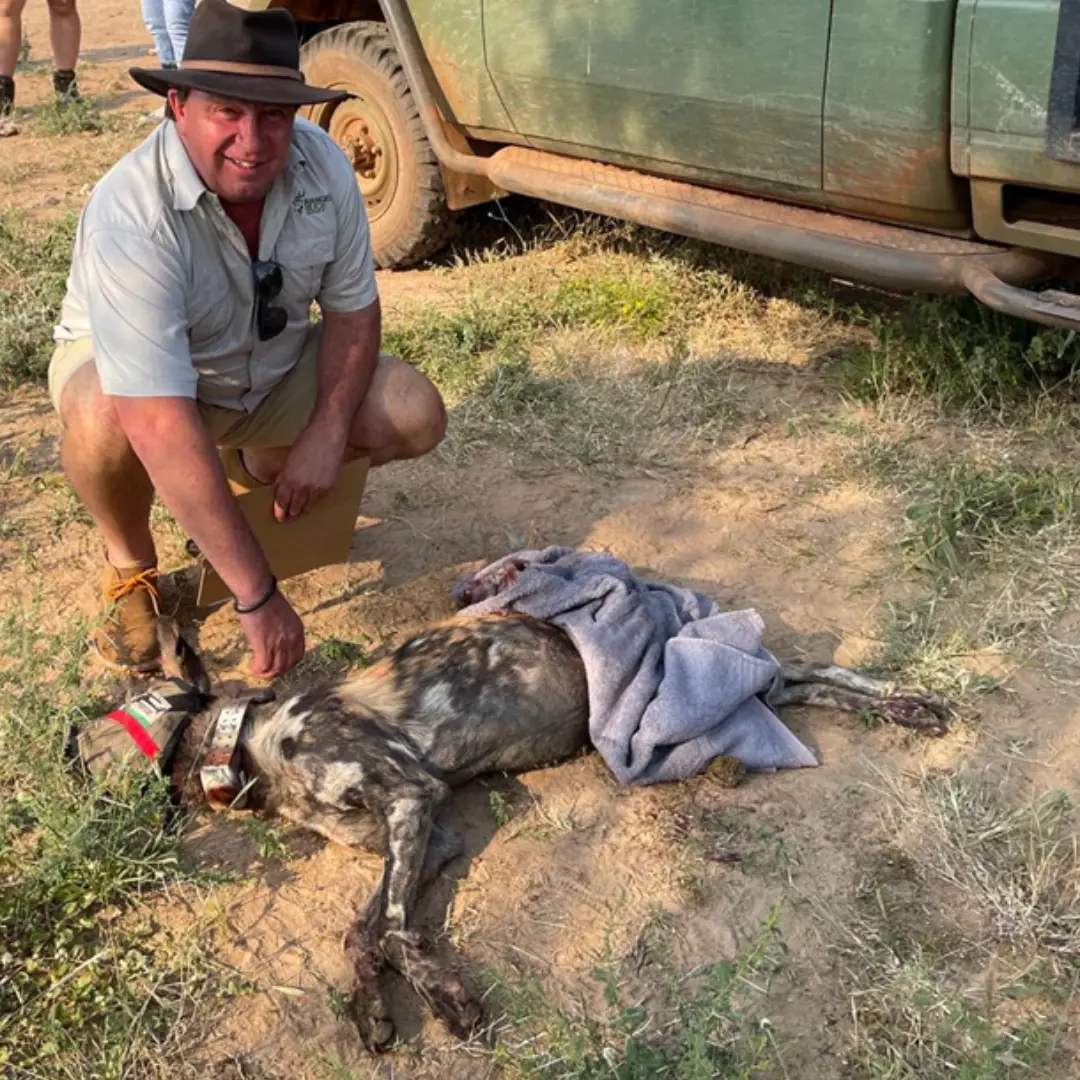
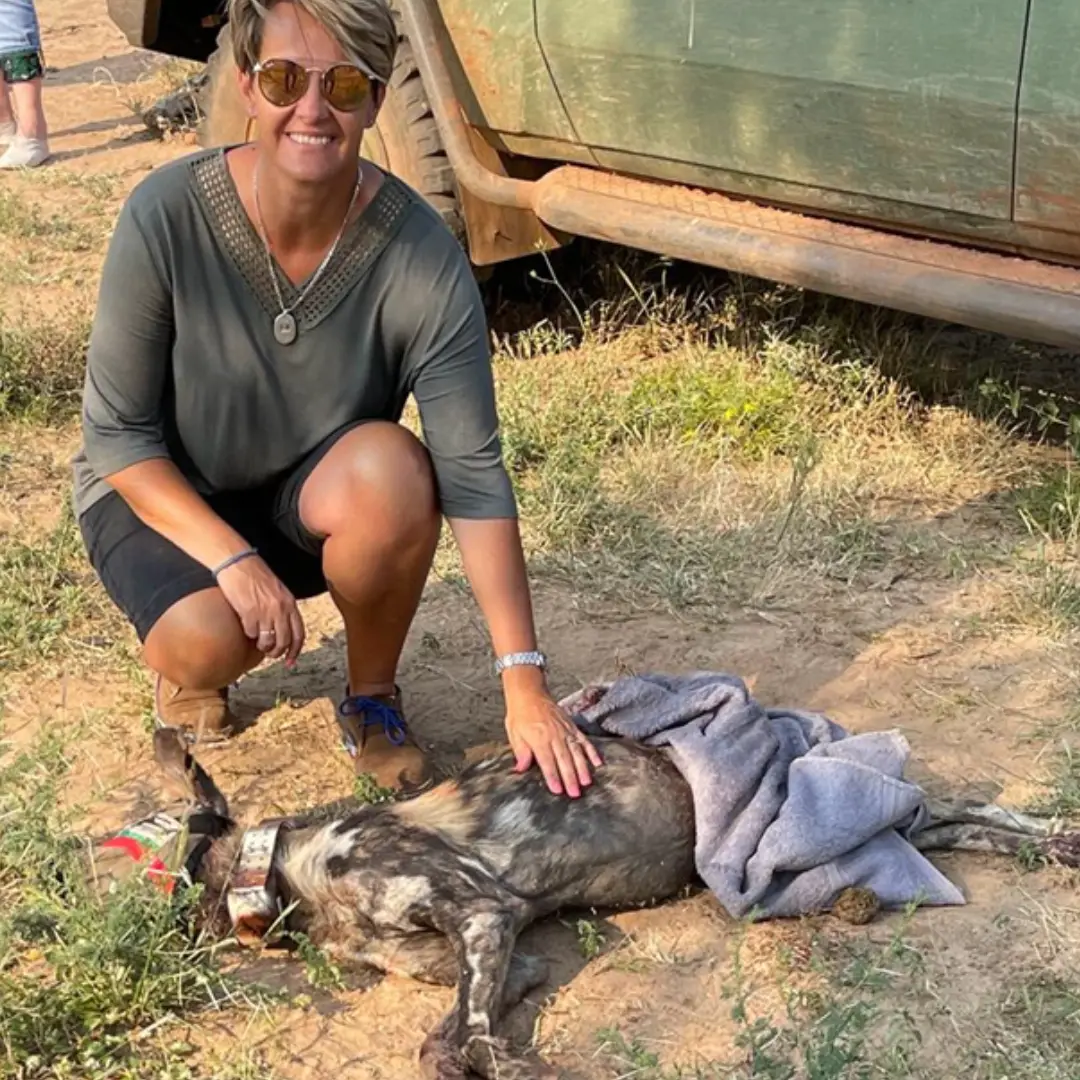
In this short film, the Ranger Buck team joins conservation professionals in Madikwe Game Reserve to locate a monitored pack of African wild dogs. Guided by prior tracking data, the team narrows in on the pack’s range before beginning a carefully supervised veterinary operation.
The focus is the alpha female — the breeding anchor of the pack. In wild dog society, her health influences pup survival, hunting efficiency, and long-term cohesion. Once safely immobilised under strict welfare protocols, the team conducts health checks, gathers biological data, and administers preventative treatment against infectious disease — one of the major risks to fragmented populations.
Moments like this are not about spectacle. They are about preserving continuity — protecting breeding structure, strengthening resilience, and giving a small, scattered population a better chance at stability.
This is the conservation context that shapes how Ranger Buck approaches wild dog safaris: not chasing dramatic sightings, but understanding the science, the systems, and the responsibility that support survival.
Protecting Breeding Stability
Wild dogs are cooperative breeders. Typically, one dominant pair leads reproduction while the rest of the pack supports pup survival.
If key adults — especially breeding individuals — are lost:
Hunting efficiency drops
Pup survival declines
Pack cohesion can collapse
Conservation work often prioritises:
Protecting alpha individuals
Reducing human conflict around den sites
Monitoring reproductive health
This is why veterinary involvement sometimes becomes necessary — not for spectacle, but for long-term pack viability.
Managing Disease Risk
Disease is one of the most serious threats to fragmented populations.
Rabies and canine distemper can devastate entire packs.
Where domestic dogs and wildlife overlap, risk increases.
Conservation responses may include:
Surveillance and testing
Vaccination programs (where approved)
Community engagement to reduce domestic transmission
Disease management is quiet work — but it is critical work.
→ Related: Why Are Wild Dogs Endangered?
Reducing Human–Wildlife Conflict
Wild dogs often move beyond park boundaries. When livestock and predators overlap, conflict can escalate quickly.
Conservation strategies may involve:
Community education
Livestock management support
Compensation frameworks (in some regions)
Corridor planning to reduce risky movement
The goal is not just protecting wildlife — it is stabilising coexistence.


Maintaining Landscape Connectivity
Fragmentation is the root amplifier of most threats.
When landscapes are connected:
Dispersing individuals can form new packs
Genetic diversity improves
Populations become more resilient
When landscapes are fragmented:
Packs become isolated
Disease spreads more easily
Local extinctions are harder to reverse
Conservation is therefore as much about land planning as it is about animals.
What This Means for a Conservation-Focused Safari
Real conservation is not staged.
It is data-driven, welfare-first, and adaptive.
A meaningful conservation experience may involve exposure to:
Monitoring operations
Veterinary oversight (when scheduled)
Field briefings on pack dynamics
Understanding how decisions are made
Activities vary based on season, permits, and conservation priorities.
But the purpose is constant: protect pack stability and long-term survival.
2026 Conservation Context
In 2026, wild dog conservation continues to focus on stabilising fragmented populations rather than simply increasing raw numbers.
With fewer than ~700 packs globally, every stable pack matters.
Every connected corridor matters.
Every breeding female matters.
Conservation is not dramatic.
It is cumulative.
Wild Dog Conservation: Myths vs Reality
Myth: Conservation means constant intervention.
Reality: Most conservation work is monitoring and prevention.
Myth: Saving wild dogs means relocating them frequently.
Reality: Stability and habitat protection are usually more important than movement.
Myth: Tourism conservation is performative.
Reality: Responsible tourism can help fund monitoring, veterinary work, and protected landscapes when done ethically.
Why Ranger Buck Aligns With This Model
Ranger Buck’s conservation experiences are built around this same philosophy: stability over spectacle, understanding over hype.
Rather than designing itineraries around guaranteed sightings, the focus is on:
Landscapes where conservation monitoring is active
Regions where pack stability is understood
Welfare-first protocols led by trained professionals
Meaningful exposure to the realities of conservation work
Because protecting wild dogs is not about dramatic moments — it is about sustained, responsible support.
For travellers who value conservation context as much as comfort, this alignment matters.
FAQ: How Wild Dog Conservation Works
How do conservationists monitor wild dogs?
Through GPS collars, VHF telemetry, camera traps, spoor tracking, and field observation. Monitoring provides data that guides all other conservation decisions.
Why are breeding females so important?
Because wild dogs are cooperative breeders, the alpha female’s survival directly influences pack stability and pup survival.
Do conservation teams vaccinate wild dogs?
In some situations and regions, disease management may involve vaccination efforts under professional supervision and regulatory approval.
Does conservation guarantee population recovery?
No — outcomes depend on landscape stability, disease pressure, and human conflict. Conservation improves resilience but cannot eliminate all risk.
Wild Dog Conservation Library
If you’re exploring African wild dog conservation, these guides will help you understand why they’re endangered, how conservation works in practice, and what an ethical experience should look like.
Wild dog conservation explained (how protection works + what conservation teams actually do) →
How many African wild dogs are left? (population context + why counts vary) →
Why are wild dogs endangered? (biggest threats + why packs are vulnerable) →
African Wild Dog Population 2026 Trends, Stability and Future Outlook →
Where to see African wild dogs (regions + responsible viewing tips) →
Is a wild dog conservation experience ethical? (what “ethical” looks like + red flags) →
- How Wild Dog Conservation Works (painted wolves) →
Wild Dog Conservation Experience (plan a tailored itinerary) →
Curate Your Own
Personalised Travel Itinerary
Curate Your Own Personalised Travel Itinerary
We specialise in creating completely personalised travel itineraries tailored to your personal needs and expectations. Simply click on the button below to chat to one of our ecosafari specialists and lets start planning your very best African safari to your very favourite destination.
get in touch with us
+27 83 653 5776
+27 83 653 5776 (WhatsApp)
info@rangerbucksafaris.com
16 Lourie Close, Meyersdal Eco Estate,
Alberton, Gauteng
16 Lourie Close, Meyersdal Eco Estate, Alberton, Gauteng
Website by Keeden Marketing | 2024
