
Plan a trip
Pangolin Conservation FAQs
Everything you want to know about pangolin conservation — from the Pangolin Guardian programme and sanctuary visits to why pangolins are trafficked, what to do if you see one, and how ethical safari tourism helps. Answers to the most common questions, all in one place.
Does Ranger Buck Safaris offer a dedicated pangolin conservation safari?
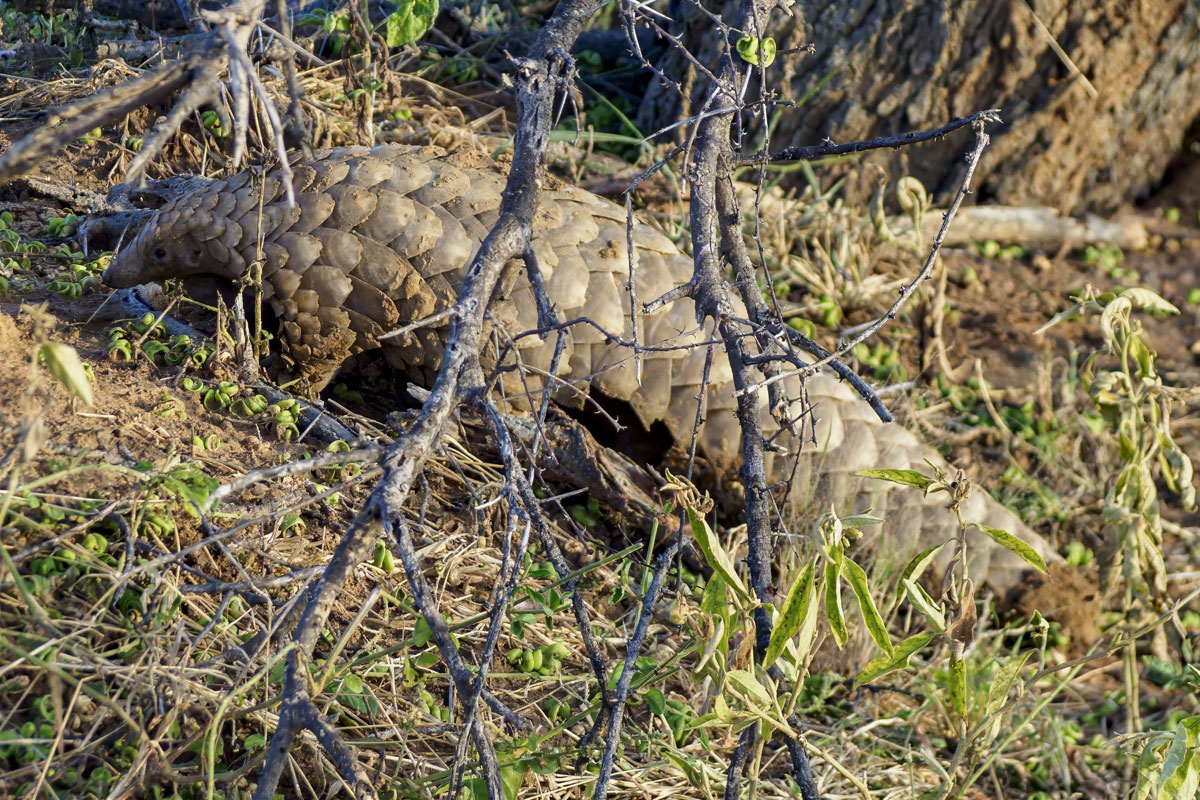
Not as a standalone product. Pangolins are extraordinarily difficult to find in the wild and no honest operator can promise a sighting. Ranger Buck Safaris supports pangolin awareness through the Pangolin.Africa Guardian initiative. For guests with a deep interest in pangolin conservation, we can arrange visits to accredited pangolin sanctuaries as part of a tailor-made itinerary. Every safari with Ranger Buck Safaris helps keep wild landscapes viable and conservation work funded.
How do I become a Pangolin Guardian?
Complete Pangolin.Africa’s free online Guardian course at pangolin.africa/become-a-pangolin-guardian. The course has two parts, takes approximately 15 minutes and awards a Pangolin Guardian certificate on completion. It is available in multiple languages and free of charge. Ranger Buck has completed it himself and is challenging every guest and follower to do the same.
Is the Pangolin Guardian course free?
Yes. Pangolin.Africa’s Guardian course is completely free of charge and open to anyone, regardless of age, location or background. The only requirement is a willingness to learn.
Can I visit a pangolin sanctuary in South Africa?
Yes. For guests with a strong interest in pangolin conservation, Ranger Buck Safaris can arrange a visit to an accredited pangolin sanctuary as part of a tailor-made safari itinerary. Pangolin sanctuaries focus on rescue, treatment, rehabilitation and preparation for release. A sanctuary visit gives you a close, ethical encounter in a setting where animal welfare is the absolute priority. Speak to our safari specialists about including this in your trip.
What should I do if I see a pangolin in the wild?
Stay calm, keep your distance, avoid flash photography and do not touch or block the animal’s path. Do not share the exact location publicly. Once the animal has moved on, report the sighting through Pangolin.Africa’s Pangolert system via WhatsApp. If the animal is injured, trapped or in danger, contact your guide or activate Pangolert’s emergency channel immediately.
Can I touch a pangolin?
No. Physical contact from untrained individuals causes significant stress to pangolins and can seriously compromise their wellbeing and rehabilitation prospects. Even in sanctuary settings, all interactions are managed strictly by trained professionals. Never touch a wild pangolin.
Are pangolins dangerous to humans?
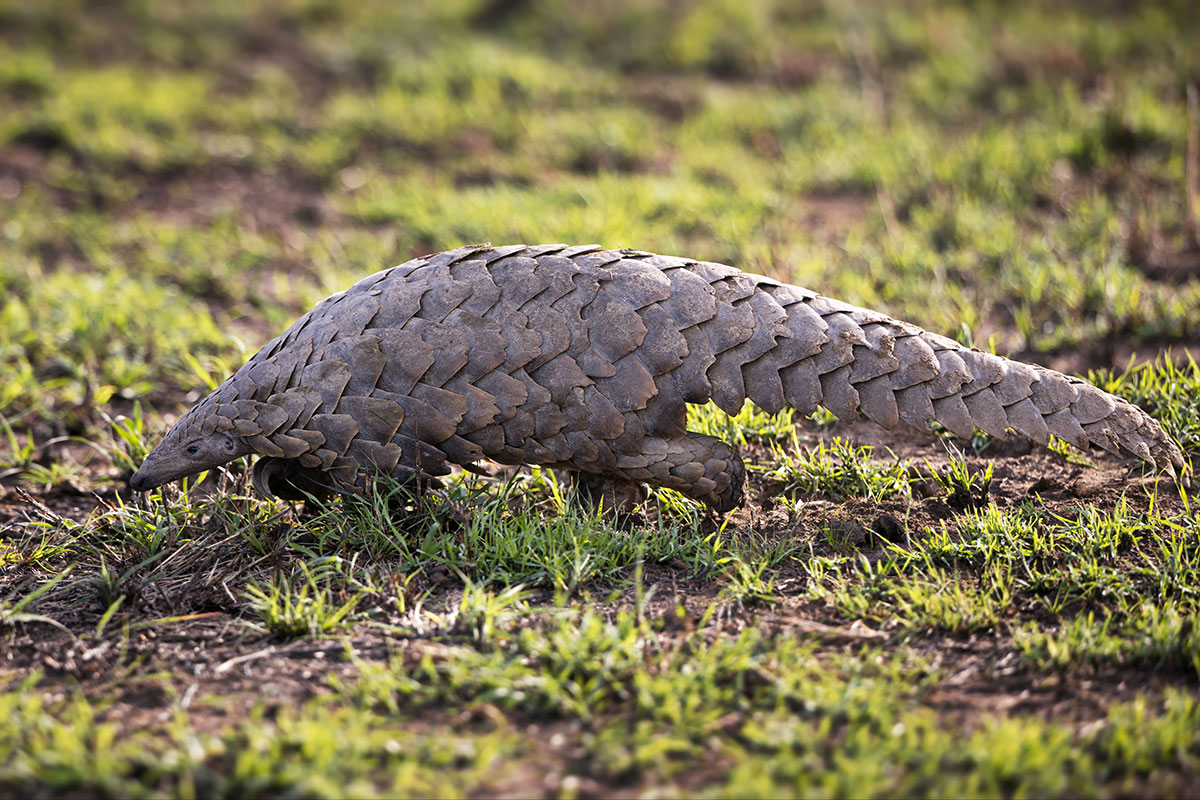
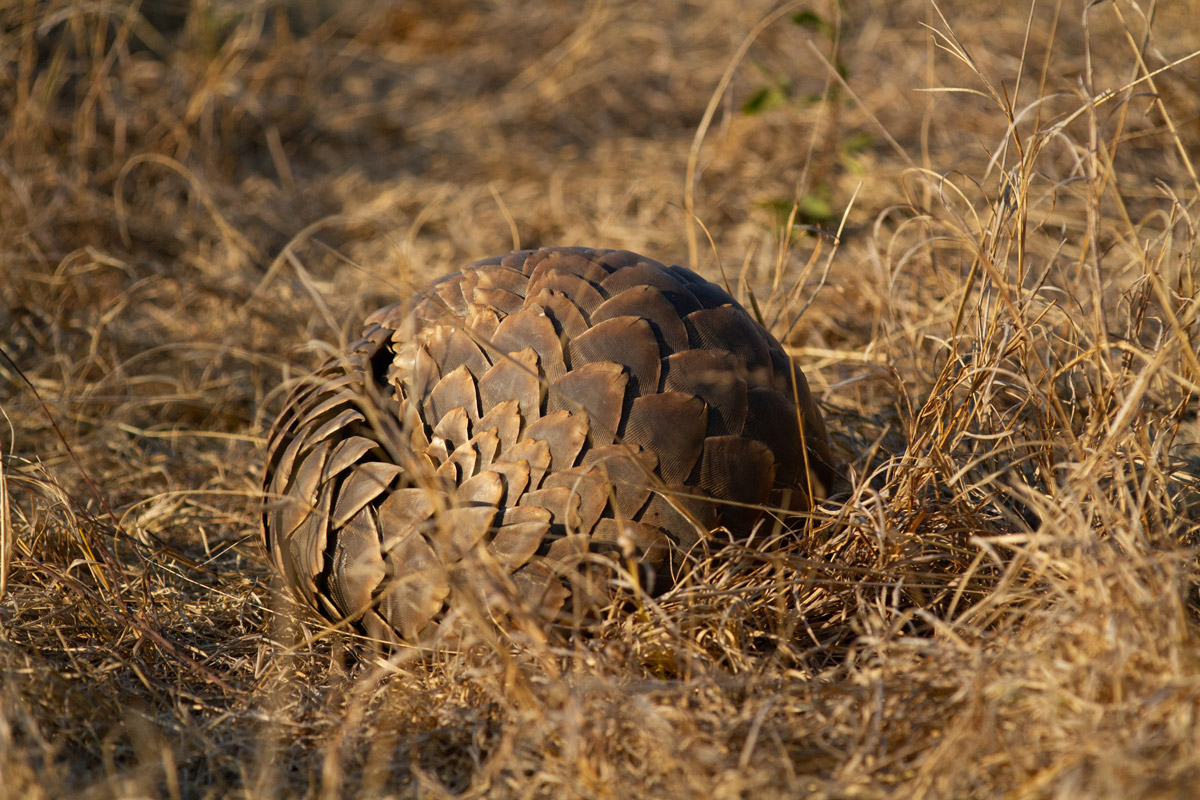
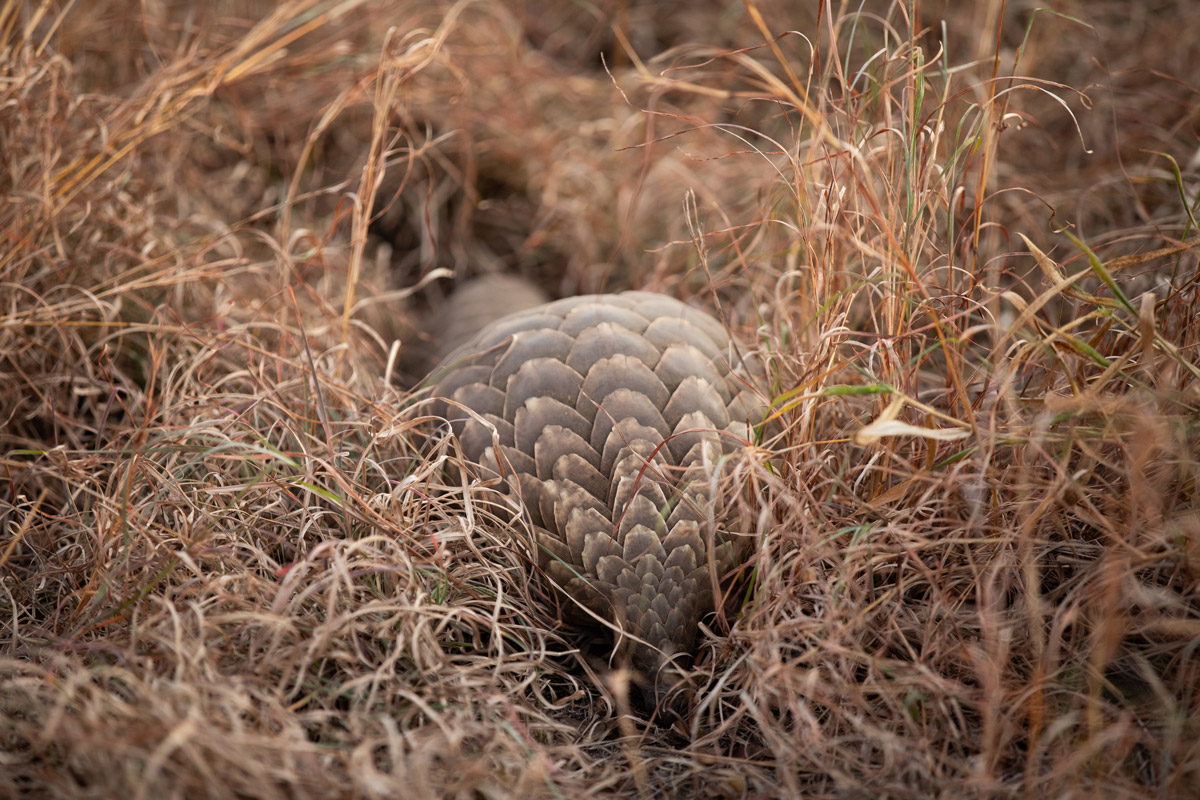
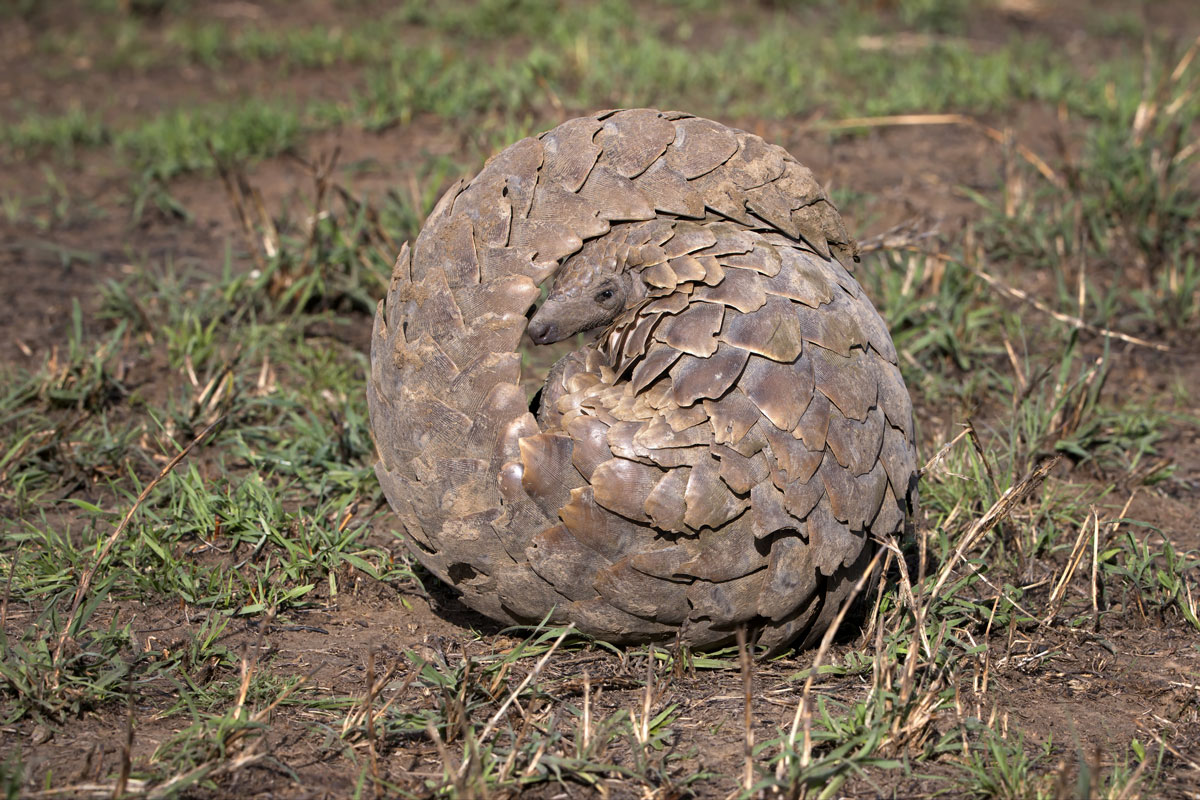
Not at all. Pangolins are completely harmless — they have no venom, do not bite in self-defence and carry no known zoonotic diseases of concern in ordinary wildlife encounters. Their only defence is to curl into a protective ball. The danger runs entirely in the other direction.
Are pangolins mammals?
Yes. Despite their scaly exterior and insect-based diet, pangolins are warm-blooded mammals. They give birth to live young, nurse their pups, and belong to the order Pholidota — more closely related to carnivores like lions, dogs and bears than to any reptile.
Why are pangolins trafficked?
Pangolins are trafficked primarily for their scales, which are falsely believed in some traditional medicine systems — particularly in China and Vietnam — to have medicinal properties. There is no scientific evidence supporting any therapeutic value. Their meat is also consumed as a luxury product in some markets. All commercial international trade in pangolins has been banned under CITES Appendix I since 2017, but illegal trafficking continues because demand remains high and financial incentives are significant.
What do pangolins eat?
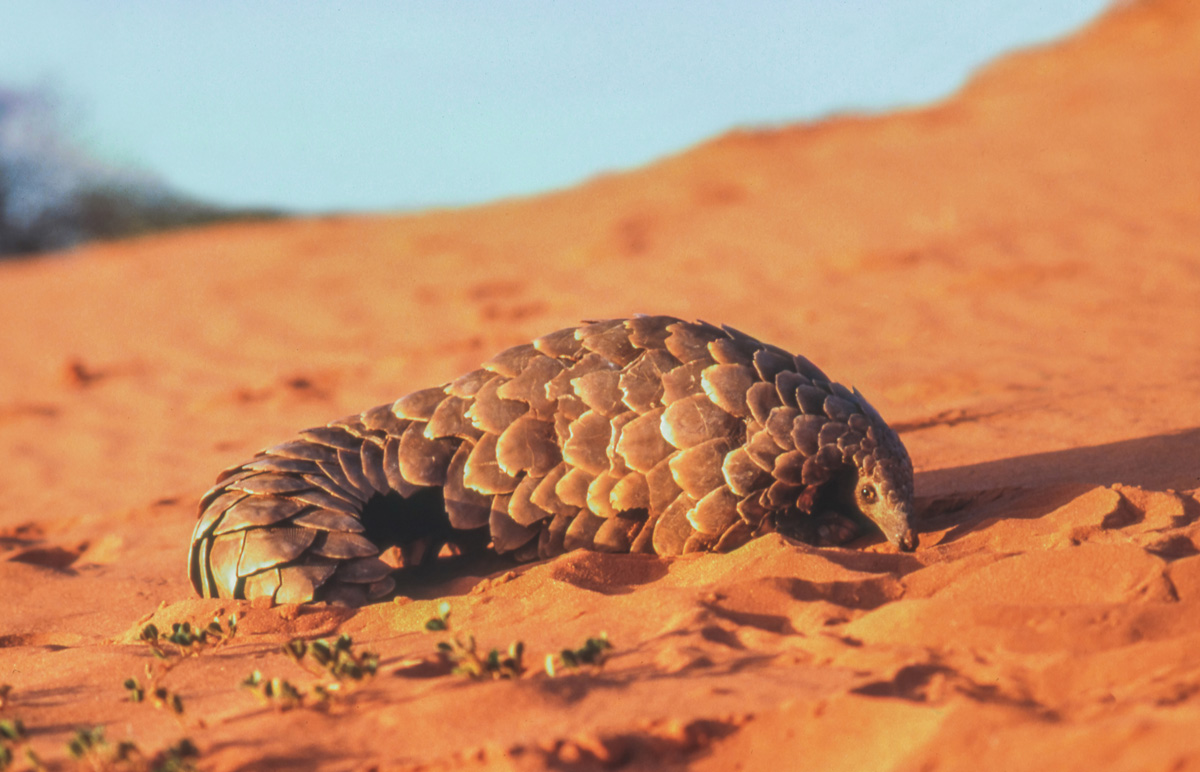
Pangolins feed almost exclusively on ants and termites. They locate nests using a highly developed sense of smell, excavate them with strong front claws, and collect insects with an extraordinarily long, sticky tongue that can extend beyond the length of their entire body. An adult pangolin may consume up to 70 million insects per year. They have no teeth — insects are ground down in a muscular, stone-filled stomach.
How does tourism help pangolin conservation?
Ethical safari tourism keeps wild landscapes economically viable. When travellers choose responsible reserves, conservation-minded operators and expert guides, they generate revenue that funds ranger deployments, anti-poaching patrols, rehabilitation programmes and long-term habitat protection. A safari with Ranger Buck Safaris is a contribution to the conditions that give pangolins and Africa’s other threatened species a fighting chance.
What is the Pangolert system?
Pangolert is Pangolin.Africa’s responsible sighting reporting system. It allows individuals and rangers to submit live and historical pangolin sightings by WhatsApp with a photo and location. This data helps researchers build a clearer picture of pangolin distribution and population trends. Emergency cases — injured animals or suspected trafficking — can also be escalated through Pangolert to vetted response teams.
Want to deepen your connection to pangolin conservation? Join Ranger Buck’s Pangolin Guardian challenge — complete Pangolin.Africa’s free course and earn your Guardian certificate.
get in touch with us
+27 83 653 5776
+27 83 653 5776 (WhatsApp)
info@rangerbucksafaris.com
16 Lourie Close, Meyersdal Eco Estate,
Alberton, Gauteng
16 Lourie Close, Meyersdal Eco Estate, Alberton, Gauteng

Website by Keeden Marketing | 2024
